Society

The sorry state of our public conveniences

From our UK edition

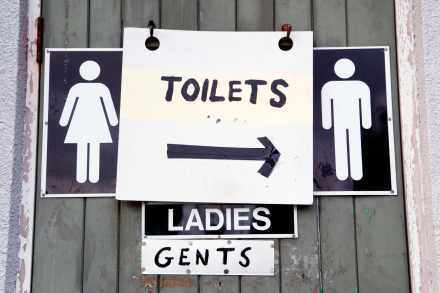
Britain’s public loos are a national embarrassment. If you are in any doubt, head to Liverpool Street Station and spend a penny. It’s unquestionably the most odious and unpleasant public lavatory anywhere in the supposedly civilised world. It has to be experienced to be believed, but suffice it to say that the level of cleanliness on display would make a Medicine Sans Frontier doctor fresh from West Africa recoil in fear and reach for their PPE. The floor is usually awash in various places with unknown fluids. The long shared trough installed for handwashing is so disgusting that you wouldn’t clean your dog in it. The supposedly automatic taps barely dispense water. The soap dispensers are equally hit and miss.

The perennial appeal of Made in Chelsea

From our UK edition

The modern world of dating is ripe for disappointment, and recent dating app convert Sophie is certainly not immune. ‘I went on a date with an actor – not doing too bad – we go to Zuma. I ordered everything; Henry VIII in there, got it all. Then the bill came and he says, how should we do this? Ugh! Ejector seat. Meep! Bye bye. No, I couldn’t. I paid the whole bill and left. Auf wiedersehen.’ Luckily, pal Olivia has a solution, and advises her to ditch the apps and instead sign up to a millionaires’ dating agency run by her friend. Good advice for all of us, perhaps, although I’m not sure I would make the criteria for the dating agency. But this is Made in Chelsea, where finding a millionaire to date is a completely reasonable expectation.

Scuzz Nation, the death of English literature & are you a bad house guest?

From our UK edition

40 min listen

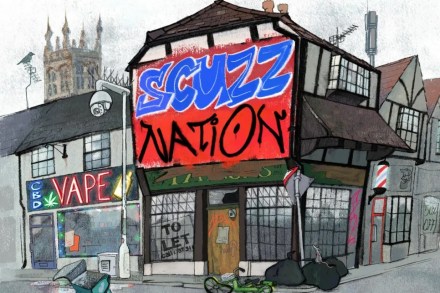
Scuzz Nation: Britain’s slow and grubby declineIf you want to understand why voters flocked to Reform last week, Gus Carter says, look no further than Goat Man. In one ward in Runcorn, ‘residents found that no one would listen when a neighbour filled his derelict house with goats and burned the animals’ manure in his garden’. This embodies Scuzz Nation – a ‘grubbier and more unpleasant’ Britain, ‘where decay happens faster than repair, where crime largely goes unpunished, and where the social fabric has been slashed, graffitied and left by the side of the road’. On the podcast, Gus speaks to Dr Lawrence Newport, founder of Crush Crime, to diagnose the issues facing Britain – and offer some solutions to stop the rot. (01:28) Next: is it demeaning to study Dickens?

Welcome to Scuzz Nation

From our UK edition

Reform’s success in last week’s local elections has been attributed to many causes. Labour’s abolition of the winter fuel payment for pensioners. The hollowing out of the Conservative party’s campaigning base. Nigel Farage’s mastery of social media. But if you want an emblem of why voters turned their back on the political establishment let me give you Goat Man. In one ward in Runcorn, the seat Labour lost to Reform by just six votes, residents found that no one would listen when a neighbour filled his derelict house with goats and burned the animals’ manure in his garden. Despite repeated appeals to authority, no action was taken.

Why don’t men ask questions?

From our UK edition

I’ll bet most women under 50 in relationships with men have found themselves wondering when on earth the man is going to get round to asking them a question. The man gets home. We ask about his meetings, his lunch, his colleagues, showing empathy and imaginative curiosity. Then we wait in vain for our turn. That sounds too passive. ‘Waiting in vain’ doesn’t begin to summon the way mild pique turns first to incredulity, then actual rage and despair at the man’s apparent lack of interest. ‘Tears are pooling on your collarbones again,’ my husband used to observe quite regularly on date nights in our courting days. ‘Is it because I should be asking a question?’ I soon learned not to say yes.

There’s nothing sexy about a sex party

From our UK edition

‘Sorry sir, the rules clearly state that all single men must be accompanied by a woman.’ As the frustrated guest is ushered off the premises, my female companion and I are welcomed into a grand reception room where the organised sex party is being held. A barmaid offers us some complimentary condoms and a handful of Quality Street, along with some fluorescent orange punch served in plastic cups. Should we be engaging in small talk or ripping each other’s clothes off? No one seems to know The organisers of tonight’s paid event claim they cater for the world’s ‘sexual elite’ but there’s something disarmingly ordinary about the snaggle-toothed mid-lifers trooping in behind us – hardly the glamour models I’d been expecting.

The inevitable rise of the divorce party

From our UK edition

Have you been to a ‘divorce party’ yet this season? If you haven’t, not to worry, there’s still time. Divorce season lasts for the whole of January, I’m told, so there’s a couple of weeks left to celebrate. And if perhaps the details of your own nasty separation aren’t yet finalised, or if your lawyer and your ex have between them drained the champagne fund, then why not simply nip into town and crash someone else’s? You’re bound to find one. Perhaps in the future there will be un-wedding lists, allowing guests to repurchase things the ex took Divorce parties have become so popular here in London that several of the savvier venues have started to offer special divorce-party deals, just as they do for weddings: balloons, cakes, music.

Can Morgan McSweeney reboot the government machine?

From our UK edition

The Queen is dead: long live the King. This week brought an end to Downing Street’s unhappy experiment in dyarchy. Out goes Sue Gray, banished to the regions. In her place stands the Irishman who won the No. 10 power struggle: Morgan McSweeney, Keir Starmer’s first chief of staff in opposition, is back on top. McSweeney’s allies believe that the new government will flourish into maturity after a troubled start. ‘We’re back to being political,’ one crows. As another minister prefers to put it: ‘He needs to go around and crack some heads – and quick’ The new chief’s strengths are threefold. First, he is familiar with how the PM thinks. Unlike Gray – who knew little of Starmer before her appointment – McSweeney has been intimately involved in his rise to power.

Why China’s nostalgia industry is booming

From our UK edition

Nostalgia is a thriving industry in China. I first noticed this while walking around Nanjing last summer. There were shops with names like ‘Finding Childhood’ or ‘Childhood Memories’, selling sweets and toys that had long been discontinued. There were posters of TV shows and celebrities from the 1980s and 1990s. The customers were like me – misty-eyed millennials, often women, looking for their lost childhoods. ‘Oh my god, remember that!’ We relished every moment. The shops have sprung up suddenly in the past two years, mostly catering to my generation, who spend more on high-street tat than our elders. But older Chinese have been seeking nostalgia too. They get their hit from remembering a more rural way of life.

Be more tiger mum!

From our UK edition

‘What’s it to do with me if your boyfriend wants to break up with you? Or if you cried, or had a fight, these are not things that I as a supervisor care about. I’m not your mother. All I care about is results. Our relationship is just employee-employer.’ In a series of videos posted on Douyin (China’s version of TikTok), Chinese tech executive Qu Jing was a little too candid about her management style. Sharply dressed and with hair cut formidably short, she said she expected her staff to be on call 24 hours a day, including at weekends, even at the cost of their personal relationships. If Qu thought these videos would give her a ‘girlboss’ image, she was wrong. They went viral and she became a national hate figure.

Are Stonewall and Mermaids charitable?

From our UK edition

Iwas once asked by a colleague to sponsor him on an undertaking designed, he said, to raise money for a very good charitable cause. I can’t remember what the cause was – cancer, maybe, or mental kids – but I do remember the nature of the undertaking. He intended to walk a number of miles down the Great Rift Valley in Kenya. Why not, I suggested, just donate the enormous amount of money such a trek would cost direct to the charity? It would easily outweigh the amount raised, not least because miserable bastards like me would probably decide it was not a charitable act at all but first-world grandstanding with a smug hubris masquerading as kindness.

Portrait of the Week: hate crimes, surprise knighthoods and flaming rickshaws

From our UK edition

Home The Hate Crime and Public Order Act came into effect in Scotland, making it a crime to communicate or behave in a manner ‘that a reasonable person would consider to be threatening or abusive’, with the intention of stirring up hatred based on age, disability, religion, sexual orientation, transgender identity or being intersex. The Scottish government offered online training to 500 Police Scotland ‘Hate Crime Champions’. The author J.K. Rowling named ten people who call themselves women that she called men. Police Scotland said complaints had been received about her, but that but no action would be taken. Rishi Sunak, the Prime Minister, said: ‘We should not be criminalising people saying common sense things about biological sex.

How Britain smashed the slave trade

From our UK edition

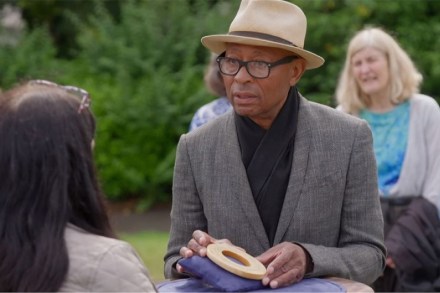
It was bound to happen sooner or later: a guest on the BBC’s Antiques Roadshow presented an artefact which derived from the slave trade – an ivory bangle. One of the programme’s experts, Ronnie Archer-Morgan, himself a descendant of slaves, said that it was a striking historical artefact but not one that he was willing to value. ‘I do not want to put a price on something that signifies such an awful business,’ he said. It’s easy to understand how he feels. The idea of people profiting from the artefacts left over from slavery is distasteful. Yet, as Archer-Morgan said, it is not that the bangle has no value: it has great educational value.

The normalisation of ‘normalcy’

From our UK edition

My husband devotes his decreasing hours of daytime wakefulness to looking at Twitter, as he still calls it. He shouted out, ‘Look at this’, just as I was putting the potatoes in the oven to roast. It was a post criticising the ENO for saying 2021 was ‘a year spent slowly returning to normalcy’. The author said, ‘Brits don’t use the word normalcy’. Is that true? In 1899, on leaving Eton at the age of 17, Evelyn Wrench was well on his way to making a fortune from selling picture postcards at tourist spots. Then he overstretched himself and went bust in 1904. Instead he turned his energies to promoting the British Empire. In 1922 he began writing for The Spectator, becoming its editor from 1925.

What are frameworks for?

From our UK edition

A brand new ‘robust’ framework was being woven and nailed together, so the Prime Minister announced at the end of last week. It’s barely a year since he presented the UK with a similar kind of structure, which he called the Windsor Framework. I imagined it to resemble in some way a Windsor chair. In 1766, the newspaper Jackson’s Oxford Journal (which still had more than a century of success ahead of it) declared that ‘the Bodleian Library has most confessedly been very much improved by the Introduction of Windsor-Chairs, so admirably calculated for Ornament and Repose’. The Windsor framework didn’t prove quite so reposeful. There is no agreement on what a framework should look like.

Joe Biden’s dog is out of control

From our UK edition

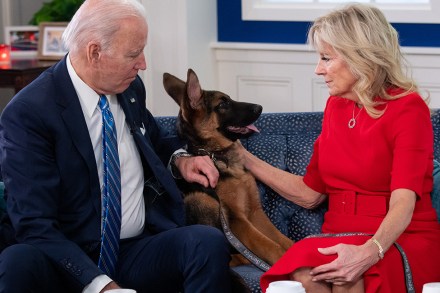
I was shocked to read about the behaviour of Joe Biden’s dog, Commander. According to a CNN report based on freedom of information requests, he bit US Secret Service agents on 24 separate occasions between October 2022 and July 2023. There were also numerous other incidents involving the White House staff. These were not playful nips, either. The agents reported being bitten on the wrist, forearm, elbow, waist, chest, thigh and shoulder, with at least two bites requiring stitches. On one occasion, an agent was bitten so badly that tours of the White House had to be suspended for 20 minutes while a janitor mopped up the blood.

Britain’s Jews aren’t safe

From our UK edition

The explosion of hatred and extremism prompted by the October 7 massacre was never going to limit itself to the Jewish state. Even as early reports were filtering in, the news that Palestinian terrorists had infiltrated Israel and slaughtered its citizens appeared to kickstart a dynamo of Jew-hatred in the West. Since then, we have had only news reports and anecdotes to go on, but the trends were evident. Now we have the numbers. A report from the Community Security Trust (CST) finds there were more antisemitic incidents in the UK over the past 12 months than in any previous year, with October 7 pinpointed as the most significant factor. The CST recorded 4,103 cases of attacks, threats and abuse directed at British Jews, a 147 per cent increase on the previous year.

Why the story of the Holocaust still needs telling

From our UK edition

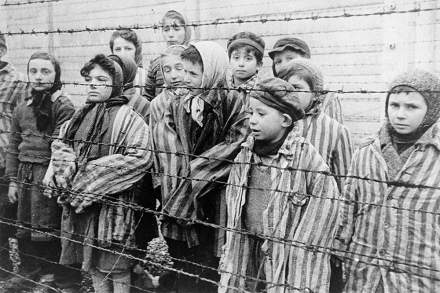
In Chekhov’s The Seagull Dr Dorn is asked which is his favourite foreign city. Genoa, he replies: in the evening the streets are full of strolling people and you became part of the crowd, body and soul. ‘You start to think there really might be a universal spirit,’ he says. I remembered Dr Dorn when I was discovering Genoa in October. Then it suddenly came to me that I had been to the city before. Genoa was where my family embarked for the Far East, when I was 18 months old, fleeing the Nazis. I don’t know about the universal spirit, though. I’m reading Enemies and Neighbours: Arabs and Jews in Palestine and Israel, 1917-2017 by Ian Black. I had reached 1953 when at midnight a text pinged in from an old friend: ‘Who will cross the street when we pass?

Portrait of the year: resignations, wars and kangaroo courts

From our UK edition

January The government stopped a Gender Recognition Bill passed by the Scottish parliament becoming law. Isla Bryson, now a transgender woman, was convicted of having raped two women; the 31-year-old was sent to a women’s prison, then transferred to one for men. A Met Police officer, David Carrick, aged 48, pleaded guilty to 24 charges of rape. Nadhim Zahawi was sacked as Conservative party chairman. Strikes by railway workers, Underground drivers, ambulance drivers, nurses and hospital doctors continued on and off all year. Ukraine struck a building in Donetsk housing Russian forces. A Russian missile destroyed a block of flats at Dnipro. Jacinda Ardern suddenly resigned as prime minister of New Zealand.

Just how much lower can the Conservatives sink?

From our UK edition

This is the year in which Michael Gambon died, so by definition a grim one for theatre. Of all the tributes, one of the most acute was by Tom Hollander, who recalled how expressive Gambon’s voice was after 30 years on stage. He could reach hundreds of people while seeming to address only one or two. That’s essential theatre acting. When Gambon turned to cinema, his voice had become supple and mellow. It set me to thinking of other great cinema voices. Simone Signoret came first to mind. Then Jeanne Moreau, James Mason, and above all, Henry Fonda. These actors have you at hello. I would have added Marlene Dietrich, but if you can be so easily parodied, can you be truly great? A Los Angeles record producer tells me that teenagers no longer consider actors as role models.