Snowflake generation

The coddling of American journalism

Yesterday I had an interesting conversation with John R. MacArthur, the publisher of Harper’s. We spoke about Ian Buruma’s departure as editor of New York Review of Books. Rick is a friend, I should say. I should also say that I believe he is a hero of free expression — and an increasingly lonely voice speaking up for authentic dissent in America. You can hear our podcast here. https://audioboom.com/posts/7016868-trial-by-twitter-is-ian-buruma-the-victim-of-a-new-mccarthyism Buruma, in case you haven’t heard, lost his job after he decided to publish an article by Jian Ghomeshi in the forthcoming edition of New York Review of Books.

john r. macarthur journalism snowflakes

India in a day

From our UK edition

Bold programming by the powers-that-be at Radio 4 meant it was possible to listen to all seven episodes of Ayeesha Menon’s adaptation of Salman Rushdie’s Midnight’s Children in a single day on Tuesday, exactly 70 years since independent India was born, and Pakistan created. Four and three-quarter hours of meticulously crafted drama (directed by Tracey Neale and Emma Harding) ingeniously slotted into episodes of different lengths throughout the day, some just 15 minutes, others a full hour (the adapter having to create and sustain pace in a variety of ways to suit the different lengths).

The mad, bad war on ‘cultural appropriation’

From our UK edition

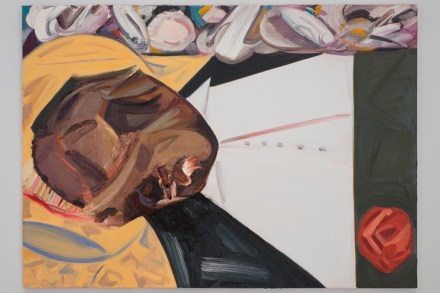
It’s usually best to ignore the indignant fury of the 21st-century young. We’re used to them now, these snowflakes, posing as victims (though they’re mostly middle-class), demanding ‘safe spaces’, banning books and speakers. Best to rise above them, deadhead the camellias. Attention, especially from the press, acts on entitled millennials like water on gremlins — they start proliferating and develop a taste for blood. But then sometimes they go too far. Ten days ago, the Whitney museum, on the New York bank of the Hudson, opened its biennial exhibition of contemporary American art. It’s an exciting show, full of vim and diversity.

For a real Oxbridge education, go to Durham

From our UK edition

‘Should I just have done with it and tell them they’re a bunch of tossers?’ I was on my way to speak at the Durham Union. The motion was ‘This House believes the NHS is out of date’. And, as usual, I was on the ‘wrong’ side of the debate — so why should I even bother? You know beforehand which way the vote is going to go at any university debate these days: the one which enables the snowflakes most easily to signal their virtue. But, on the spur of the moment, I decided to give Durham the benefit of the doubt. ‘I was going to be incredibly rude to you,’ I began. ‘Which you totally deserve for being a bunch of snowflakes who are going to vote against the motion because hashtag “I heart the NHS”.

Snowflakes in the workplace

From our UK edition

Last week I was asked to give a talk about generation snowflake. This was at a breakfast organised by a recruitment company called GTI Solutions and the idea was that I would provide an urban anthropologist’s take on this new tribe for the benefit of their corporate clients, most of whom are thinking about how to recruit them and, once they’ve got them, how to keep them happy. This has given me an idea about a new consultancy service I could provide. The main challenge thrown up by employing these new graduates, it seems to me, is that they won’t be particularly good at communicating with members of other generations in the workplace.

What’s to blame for a generation’s desperation?

From our UK edition

Youth is wasted on the young, for the most part, and thank God for that. There’s nothing grislier than a teenage girl aware of her hypnotic effect on men, or a youngster who begins his important thoughts: ‘As a young person, I…’ These days, though, it’s not youth that’s wasted on the young so much as life, which is an altogether more troubling problem. Over the last year or so, I’d say a good third of the British kids I’ve met, from 15 to 25, have been suffering in some way from anxiety or depression. Often it’s obvious: severe anorexia; forearms calibrated with razor marks. The child says a wan hello, then slinks off to re-submerge in social media. The adults discuss the problem sotto voce.

The snowflake factory

From our UK edition

Another week, another spate of barmy campus bans and ‘safe space’ shenanigans by a new breed of hyper--sensitive censorious youth. At Oxford University, law students are now officially notified when the content of a lecture might upset them. In Cambridge, there were calls for an Africa-themed end-of-term dinner to be cancelled just in case it caused offence to someone somewhere. It all seems beyond parody. ‘What is wrong with these thin-skinned little emperors?’ we cry. But while we can harrumph and sneer at Generation Snowflake’s antics, we miss a crucial point: we created them. First, it is important to note that young people who cry offence are not feigning hurt — generational fragility is a real phenomenon.