Sloth

Self-betterment through contemplation of the Seven Deadly Sins

What mistake did Narcissus make when he looked into the water? To fall in love with his own ravishing self, we might think. But to the medieval mind, that wasn’t his problem at all. In John Gower’s 14th-century poem ‘Confessio Amantis’, Narcissus falls in love all right – but with someone else entirely. His fault isn’t that he loves himself; it’s that he doesn’t even recognise himself. Then, as now, as Peter Jones argues in this revelatory exploration of late medieval psychology, the path to self-betterment went through self-knowledge. Like our own, it was ‘a civilisation geared towards understanding the human mind’. But whereas the tools we use today are
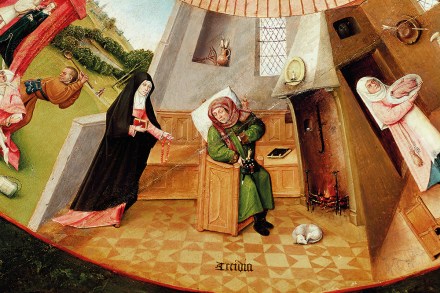
Seeking forgiveness for gluttony, sloth and other deadly sins

Professor Guy Leschziner writes that he was raised in a secular household that was ‘entirely irreligious’ yet with ‘a strong sense of morality, of right and wrong’. As an eminent neurologist and a rational atheist, it’s striking that his study of the extremes of human behaviour should reach for such Biblical terms. Is there an element of ghoulishness here? Seven Deadly Sins has a structure of which David Fincher, director of the gruesome film Seven, might approve.  To zero in on the sins is undoubtedly a darkly entertaining approach, if not for the squeamish. Having been a consultant at Guy’s hospital for more than 25 years, Leschziner has seen ‘the