Slightly Foxed

Literarily a love affair

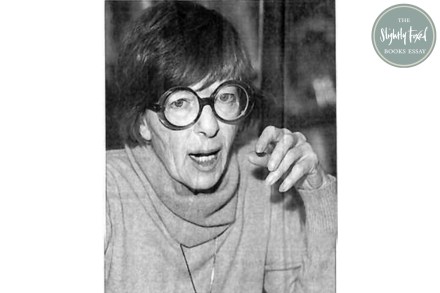
I thought I could never feel fond of Charing Cross Road, London. In 1988, when I was 23, I spent a miserable three months there doing a typing course on the bleak first floor of a building next to the Garrick Theatre. Secretarial instruction was delivered over headphones to classrooms full of women and as I tried to follow the disembodied tutorials my fingers kept slipping and jamming between the keys of a hefty, black manual typewriter.Fortunately for me, just as the course was finishing, a job as subeditor at Harpers & Queen fell into my lap.
hanff

Oh Nancy, Nancy!

When I was four, I fell in love for the first time. The object of my affections was Jemima the rag-doll from preschool. That was a trial run. I was seven or eight when I got my first serious crush. She was an older woman: red-haired, wholesome, adventurous and intelligent. She was 16. She was always 16. Her name was Nancy. My love for her — like the young Julian Barnes’s love for an older woman — did a great deal to shape my life.The Nancy Drew mysteries (I didn’t know, then, that ‘mystery’ is what Americans call a detective story) were the first series of books to which I became completely addicted.

nancy drew

The sadness of Mrs Bridge

As a fan of early jazz, I’ve read a great deal about Kansas City as it was in the 1930s. A most attractive place it seems in retrospect, of 24-hour drinking and gambling, to the accompaniment of wonderful music provided by young, prodigiously talented and mostly black instrumentalists and singers; a wide-open city ruled over by a corrupt mayor, Boss Pendergast, whose main duty seems to have been to keep the good times rolling. It is at this time and in this place that the novel Mrs Bridge (1959) by Evan S. Connell is set, but Mrs Bridge’s life elapses without a mention of any of these goings-on.

slightly foxed mrs bridge

A colonial adventure in Mohawk Valley

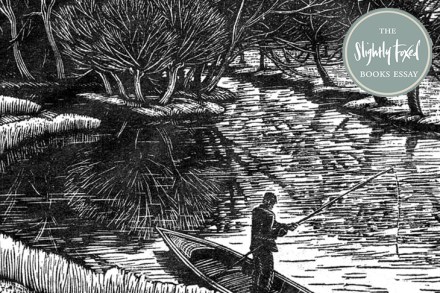
You should never camp in a ravine. Look for higher ground, and a windbreak — a fallen tree is fine, but rocks are the best. Gather balsam wood for bedding, and use your tomahawk to cut firewood from a dead tree. Make two fires. Set the bigger one against the rocks for warmth, and spread the ashes of the smaller one over the ground you wish to sleep on — they will stop it being so cold and damp. Catch fish from the river, but keep an eye out for Indians moving silently through the forest on moccasined feet. This much I have learnt from Ronald Welch’s Mohawk Valley. I just wish I had read it as a boy, for it would have furnished my bivouacking trips in the woods with a far greater level of detail.

An American in Darwin’s family

In the spring of 1883 my mother, Maud Du Puy, came from America to spend the summer in Cambridge with her aunt, Mrs Jebb. She was nearly 22, and had never been abroad before; pretty, affectionate, self-willed, and sociable; but not at all a flirt. Indeed her sisters considered her rather stiff with young men. She was very fresh and innocent, something of a Puritan, and with her strong character, was clearly destined for matriarchy.The Jebbs, my great-uncle Dick, and my great-aunt Cara, lived at Springfield, at the southern end of the Backs, and their house looked across Queens’ Green to the elms behind Queens’ College.

raverat darwin

A gas-lit world

For me, a home without Period Piece is like a house without a cat — lacking an essential cheering and comfortable element. I have loved Gwen Raverat’s memoir of growing up in Cambridge in the 1890s ever since I first read it 20 years ago when recuperating from a bad bout of ’flu, at that blissful moment when you are feeling better but not quite strong enough to get up and do anything. I can still recall the delicious feeling of reading and dozing, dozing and reading, snug in the gas-lit world of Victorian Cambridge, until the January afternoon outside the bedroom window gradually turned purple and faded into dark.

period piece

A chance encounter with a butterfly-catching Nazi

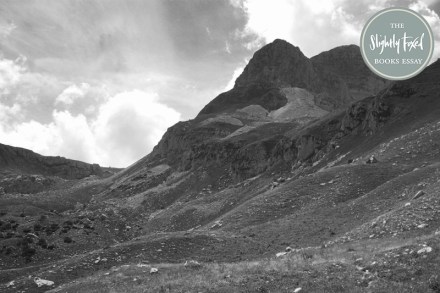
In the winter of 1943, Eric Newby, captured in 1942 on a commando raid on Sicily, escaped from an Italian prisoner of war camp. Love and War in the Apennines, his memoir of life on the run among the peasant farmers of the Apennine Mountains, is that rarest of combinations, a military classic and a love story. Patrick French’s tribute to Newby’s memoir can be read here. In this excerpt, Newby describes an unlikely encounter in a mountain pasture. As I climbed, the trees began to thin out and at last I came to a place where there was nothing but juniper growing.

butterfly naxi apennines

Love and War in the Apennines

An escaped British prisoner-of-war is sleeping in a grassy hollow by the edge of a cliff. He wakes to find a German soldier standing over him, wearing summer battledress, a pistol at his hip. Realizing he has been caught, he says his name and adds, ‘I’m a lieutenant in the infantry, or rather I was until I was put in the bag.’In the bag – captured. It is one of the many phrases of the time that add to the resonance of Love and War in the Apennines (1971), a vivid memoir of Eric Newby’s capture, escape and recapture in Italy’s mountainous terrain during the later years of World War Two. The man standing over him will not, though, take him away.

apennines

The world of William Maxwell

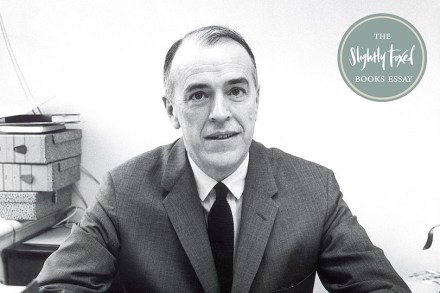
A curious thing: the New York literary world is smaller than the London literary world. It also has a strange feeling of being more old-fashioned. I was edited there by the legendary Joe Fox. I don’t think he liked me, but we would have dinner at a hotel restaurant, the last place where he could smoke in New York, and talk about great writers, including William Maxwell. Joe Fox died at his desk in Random House behind a huge pile of copies of the New York Times, cigarette on his lips. William Maxwell himself was one of this relatively small but influential group of New York literary figures. Because of his very long life and his great influence as literary editor of the New Yorker, he knew almost every writer who passed through the city.

william maxwell

I shall never see the Arctic, but I have Arctic Dreams

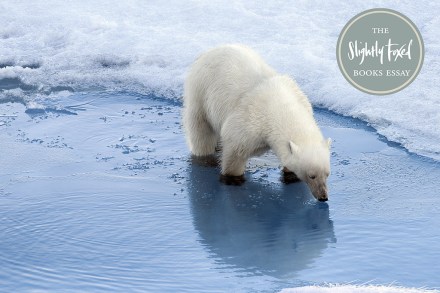
As travelers go, I am a wimp. I like comfortable transport and a bed to sleep in. But I would dearly like to be otherwise, and the travel books that appeal to me are those which give me vicarious experience of the sort of spartan roaming that I know I could never have undertaken.Barry Lopez’s Arctic Dreams is much more than a travel book; its subtitle is Imagination and Desire in a Northern Landscape, which causes one to raise an eyebrow. Desire? What does the man mean? To be honest I am still not too sure, but by now I am sufficiently beguiled by its author not to care too much.

slightly foxed arctic

The many lives of Frank Harris

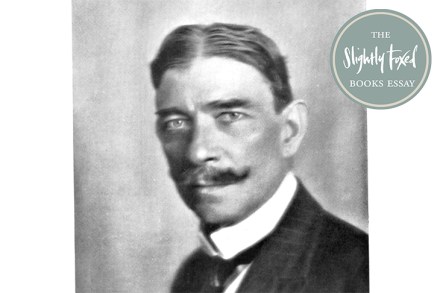
Does anyone today know who Frank Harris was? Are his novels and biographies read at all now? A hundred years ago he was acknowledged ‘by all great men of letters of his time to be . . . greater than his contemporaries because he is a master of life’, or so wrote the critic John Middleton Murry. George Meredith likened his novels to Balzac’s, and Bernard Shaw his short stories to Maupassant’s – high praise which was somewhat deflated by the discovery that one story had actually been lifted from Stendhal. But no one would have been more astonished at his disappearance as a great man of letters than Frank Harris himself. ‘Christ goes deeper than I do,’ he explained, ‘but I have had wider experience.

frank harris

My father threatened to sue me for my first novel

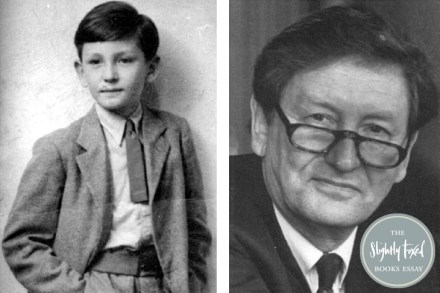
My first novel, A Dog’s Life, was largely autobiographical. It described my grandparents’ life, my parents’ marital exploits, and my own limping attempts to become a writer. But since I seemed unable to harness these first two subjects to the advancement of the third. Then I suddenly saw how I might carve out the first quarter of this spacious family saga and make it a self-contained novella covering 24 hours of family life. Heinemann offered me an advance on royalties of £500, which was ten times what they had given me for my biography of Lytton Strachey. Roland Gant did not wish to publish A Dog’s Life until the two Strachey volumes were out of the way.

michael holroyd novel

The hunt for the Führer

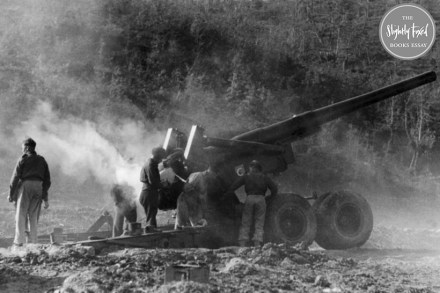
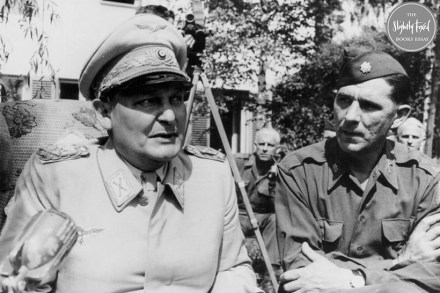
I cannot now remember when I first read Hugh Trevor-Roper’s The Last Days of Hitler (1947). My memory is confused by the fact that I knew the author in old age and was to become his biographer; Trevor-Roper himself told me about the extraordinary circumstances in which he had come to write the book. In September 1945 he had been awaiting discharge from the army so that he could resume his pre-war role as an Oxford don, when he was asked to undertake an urgent investigation into the fate of the Führer. This was then a mystery. In January, as the Allied armies invaded Germany, Hitler had retreated to an underground bunker below the Reich Chancellery in Berlin, to escape Allied bombing; his last months would be spent in these eighteen small and windowless rooms.

hunt führer