Seneca

Trump has clearly been reading Seneca the Younger

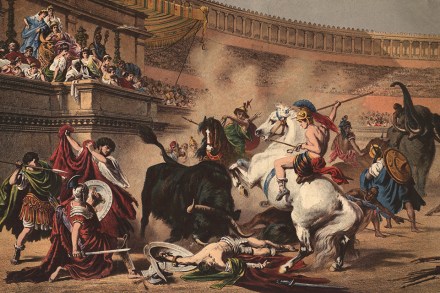
Donald Trump, who has decided not to allow the televising of the spectacle of a soldier being executed by firing squad, has clearly been reading Seneca the Younger, as he would. After all, Seneca was one of Nero’s advisors. In a letter to his friend Lucilius, to which the modern title “On Crowds” has been added, Seneca gives an account of his day at the gladiatorial games. In between the slaughter of animals (in the morning) and of other gladiators (in the afternoon), there was a midday interval which Seneca decided to attend in the hope of finding amusing and witty entertainment of some sort. Far from it. What he saw were condemned criminals, with no armor, fighting each other to the death and being urged on enthusiastically by the crowd. Not that the winner was released.

seneca

What Seneca would have made of the assisted dying bill

From our UK edition

Kim Leadbeater’s assisted dying bill has generated much talk about the ethics of suicide. As far as the ancients were concerned, it was only in life that you could make your mark. The Christian passion for embracing, even rejoicing at, death made no sense to them. Ancient thinkers generally did not fear an afterlife. Although there were no received views on the matter (unless you were a member of a cult of some sort), many ancients reckoned that, if the gods were displeased with you, they would demonstrate their hostility in this life rather than the next. But when death was inevitable, they wanted to be in control, because the way one died revealed the true stature of the person, which could do much for one’s posthumous reputation.

Seneca’s guide to coping with disaster

From our UK edition

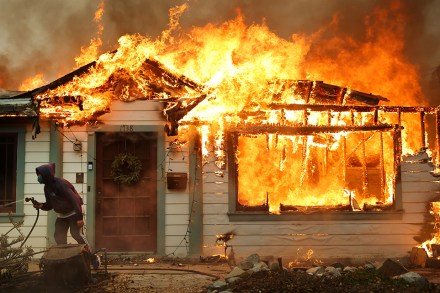
How does one attempt to console someone on the destruction of their home, a fate recently visited on so many citizens of Los Angeles? Seneca, the millionaire philosopher and adviser to the emperor Nero, associated consolation with ‘reprimanding, dissuading, exhorting, commending’. He exemplifies that in a letter musing on the reaction which his friend Liberalis had had to the destruction by fire of his beloved Lugdunum (Lyon) in Gaul ad 64. This had caused Liberalis to worry about the strength of his own character, usually so steadfast, when confronted with this disaster. Seneca contended that we should be ready for anything, since there is ‘nothing that Fortune, when it so wishes, does not topple at the height of its prosperity’.

What would the Romans think of assisted suicide? 

From our UK edition

What a song and dance about the end of life! Historians assure us that, among human beings, there is a long, well-established tradition of dying and if, after a life well lived, one feels enough is enough, what on earth is the problem? Seneca, the philosopher and adviser to Nero, took a duly stoical approach: birth was a death sentence. We were in fact dying every day. Since death would get us in the end – in his case, Nero ordered him to commit suicide – it was as pointless to fear death as it was useless to run from it (he suggested that would mean simply lengthening your death rather than your life). After all, one was facing hard reality. You could not but obey Nature: Nature would certainly not obey you.