Security

The threat of AI intruders

Most of us have gone to bed and forgotten to lock a door or window. Now imagine an intruder who tried your front door every night, then the back door, then every window. They never get tired, never get bored and never stop trying. Eventually, they would find the one you forgot. That is one way to understand the security problem created by AI agents. Agentic AI is not inherently malicious. Part of the risk comes from its persistence: agents are designed to pursue as many routes as possible to achieve an objective. The other part is that they are being deployed in systems designed to defend against humans, with weaknesses that until now have not been exposed.


Harold Wilson is the new Labour lodestar

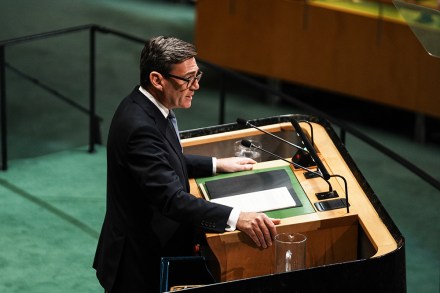
After Andy Burnham’s speech at the Labour party conference on Tuesday, one veteran factionalist declared: ‘We are all Burnhamites now.’ Romantics love the rhetoric; cynics respect the ruthlessness. ‘Game recognises game,’ says one Labour figure. The Prime Minister’s address was pitched at a wounded party seeking support. Emotive and personal, yet also intensely political, it showed a keen awareness not just of Labour’s values, but of its interests too. Right to Buy, which attracted legions to the Tory ranks, will be halted for new homes; a new National Care Service will bring thousands more members into the unions’ fold.

Can Andy Burnham resist the techlash?

From our UK edition

If Andy Burnham wants a reminder of the case for artificial intelligence (AI), he need only walk down the streets of his Makerfield constituency. Drives are dominated by Ford Transits and VW Transporters, the favoured vans of the self-employed. Blue-collar, hard-working, manual labourers: these will be the people most secure in the coming jobs revolution. Their accounting is made easier via new online systems; their public services smoothed by better programmes. Wigan council is using AI to cut costs in the care system; the nearby Heinz factory deploys it in its production line. Burnham wants a ‘Makerfield test’ for all aspects of policy. Yet what does that really mean when AI is so fast-changing? https://www.youtube.com/watch?

Britain is not ready for war – and Labour isn’t doing enough

From our UK edition

38 min listen

Britain is defenceless, declares the Spectator's cover piece this week. From the size of the armed forces to protection against cyber warfare, the government is not spending fast enough to meet the UK's security challenges. But is the public ready to choose warfare over welfare? And can we blame the young people who don't want to fight for their country? For this week's Edition, host William Moore is joined by opinion editor Rupert Hawksley, columnist Matthew Parris, and Whitehall editor of the Financial Times Lucy Fisher. As well as meeting Britain's defence challenge, they discuss: whether the Mandelson scandal is bigger than the Profumo affair; the organised gangs terrorising rural farmers in the UK; and, why some people just can't get enough of conspiracy theories.

Britain is not ready for war – and Labour isn’t doing enough

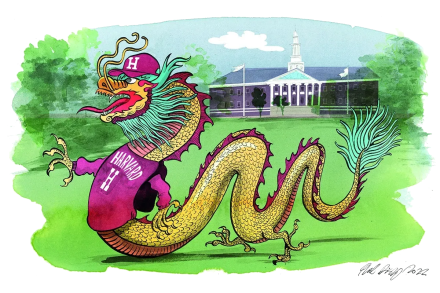
The battle to stop US universities aiding Chinese repression

It goes by an innocuous name – “Integrated Joint Operations Platform” (IJOP) – but it’s one of the most sinister components of China’s surveillance state, managing what has been described as a genocide against the Uighurs. The IJOP combines multiple systems of repression – location, messages, contacts, social media and other data from phones, together with information from checkpoints, cameras and biometric records. It then flags “suspicious” individuals for detention and forced labor. Now leading US universities have been accused of extensive collaboration with Chinese laboratories which develop technology that may be deployed or adapted for use in this system.

China’s slow but sure infiltration of America

As it becomes clearer that China and the US have entered a new Cold War, Beijing’s spy operations have grown more flagrant and provocative. Whether it be flying spy balloons, buying farmland near US military bases or even establishing a secret police station in New York City, China is slowly but surely infiltrating the US. In February 2023, a US fighter jet shot down a Chinese spy balloon over the Atlantic. The balloon crossed into US airspace over Alaska in late January before passing through Canada and into Montana. While the balloon was able to transmit information back to Beijing in real time, CNN reports the government doesn’t know exactly what intelligence was gathered.

xi jinping wang huning wargame militarizing IP china

Boris Johnson undersold his security review

From our UK edition

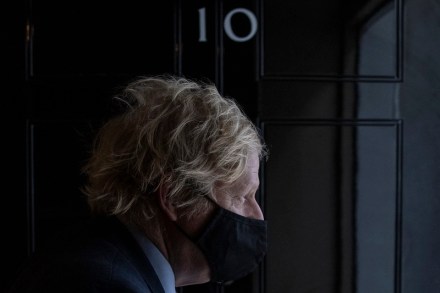
It was the political equivalent of Halley's comet. On Tuesday, Boris Johnson underestimated his own achievement. He claimed that the review of defence, security and foreign policy was the most wide-ranging study of those topics since the end of the Cold War. That was being too modest. It is the most important contribution since the Duncan Sandys Defence White Paper in 1957, which set out Britain's strategy for the Cold War: rethinking and re-organising our capabilities and commitments in order to contain and counter the Russian threat. But the latest review is even more radical. The Sandys paper rested on one assumption which is, alas, no longer true: that Britain was a superpower – if not a full member of the Big Three, still clocking in at two and a half.

Putin is finally waking up to Russia’s climate change problem

From our UK edition

The snow is falling in Moscow, but that is after the warmest autumn there on record. Meanwhile, perhaps reflecting that with the arrival of vaccines, there is at least the prospect of an end to the Covid-19 crisis, the climate change debate is rekindling – and with a particular geopolitical angle. Much of the conventional wisdom is that it is a perverse boon to Russia. Representative of this perspective, for example, has been a recent study that led the New York Times to predict that Moscow will ‘win the climate crisis’ – while its partner, ProPublica, warned that ‘Russia could dominate a warming world.’ Stirring stuff, and no doubt music to Vladimir Putin’s ears.

Welcome to authoritarian Hong Kong

From our UK edition

The national security law in Hong Kong has been passed for just over a month, but the scope of Beijing's plans are now clear. This is a constitutional coup. The safeguards which have historically defended human rights in Hong Kong have been shattered. Rule of law has been replaced with rule by law – and the Communist Party's word is law. Thursday 30 July brought home the reality of the new status quo. Hong Kongers woke up to the news that four young people aged between 16 and 21 years old – representing a small group of students who campaigned for Hong Kong independence last year – heard a midnight knock on the door and were arrested. Their crime? Posting on social media, or ‘organising and inciting secession’ in the new dystopian Hong Kong.

Has France been naive in its handling of Huawei?

From our UK edition

The controversy over the UK’s use of Huawei equipment in its 5G network has not abated, despite the government’s announcement that the Chinese manufacturer’s equipment will be stripped from the network by 2027. Conservative MPs continue to be unsatisfied by this half-way house, claiming that Britain will remain vulnerable to ‘back-door’ espionage by the Chinese state. They carry on threatening the government with an embarrassing, albeit symbolic, rebellion. But it is no secret that the real pressure to abandon Huawei equipment comes principally, and forcefully, from the UK’s ‘Five Eyes’ partners. The ‘Five Eyes’ network dates back to the Second World War and comprises the UK, the USA, Canada, Australia and New Zealand.