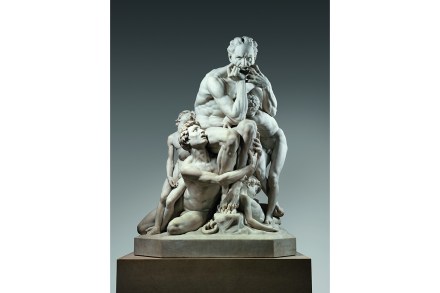
Sculpture

How to succeed in sculpture (without being a man)

From our UK edition

Whee-ooh-whee ya-ya-yang skrittle-skrittle skreeeek… Is it a space pod bearing aliens from Mars? No, it’s a podcast featuring aliens from Venus: women sculptors. If the intro music to Sculpting Lives: Women & Sculpture sounds like Dr Who, its two jolly presenters — Jo Baring, director of the Ingram Collection of Modern British & Contemporary Art, and Sarah Turner, deputy director for research at the Paul Mellon Centre for British Art — come across as younger, slimmer, artier versions of the Two Fat Ladies. ‘Jo can talk about Liz Frink’s work until the cows come home,’ Sarah informs us at one point before warning Jo: ‘You’re going to have to convince me a little bit.


Mother nature is finally getting the art she deserves

From our UK edition

I guess that few would currently dispute that the world is in crisis. I’m not talking about Covid-19. Nor am I primarily addressing the issues arising from the 36 billion tonnes of carbon that the human project sends into our atmosphere every year. Climate chaos is a part of the issue, but I’m thinking principally of those things that most impact upon the biosphere as an ongoing live enterprise.

The human clay

This article is in The Spectator’s March 2020 US edition. Subscribe here.The topics in The Necessity of Sculpture emerged randomly, thrown off by successive exhibition calendars and coming to range in time and place from ancient Mesopotamia to 21st-century Manhattan. As I made the selections, what began to take shape, beyond a conventional anthology, was a synoptic history of the art form. The title is a belated riposte to Ad Reinhardt’s famous dismissal, in around 1960, of sculpture as ‘something you bump into when you back up to look at a painting’.

sculpture

The insufferable wokeness of public art

In the middle of the 20th century, the Central Intelligence Agency executed a commendable troll against the American left. Long rumored to be a joke, documents released in the 1990s revealed that during the Cold War the CIA secretly funded and promoted some of America’s biggest contemporary artists without the knowledge of the artists themselves. It was art as weapon. The US aimed to showcase the intellectual freedom and creative superiority of Western, capitalist societies against the drab, inhibited propagandist art of the Soviet Union by broadcasting this wildly inventive style in vogue at the time. The CIA propped up artists like Jackson Pollock, Robert Motherwell, Willem de Kooning and Mark Rothko.

public art