Sculpture

A dreamy, if overly ambitious show: Silk Roads, at the British Museum, reviewed

From our UK edition

Towards the end of the British Museum’s Silk Roads show, there is a selection of treasures found in England. Among them is a copper flagon made in Syria and buried in Essex in the late 500s. It is believed that the flagon belonged to an English mercenary who went to fight for the Byzantines against the Sassanians in the 570s. The flagon’s looping handle would have held it tight to a saddle, so perhaps it came to England attached to the warrior’s horse as he rode home from his adventures in the East. There are many spectacular objects in this exhibition. Very many If objects are to inspire more than awe in us, we also need a handle.

How a single year in Florence changed art forever

From our UK edition

The story goes that one day early in the 16th century Leonardo da Vinci was strolling through Florence with a friend. Near the Ponte Santa Trinita they came across a group of gentlemen disputing a point in Dante’s Divine Comedy. Seeing Leonardo, they asked him to explain the passage. At that same moment, Michelangelo Buonarroti also happened to hurry by, and Leonardo beckoned the sculptor over to interpret it for them. But Michelangelo, feeling he was being mocked, rounded on Leonardo: ‘Explain it yourself, you who tried to cast a horse in bronze, and couldn’t do it, and had to abandon the project in shame!’ With that he turned on his heels and stalked off, leaving Leonardo standing in the street embarrassed and furious.

The art inspired by the 1924 Paris Olympics was a very mixed bag

From our UK edition

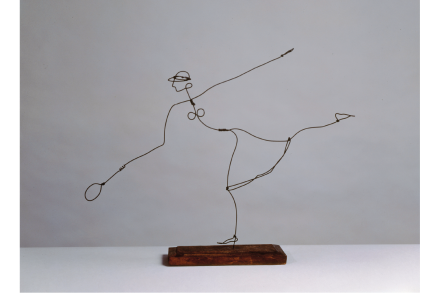
George Orwell took a dim view of competitive sport; he found the idea that ‘running, jumping and kicking a ball are tests of national virtue’ absurd. ‘Serious sport has nothing to do with fair play,’ he wrote in Tribune after scuffles broke out during the Russian Dynamo football team’s 1945 tour. ‘It is bound up with hatred, jealousy, boastfulness, disregard of all rules and sadistic pleasure in witnessing violence: in other words it is war without the shooting.’ Suzanne Lenglen’s loose-fitting knee-length tennis dresses inspired the new ‘style sportif’ of Coco Chanel Baron Pierre de Coubertin, visionary founder of the modern Olympics, took the opposite view: to him the three words ‘Faster, Higher, Stronger’ represented ‘a programme of moral beauty’.

Why has Leonora Carrington still not had a big exhibition?

From our UK edition

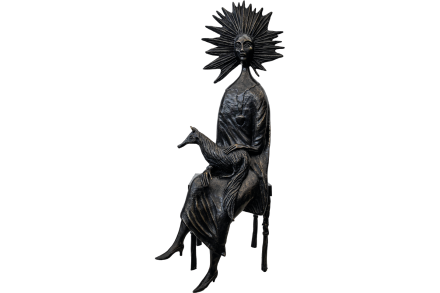
‘It had nothing to endow it with the title of studio at all,’ was Edward James’s first impression of Leonora Carrington’s Mexico City workspace in 1946. ‘The place was combined kitchen, nursery, bedroom, kennel and junk store. The disorder was apocalyptic: the appurtenances of the poorest. My hopes and expectations began to swell.’ Carrington blended Egpytian, Mayan, Mesopotamian and Celtic legends learned at her nanny’s knee Over six decades in the creative chaos of this house on Calle Chihuahua, Carrington would paint some of her best-known works and write her quirky serio-comic novella The Hearing Trumpet, which is narrated by a 92-year-old woman.

This British surrealist is a revelation

From our UK edition

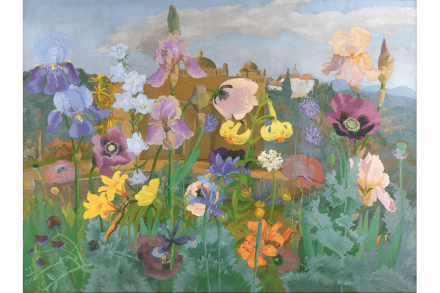
When the 15-year-old Maggi Hambling arrived at Benton End in Hadleigh, Suffolk – home of the East Anglian School of Painting and Drawing – with two paintings to show the school’s founders, Cedric Morris and Arthur Lett-Haines, she was ushered into the dining room where Morris was having dinner. He made some criticisms but was very encouraging, then Lett-Haines came in and made the opposite criticisms but was encouraging too. As teachers, both believed in bringing out a student’s native talent – but as artists and characters, says Hambling: ‘They were polar opposites.

How a market town in Hampshire shaped Peggy Guggenheim

From our UK edition

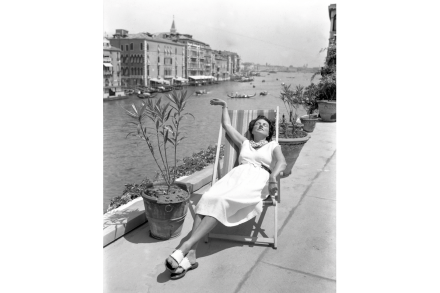
On 24 April 1937 Marguerite Guggenheim – known as Peggy – of Yew Tree Cottage, Hurst was booked by a certain PC Dore for driving an unlicensed vehicle through nearby Petersfield. What was the founder of the famous Venice museum doing in a market town in Hampshire? It’s a long story, vividly told in an exhibition marking the 25th anniversary of the opening of Petersfield Museum on the site of the former police station and courthouse where she paid her £1 fine. ‘Peggy,’ said a friend, ‘is absolutely revolting about sex. Delicacy is unknown to her’ In the 1930s the Jewish-American heiress, who had lost her father Benjamin on the Titanic, was rattling around Europe with a fast crowd of writers and artists.

Beguiling: Yinka Shonibare, at the Serpentine Galleries, reviewed

From our UK edition

More than seven centuries ago, the medieval cartographer Richard of Haldingham created Hereford Cathedral’s Mappa Mundi; I say ‘created’ because when he drew his map it was largely a work of the imagination. Its terra incognita is populated with bizarre creatures born of the fever dreams of early travel writers: his Africa is inhabited by Monocules, one-eyed, one-legged men who use their single foot as a parasol, and his Asia is roamed by the Bonnacon, a bull-like creature with inward-curling horns whose only defence is his projectile faeces.

The latest Venice Biennale is ideologically and aesthetically bankrupt 

From our UK edition

Last week’s opening of the 60th edition of the Venice Biennale marks a watershed for the art world. In much of the festival’s gigantic central exhibition, curated by the Brazilian museum director Adriano Pedrosa, as well as in many of the dozens of independently organised national pavilions and countless collateral events, it more obviously than ever before didn’t so much matter what was on show, but why. The politics of visibility and representation has been eating away at the arts for at least a decade, most recently under the banner of ‘decolonisation’. The now nearly complete abdication of aesthetic criteria in favour of a decolonial organising principle is here finally exposed as a wholly inadequate rationale for presenting contemporary art.

Winning: When Forms Come Alive, at the Hayward, reviewed

From our UK edition

In case you didn’t know, we live in a ‘post-minimalist’ age, sculpturally speaking. Not a maximalist age, though some of the works in the Hayward’s new sculpture show are huge – an age of revolution against neatness. Who’s to blame for this call to disorder? Women. The two prime movers of this movement, if you can call it that, could not be more different, but both rebelled against minimalist geometry. As a student at Black Mountain College in the late 1940s, Ruth Asawa travelled to Toluca, Mexico, and saw villagers looping wire to make baskets for eggs. It struck her as a way of drawing in three dimensions and later, after becoming a mother of six, of working from home.

The spare, graceful, revelatory sculptures of Kim Lim

From our UK edition

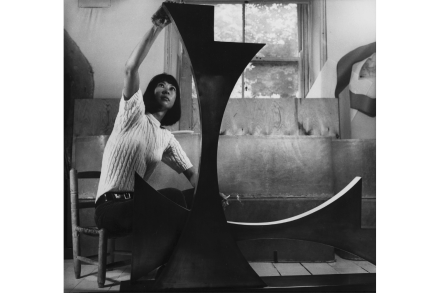
In 1989, the sculptor Lorna Green circulated a questionnaire among 320 of her female peers about their experiences as women in a male-dominated field; three years ago she sent a follow-up survey. The work of 29 respondents to both is currently on show in an instructive exhibition, If Not Now, When? Generations of Women in Sculpture in Britain 1960-2023 at the Saatchi Gallery (until 22 January). They include Kim Lim (1936-97), who is the subject of an overdue retrospective at the Hepworth Wakefield.

How Philip Guston became a hero to a new generation of figurative painters

From our UK edition

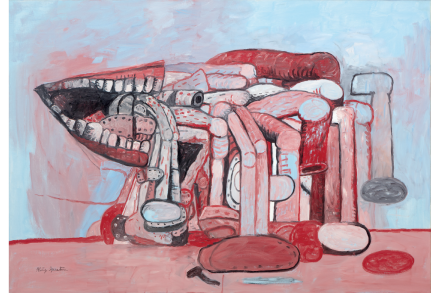
Why do painters represent things? There was a time when the answers seemed obvious. Art glorified power, earthly and divine, and provided moral exemplars of how to behave – in the case of sacred paintings – or how not to in the case of profane ones. When modernism threw all that into doubt, the picture frame remained. The question for modern artists was, what to put in it? Fifteen years of non-representational painting prompted Guston to question its usefulness For the first decade of his career, Philip Guston had an old-fashioned answer: the murals he painted in the style of Italian Renaissance frescoes in the US and Mexico during the 1930s promoted ideals of social justice.

The brilliant, underappreciated work of Germaine Richier

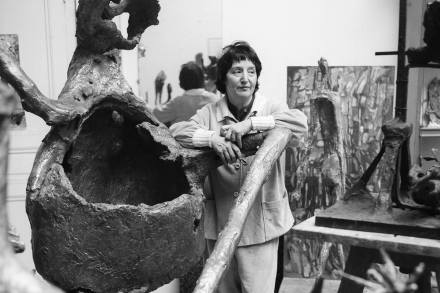
In the spring of 1951, there was a commotion in Assy, a remote part of the Alps where France and Italy are only separated by mountains and valleys. In a town normally famed for its tuberculosis-healing properties and its winter sports, a debate about sacred art was beginning to make itself heard. After nine years of construction, the Église Notre-Dame de Toute Grâce du Plateau d’Assy was finally finished in 1946. A low, squat building, designed by architect Maurice Novarina and fashioned out of sandstone, it looked more like a chalet than a church.

Richier

Greg Lansky: the artist with a scandalous past

St. Paul points out that “all have sinned and fall short of the glory of God.” Despite that inclusive “all,” human nature inclines toward exclusion of the “other,” which is a very difficult thing for many of us to overcome — me included. Enter Greg Lansky, pornographic-film producer. Perhaps no one in recent memory has made a greater profit from the highly lucrative commerce paradoxically known as “adult entertainment” than Parisian-born entrepreneur Lansky. Within the span of about fifteen years, he went from dropping out of school and having few realistic prospects to making fortunes from adult media, partying with celebrities and receiving glowing profiles in magazines such as Forbes, GQ and Rolling Stone.

greg lansky

Biomorphic forms that tempt the viewer to cop a feel: Maria Bartuszova, at Tate Modern, reviewed

From our UK edition

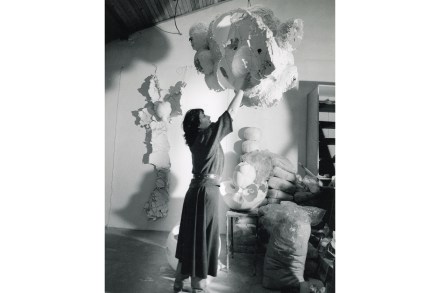
Art is a fundamentally childish activity: painters dream up images and sculptors play with stuff. It was while playing with an inflatable ball with her young daughter in the early 1960s that Maria Bartuszova had the idea of filling balloons with liquid plaster instead of air. The inspiration fed her muse for 30 years, seeding the mixed crop of biomorphic forms currently filling five rooms at Tate Modern. Trained in ceramics at Prague Academy of Arts under communism, Bartuszova turned to plaster after moving with her sculptor husband Juraj Bartusz to the industrial city of Kosice, now in Slovakia, in 1963. Plaster was cheap and plentiful: a 1987 photo in this exhibition, the first to bring her work to a British audience, shows her with stacks of sacks of it in the studio.

The uncomfortable lessons of the new Fourth Plinth statues

From our UK edition

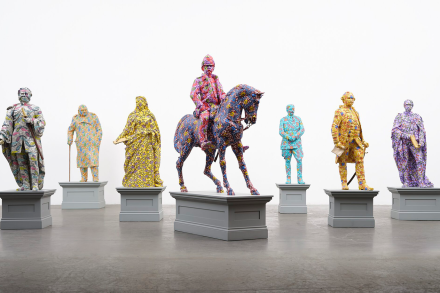
The Revd John Chilembwe – whose statue now adorns Trafalgar Square – is notorious for the church service he conducted beneath the severed head of William Jervis Livingstone, a Scottish plantation manager with a reputation for mistreating his workers. The night before, Chilembwe’s followers had broken into his house and chased him from room to room as he tried to fend them off with an unloaded rifle. Eventually, they pinned him down and decapitated him in front of his wife and children. It was the most significant action in the 1915 Chilembwe rebellion, a small, short-lived affair in an obscure corner of the British Empire today known as Malawi. It says a lot about our times that a figure with Chilembwe’s record should be vaunted with a public statue.

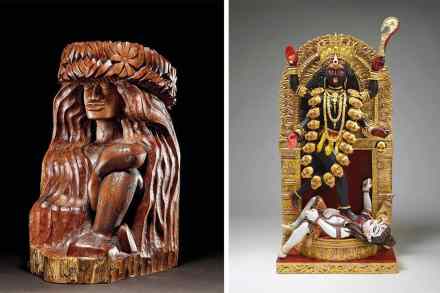
A mess: British Museum’s Feminine Power – the Divine to the Demonic reviewed

From our UK edition

The point at which the heart sinks in this exhibition is, unfortunately, right at the outset. That’s where we meet the five commentators that the British Museum has invited to respond to the objects and ideas in the exhibition. But only Mary Beard knows her subject. There’s Bonnie Greer, playwright and critic; Elizabeth Day, podcaster and novelist; Rabia Siddique, humanitarian (that’s a calling, it seems) and barrister; and Deborah Frances-White, podcaster and stand-up comedian. Each presides over part of the exhibition, which is ordered by categories such as Passion and Desire and Magic and Malice. It’s an odd exercise.

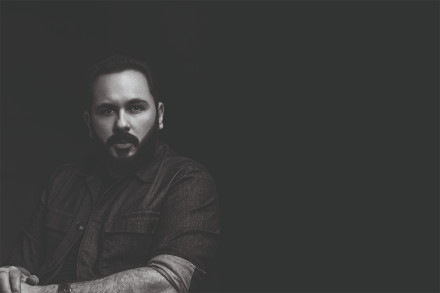
The jewel-bright, mesmerisingly detailed pictures by Raqib Shaw are a revelation

From our UK edition

Describing the Venice Biennale, like pinning down the city itself, is a practical impossibility. There is just too much of it, tucked away, scattered throughout the maze of alleyways and canals. And the art is no longer confined to the Biennale’s national pavilions in the gardens. It has spread, via dozens of tagalong shows cashing in on the presence of the global art world, to a motley array of disused palaces, warehouses, churches, at least one shop and a hidden garden loggia. A good way to sample it is just to follow your fancy: step through an ancient doorway and find out what is on the other side. That’s how I came across a little show by the Swiss artist Ugo Rondinone in the venerable Scuola Grande di San Giovanni Evangelista.

Valuable reassessment of British art: Barbican’s Postwar Modern reviewed

From our UK edition

Notoriously, the past is another country: what’s more, it’s a terrain for which the guidebooks need constantly to be rewritten. That’s one attraction of the new exhibition Postwar Modern at the Barbican. It’s a survey of what might seem all-too-familiar territory: British art in the two decades that followed VE day. Yet it succeeds in revealing numerous half-forgotten or undervalued movements and people, the good, the bad and – most intriguingly – candidates for reassessment. The decades that followed the second world war were marked by dreary austerity, perhaps explaining the tendency for the art to be coloured oatmeal, beige, grey and brown. But this was also a time of dawning hope, increasing prosperity and growing optimism.

Beautiful and revealing: The Three Pietàs of Michelangelo, at the Museo dell’Opera del Duomo, Florence, reviewed

From our UK edition

The room is immersed in semi-darkness. Light filters down from above, glistening on polished marble as if it were flesh. This is the installation for Le Tre Pietà, a remarkable micro-exhibition that has just opened at the Museo dell’Opera del Duomo in Florence. It is low in quantity, containing just three works. But stratospherically high in quality, since it comprises Michelangelo’s three versions of the Pietà – that is, the Madonna mourning the dead Christ. He carved these over almost 70 years: one in his early twenties, the next in his seventies, the last in his eighties. Admittedly, the first and the last are present only in a rather old-fashioned virtual form: high-quality plaster casts.

Saudi Arabia’s burgeoning art scene

From our UK edition

A little more than a century ago, a charismatic British army captain called T.E. Lawrence and fearsome Bedouin warriors swept through the sublime canyons around the desert city of Al-’Ula where I stroll today. They blew up the Hejaz railway, built to transport hajjis from Damascus towards Mecca but repurposed during the first world war by Turks to ferry munitions and troops. Such was the 1916-18 Arab Revolt that threw off Arabia’s Ottoman yoke. Today a very different kind of Arab uprising is sweeping through Al-’Ula. The canyons resonate not with bombs but with art. Dubai-based Zeinab Alhashemi has constructed boulders made from camel hides for a piece called ‘Camouflage 2.0’.