Scottish referendum

The surprise winners from the referendum? Scotland. Politics. Big ideas are back at last

From our UK edition

[audioplayer src="http://traffic.libsyn.com/spectator/TheViewFrom22_4_Sept_2014_v4.mp3" title="Isabel Hardman, Fraser Nelson and Hamish Macdonell discuss the referendum" startat=700] Listen [/audioplayer]Let us take a trip to America in 1976. The unelected incumbent president, Gerald Ford, is being challenged for the Republican party’s nomination by Ronald Reagan — and does not take it seriously. Sure, Reagan may have served as governor of California but, still, come on, is this Grand Old Party really going to choose a two-bit B-movie actor as its standard-bearer? And isn’t he the candidate of fruitcakes and loonies? Say what you will about Gerry Ford but you know where you stand with him. But not everyone sees it that way. Reagan is winning in places he shouldn’t have a chance.
Jim Murphy laments the ‘energy of nationalism’. Where’s the energy of unionism?

From our UK edition

“It’s part of the energy of nationalism,” sighed Jim Murphy on Newsnight. “They’re never knocked down.” He’s right, and that that is why the Scottish referendum polls show the gap between the two narrowing - YouGov has that gap at 6 points, down from 22 last month. If even Labour’s Jim Murphy accepts that the momentum is with the nationalists – and says that the momentum is with them because they are nationalists – then it’s a rather depressing state of affairs. Where is the passion and energy of the campaign to save the United Kingdom?

Scottish referendum: ‘no’ lead falls to 6 points, from 22 points last month

From our UK edition

Tonight brings a reminder that the Union is in real danger. A new YouGov poll has the No camp’s lead in the Scottish referendum down to just six points. Just a month ago, No had a 22 point lead with You Gov. This poll is particularly striking as YouGov’s polling has not been as favourable to Yes as that of other pollsters; this is Yes’s highest ever score with YouGov. Particularly worrying is that undecided voters are going Yes by a margin of two to one. If this poll is right about how much the gap has narrowed and the undecideds continue to break in the same way, then this referendum could come down to who has the better ground operation. It is, obviously, only those who live in Scotland who have a vote in this referendum.

Andrew Marr’s diary: Seeing shadows of Syria in Limousin’s ghost village

From our UK edition

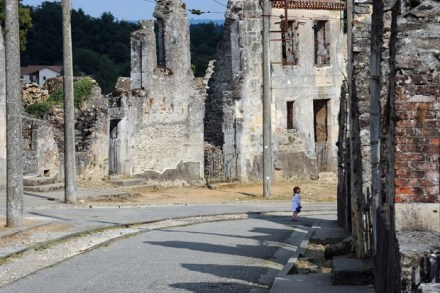
No, no, no, you don’t want a house abroad — the paperwork, the taxes, the piping, the cost of the pool. What you want are good, kind, generous friends with houses abroad. That’s what we’ve enjoyed this summer, meeting scores of interesting new people and being looked after by our best friends. We pay them back with wine, little presents and London hospitality. The only downside to ‘les vacances ligging’ is having to book extra seats home on Ryanair for our vastly swollen and moaning livers. The most striking thing we did in France was to visit Oradour-sur-Glane, the Limousin village where on 10 June 1944 a Panzer division of the SS massacred 642 men, women and children as a reprisal operation against the Resistance.

The SNP’s ‘cybernats’ are a modern political scourge – with the zeal of converts

From our UK edition

The first ‘yes’ campaign volunteer knocked on my door towards the end of last year. She was a member of the Scottish Socialist Party. I glanced at her dog-eared tally sheet — in my old block of 40 flats, only three residents had said they would vote no. In this neglected pocket of Edinburgh there are men who roll up their tracksuit bottoms to show off their prison tags. It is made up of decaying towers and pebble-dashed tenements. The people here are going to vote for change. Who can blame them? Now that I have moved to a more genteel suburb outside of the city, a further three yes activists have attempted doorstep conversions. I have heard appeals to my head, my heart and my wallet from nationalists who are as dogged as Jehovah’s Witnesses.

Europe’s leaders worship Mario Draghi. They should listen to him instead

From our UK edition

European Central Bank President Mario Draghi secured a place in history by his demonstration, on 26 July 2012, of the power of words in a financial crisis. Not long in office, he had already shown willingness to act firmly, averting a liquidity crunch by providing three-year lending facilities for European banks. That day, he told a conference in London: ‘Within our mandate, the ECB is ready to do whatever it takes to preserve the euro. And believe me, it will be enough.’ While the rest of the speech was an opaque metaphor about the euro as a bumblebee — ‘a mystery of nature because it shouldn’t fly but instead it does’ — ‘whatever it takes’ was clear enough to steady the bond market and ease borrowing costs of eurozone governments.

View from 22 podcast special: Scottish independence debate round two

From our UK edition

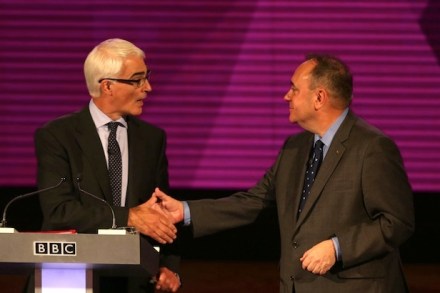
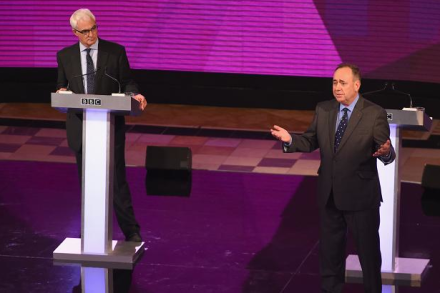
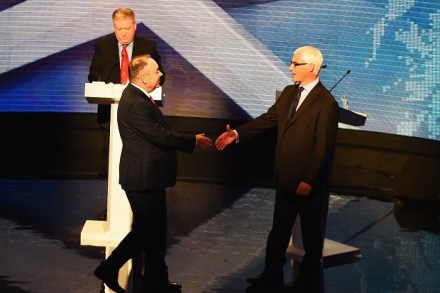
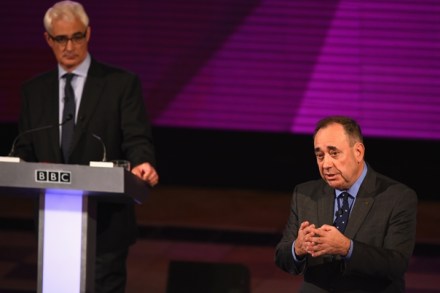
In this View from 22 podcast special, Alex Massie, Isabel Hardman and Fraser Nelson analyse this evening's going on in Glasgow, as Alex Salmond and Alistair Darling took part in the second round of their independence debates. The polls released immediately after the debate from The Guardian/ICM has Salmond the clear winner on 79%, with Darling on just 21% of the vote. But are the Yes campaigners right to be 'cock-a-hoop' about tonight, or will things appear differently in a few days when the dust has settled?

Salmond vs Darling: round two – live

From our UK edition

Welcome to tonight’s liveblog of the BBC debate between Alex Salmond and Alistair Darling at the Kelvingrove Art Gallery in Glasgow. 00:05 In this View from 22 podcast special, Isabel Hardman, Alex Massie and Fraser Nelson discuss what they made of tonight's debate. listen to ‘Scottish Independence Debate special – with Isabel Hardman, Alex Massie and Fraser Nelson’ on Audioboo PS – in the podcast above, Fraser asks Alex Massie what he would choose as a headline if he were editor of a Scottish national newspaper.

The Yes camp is gaining ground in the Scottish independence referendum

From our UK edition

The Yes camp is closing the gap. That is the clear message from two new opinion polls published this morning. Both polls – ICM for Scotland on Sunday and Panelbase for the Sunday Herald – show that the undecideds are, at last, starting to make up their minds. But in doing so, the undecideds are going to Yes in greater numbers than they are to No. [datawrapper chart="http://static.spectator.co.uk/zNI3m/index.html"] That trend is clear, it is helping Yes to close the gap but it has not, as yet, given Yes anything like the support it needs to win the referendum in a month’s time. In the ICM poll, the undecideds are down from 21 per cent in July to just 14 per cent now.

Kriss Akabusi and friends save the union

From our UK edition

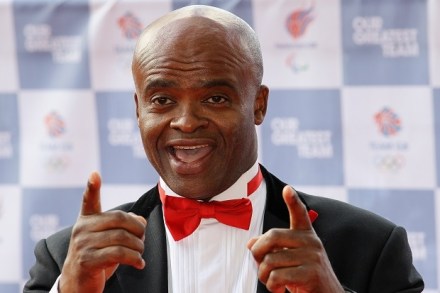
Forget Alistair Darling’s debate victory. Forget the lack of Salmond’s currency ‘Plan B’. Forget the tonne of Scottish ink that savaged Salmond in print this morning (see Alex Massie in today’s Spectator for the best example). No, historians will pin-point today as the moment that Kriss Akabusi saved the union. Awooga, awooga. It has become custom in any public debate these days to draw up a tiresome list of public figures who back one’s cause. ‘Stay Together’, which launched today, and includes celebrities who do not even have a vote in Scotland’s future, is classic of the genre. Akabusi is joined by the likes of Helena Bonham Carter, Bryan Ferry, Parky, a brace of Snows, Mitchell&Webb, Andy McNab and Tani Grey Thompson.

Alex Salmond fails to land the blow he desperately needed

From our UK edition

Many people, I’m sure, will already be calling the first TV debate in Alistair Darling’s favour. That is a fair point to make but it was not quite as straightforward as that. I think a truer reflection would be this: Darling won on substance but lost on style, while Alex Salmond won on style but lost on substance. That may seem a bit pedantic, but it matters. First, the question of style: Salmond was – as we knew he would be – calm, composed and articulate. Darling was – as many in his camp feared he would be – anxious, shouty and irritable. The former Chancellor looked nervous. He had trouble getting his message across. Indeed, even his eyebrows kept darting up and down as if constantly looking for a way out.

Time is running out for Alex Salmond and the Nationalists

From our UK edition

Nicola Sturgeon, the SNP deputy leader, is busy claiming that post the Glasgow games the momentum will be with the Yes side in the referendum. But this claim is contradicted by the Survation poll in today’s Mail on Sunday which shows support for Yes marginally down on last month. The Yes campaign’s last best chance to gain the ‘big mo’ that it needs comes in Tuesday night’s debate between Alex Salmond and Alistair Darling. Alex has written about why he doesn’t think this debate will be a game changer, but with a million Scots expected to tune in, Salmond isn’t going to have a better opportunity to try and turn things round. But the dilemma for Salmond is how to approach this debate.

David Cameron can’t afford any more slip-ups

From our UK edition

From now until September 18th, the Scottish referendum will rightly dominate national politics. Tuesday night's debate between Alistair Darling and Alex Salmond is the Yes campaign's last and best chance to gather the momentum it needs to pull off an improbable victory. But, as British Election Survey data shows, the result of the referendum is not a foregone conclusion. If the ‘undecideds’ keep breaking the same way, the result will be No 53.6 per cent, Yes 44.6 per cent. This is too close for comfort. But if Scotland votes No, attention will quickly shift to next May's UK election. It is a sign of how speeded-up our politics has become that David Cameron's political career could be over two years before his 50th birthday.

Why won’t the Salmond / Darling debate be shown in England?

From our UK edition

The future of Britain is at stake, but you wouldn't know it from how ITV is behaving. On Tuesday, STV will broadcast a live debate between Alex Salmond and the leader of the No campaign, Alistair Darling. This promises to be one of the pivotal moments in the referendum campaign.  But, depressingly, the only way anyone outside of Scotland will be able to watch it is on the internet via STV Player. The failure to put it on ITV across the whole of the UK reflects the failure to understand that, while only the residents of Scotland may have vote in the independence referendum, the result will affect all of us. If Scotland votes for independence, the rest of the UK will be much diminished. It won't be Great Britain anymore but little Britain.

There’s no contradiction between cheering on Scotland and voting for the union

From our UK edition

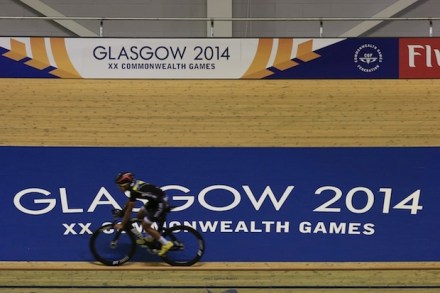
In choosing this September for the Scottish referendum on independence, the SNP was presumably hoping Scots voters would be basking in the glory of a successful Commonwealth Games. There is every reason to hope that the games, which opened in Glasgow this week, will emulate the London Olympics for organisational skill and, moreover, will help to sell an often-maligned city to the world. But why does it follow that Scotland needs to be independent of the UK to organise and enjoy such an event? If these games had been marred by pettifogging bureaucracy or financial constraints imposed by Whitehall, or if someone in London had trampled on Glasgow’s bid and put forward London or Birmingham instead, there would be every reason for Scots to feel aggrieved.

Today’s poll shows Alex Salmond running out of time

From our UK edition

There really isn’t much time left. From today, there are just nine and a half weeks until we go to the polls in the independence referendum. Also today, we have the latest ICM poll for Scotland on Sunday. The main figures are: Yes 34 per cent (down two points), No 45 per cent (up two) and don’t know 21 per cent (unchanged). If the don’t knows are excluded, the figures are Yes 43 per cent (down two), No 57 per cent (up two). [datawrapper chart="http://static.spectator.co.uk/Z2duc/index.html"] Suddenly, that nine-and-a-half week window looks pretty small for the Yes camp. It means that Alex Salmond and his colleagues have just 66 days to overturn what has become a stubbornly immoveable lead for Better Together. [datawrapper chart="http://static.spectator.co.

Spectator letters: A surgeon writes on assisted dying, and an estate agent answers Harry Mount

From our UK edition

Real help for those in pain Sir: The fickleness of existence is exemplified by the fact that being Tony Blair’s ex-flatmate puts you in the position of further eroding the moral fabric of the nation without ever having had stood for office. An advert for Charlie Falconer’s Assisted Dying Bill is rather cynically placed opposite Jenny McCartney’s nuanced examination of the implications of this potential legislation (‘Terminally confused’, 5 July). Among other points, Ms McCartney quite correctly reprises the ‘slippery slope’ argument, which in the case of legalised abortion turned out to have been prophetic. One of her issues is the involvement of medical staff.

Spectator letters: Press regulation, heroic Bulgarians and the case for Scotch on the rocks

From our UK edition

Beyond the law Sir: In your leading article of 28 June you make the point that the hacking trial demonstrates why political oversight of press regulation, not press regulation by politicians, would be an unnecessary ‘draconian step’ because ‘hacking is already against the law’. Later you compare the illegal but honourable behaviour of Andy Coulson with that of Damian McBride, who ‘broke no law but behaved criminally’. In doing so you weaken the earlier argument. Regulation of the press should not solely be focused on illegal activity; rather it is to ensure that the press does not behave in a way analogous to that you criticise McBride for.

A disunited kingdom would be a mess – it needs to be kept together

From our UK edition

If Scotland did leave, it would be a disaster for the rump UK that would be left behind, I argue in the magazine this week. We would go from Great Britain to little Britain. Every time the Prime Minister of the rUK raised his voice on the world stage, he would be met by a mocking chorus of ‘you couldn't even keep your own country together’. Beyond this, there are the slew of practical problems that Scottish independence would raise. Where would Trident be based? In the best case scenario you would end up with the submarines in Devon while the actual nuclear weapons were stored three hours’ drive away in Berskhire. In the worst case scenario, the successor state would either have to unilaterally disarm or ask the French to store the weapons for it.