Scotland

Whoever wins the SNP leadership race, independence has already lost

From our UK edition

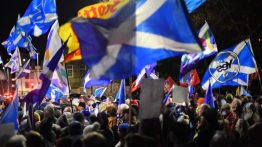
‘Now is not the time,’ successive Tory prime ministers told Nicola Sturgeon following her persistent calls for another independence referendum. It’s simply too soon after the last one, they said. In August, the Scottish secretary, Alister Jack, caused fury in nationalist circles after he stated there would need to be at least 60 per cent support for independence in opinion polls before the UK government would respond to further Section 30 referendum requests. Strange, then, that this Tory message appears to be exactly what the SNP leadership candidates were parroting in Tuesday night’s now infamous STV debate.

Is Humza Yousaf’s campaign starting to sink?

From our UK edition

The SNP leadership has turned into open civil war. Alex Salmond has shafted the frontrunner Humza Yousaf who tried to shaft Kate Forbes, who was, in turn, shafted by Nicola Sturgeon. No wonder long-suffering deputy First Minister, John Swinney, has resigned.  Swinney’s departure came on the day Salmond torpedoed Yousaf, Sturgeon’s chosen successor, by claiming he had skipped Holyrood's landmark gay marriage vote in 2014 due to 'religious pressure'. Yousaf says his ‘recollection is different’, but his position is now untenable. His account is contradicted by the minister who was in charge of the 2014 equal marriage vote, Alex Neil, and now the then first minister, Salmond.

Is Ash Regan merely Alex Salmond in disguise?

From our UK edition

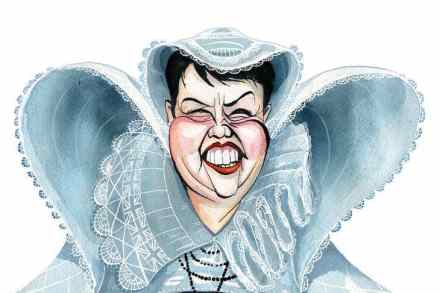
Is Ash Regan the dark horse in the SNP leadership race? Kate Forbes and Humza Yousaf are the frontrunners, yet in a race full of surprises, Regan's chances should not be ruled out. The 48-year-old MSP for Edinburgh Eastern resigned in protest over gender self ID. Now she has returned as the candidate for change from the Nicola Sturgeon era – but might her ties to another former SNP leader, Alex Salmond, prove to be her undoing? Regan is clear about what went wrong for the SNP under its outgoing leader: ‘Kids in the playground can see that there have been some issues in the SNP of late,’ she says when I meet her at her campaign launch in North Queensferry in Fife. ‘Our movement has been divided for far too long by petty differences and personal agendas.

In defence of the Free Church of Scotland

From our UK edition

Recent days have shown an upsurge of interest in a small Presbyterian church (the Free Church of Scotland, colloquially referred to as ‘the Wee Frees’) because one of its members, Kate Forbes, is running to replace Nicola Sturgeon as first minister. As a former Moderator of that Church, an honorary role as an ambassador for the movement, it is fascinating, amusing and not a little frustrating for me to watch the ‘expert’ commentators get it so wrong, so often, when they discuss it.  In the past few days, some have publicly wondered if Forbes believes in dinosaurs; if she will be able to do her job on Sundays; and even if she will ban homosexuality.

The SNP leadership race has turned into the mother of all culture wars

From our UK edition

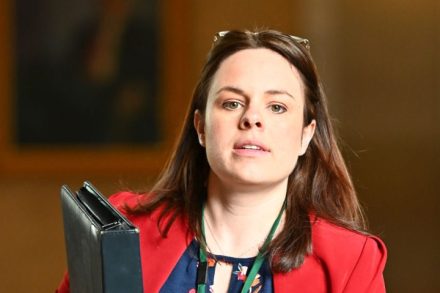
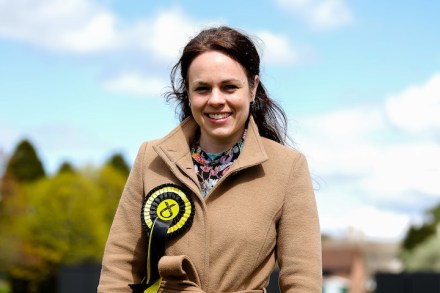
Bring back Nicola Sturgeon. The race to replace her as SNP leader and first minister has turned into the mother of all culture wars. Who would have thought that the party of independence would start tearing itself apart over a law on same sex marriage that was passed nearly a decade ago? The early front runner, Kate Forbes, provoked fury among ‘progressive’ SNP supporters on Twitter by saying she opposes gay marriage – something everyone who knows her knew perfectly well. She is an evangelical Christian for heaven’s sake, a member of the Free Church of Scotland. Of course she opposes gay marriage. That along with having children out of wedlock and working on the sabbath.

Why the Tories fear Kate Forbes

From our UK edition

Whenever a governing party changes leader midway through a parliament, it’s interesting to note what the main opposition makes of the contest. Specifically, which candidate they would be more comfortable to see win — and which they dread the most.  So, as the SNP begins choosing Nicola Sturgeon’s replacement as party leader and first minister, I’ve been asking Scottish Tories what they think so far. Whomever the Scottish Nationalists pick will be staring down Douglas Ross every week at First Minister’s Questions, while the Scottish Tory leader will have to update his strategy and rhetoric for a post-Sturgeon era.  So far there are two declared candidates.

Scottish schools have become places of indoctrination

From our UK edition

Nicola Sturgeon may be on her way out – but after 16 years of SNP rule, Scottish schools are still places of indoctrination. This may sound like a hyperbolic thing to say, but that’s the only conclusion you can draw when you look at what Scottish educators and the Scottish government are saying themselves.   Take the General Teaching Council for Scotland’s Standard for Headship, which sets out the professional framework for what a headteacher, teachers and schools should be all about.    You would expect such a document to be all about imparting knowledge and aspiring to teach every child as much as possible.

The SNP-Green coalition is unlikely to last the week

From our UK edition

Scottish nationalists are shell-shocked after their leader did a bunk on Wednesday. And with good reason. Nicola Sturgeon left the SNP leaderless, directionless, failing on almost every policy front – from the NHS to bottle recycling – and with a legislative time bomb in the Gender Recognition Reform Bill, which is due to go off just as their new leader is installed at the end of March. It will probably destroy the Scottish coalition well before then. Indeed, the 18-month-old union with the Scottish Greens, another of Sturgeon’s personal initiatives, is unlikely to last the week.  Attempts by pro-GRR Bill loyalists to keep the finance secretary, Kate Forbes, out of the leadership race by demonising her as a bigot on social media, have failed.

Humza Yousaf and Ash Regan launch SNP leadership bids

From our UK edition

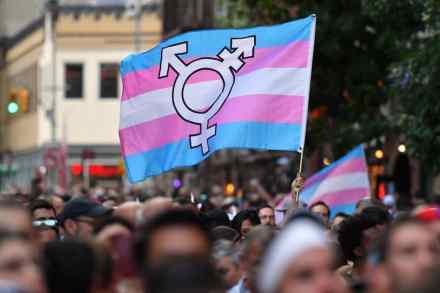
The first two candidates have declared in the race to succeed Nicola Sturgeon: Ash Regan and Humza Yousaf. The pair announced their intent in a front-page story for the Sunday Mail titled ‘Battle of the Bill: FM hopefuls go head-to-head on gender reform’. That focus reflects Regan’s major claim to fame as the only minister to resign over Sturgeon’s trans reforms back in October. In so doing, she became the first minister within the SNP to resign over government policy in 15 years. That is a testament to how united the party has been on most policy planks and suggests that the Gender Recognition Reform Bill will probably be one of the few public points of contention in this contest.

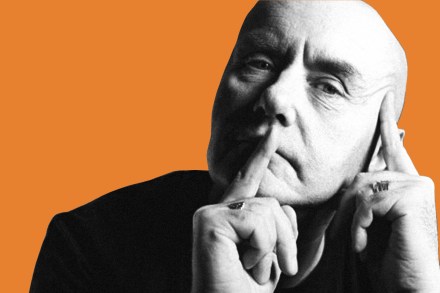
Trainspotting at thirty: an interview with Irvine Welsh

A lot of new books grow old fast. It isn’t even the fault of their material, necessarily, but their milieu. Hour by hour, the means of cultural production are accelerating at an evaporative rate. Today more than ever before, irrelevancy looms large over the shoulder of the novelist. It’s an environment within which thirty days of relevance is a feat, but thirty years? A fiction in and of itself. Yet, throughout three decades of cultural churn, the words of Irvine Welsh have remained steadfast; as culturally relevant and artistically avant-garde as the day they first hit the shelves.

Irvine Welsh

Is it time to replace Scotland’s sporting anthem?

From our UK edition

'Flower of Scotland' is the unofficial national anthem north of the border but soon enough we may never hear its like again. Jim Telfer, one of the country’s most celebrated rugby coaches, has called for the song to be dropped at sporting events in favour of an alternative that ‘shows us standing for something rather than against something as a country’. His plea has been echoed by former Scotland international Jim Aitken, who wrote to the Times dismissing the song as an ‘anti-English dirge’.  Telfer’s complaint prompted Lord McConnell, a former Labour first minister, to urge a more ‘positive’ musical number, while Scottish Tory MSP Murdo Fraser deemed the current tune too ‘jingoistic’.

Are Holyrood and Westminster heading for another Supreme Court showdown?

From our UK edition

The UK government’s threat to block Nicola Sturgeon’s Gender Recognition Reform Bill took many by surprise. The powers, under Section 35 of the Scotland Act, have never been used before. The assumption from some observers, this one included, was that this was a negotiating tactic ahead of inter-governmental discussions on the Bill’s implementation and cross-border issues that might arise. That assumption appears to be wrong. I understand that raising the spectre of Section 35 is not a negotiating tactic: ministers are seriously contemplating it and legal advice is being sought. Among ministers’ concerns are questions over passports, driving licences and public safety.

Scotland’s Gender Recognition Reform Bill is an open goal for unionists

From our UK edition

Having just squandered a quarter of a million pounds on her fruitless Supreme Court independence challenge, Nicola Sturgeon’s government could be headed back to Little George Street sooner than they might have expected. If the UK government deems the hugely controversial Gender Recognition Reform Bill unlawful, a Section 35 order blocking the legislation from going to royal assent could be invoked by Scottish Secretary Alastair Jack. This would oblige Sturgeon’s government to take the matter to court. Is this what the First Minister wants? Many have been perplexed at her stubbornness in pursuing this contentious legislation, warts and all. (She wouldn’t even countenance a few common-sense safeguarding amendments, such as not allowing sex-offenders to change sex.

The preventable death of the Scottish Tories

From our UK edition

The Ruth Davidson era is over. It has been three years since the now Baroness Davidson stood down as leader of the Scottish Tories, but the last decade of opposition politics has belonged to her. It was Davidson who parlayed opposition to independence into tactical support for the Scottish Conservatives, convincing a section of older, blue-collar Labour voters to lend her their vote to stop the SNP. In doing so, she took the Tories from third to second place at Holyrood and, in 2017, to their biggest win in a general election since the days of Margaret Thatcher. What she failed to do was make the Scottish Tories a viable party of government (a tall order at the best of times) and now the gains she made look set to be reversed.

Welcome to the Seychelles… of Scotland

From our UK edition

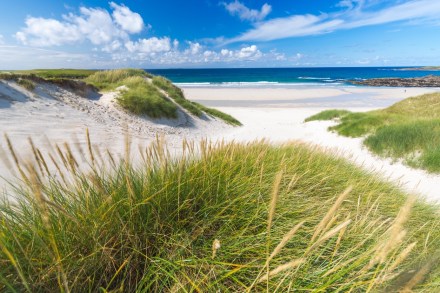
When Thailand's tourist board mistakenly used a photo of West Beach on the Isle of Berneray in Scotland to promote the tropical paradise of Kai Bae Beach, it took a British expat with a keen eye to spot the error.  But perhaps the confusion shouldn't come as a surprise. With ivory dunes tumbling down to turquoise waters and the occasional chatter of a faraway pod of dolphins, the beaches of Uist, a collection of islands in the Outer Hebrides, could easily be mistaken for some of the most popular bays in the Seychelles or Caribbean. The only giveaways are the brisk breeze that nips your ears and the dearth of other visitors. The beaches here are regularly voted some of the most beautiful in the world.

Why we pick the wrong holiday destinations

From our UK edition

Having returned from a fortnight’s break, I wonder if we get holidays all wrong. In northern Europe, the custom is that you head south to spend time on the beach. But equally, there is such a thing as too damned hot, especially if, like me, you have a healthy dose of Celtic ancestry. To avoid this, you need to study what is called the ‘wet-bulb temperature’. This is a measure of temperature which accounts for the cooling effect of evaporation. At 100 per cent relative humidity, the wet-bulb temperature is equal to the dry-bulb temperature shown on weather forecasts. At lower humidity the wet-bulb temperature is lower, owing to evaporative cooling, a mechanism all humans other than Prince Andrew depend on to reduce their body temperature.

The Queen’s act of Union

From our UK edition

In death, as in life, Elizabeth II has been a unifying force for her country. For all the political rancour of recent years, this week has revealed a country at ease with itself. People of all political persuasions have come together to show their respect – in Scotland just as much as in England. It has been a reminder of what a force for good a monarch can be when he or she devotes their life to service. After the Queen’s coffin was transferred from Balmoral Castle to Holyroodhouse, up the Royal Mile to St Giles’ Cathedral, members of the public lined up to see it as it lay in state. Nicola Sturgeon was as effusive in her tributes as any Westminster politician. The new King was heard by the Scottish parliament with respect.

Money won’t keep the Union together

From our UK edition

Despite its name, Gers Day is not an annual celebration of the Ibrox side that makes up one half of Glasgow’s notorious Old Firm. If only it were that uncontentious. In fact, Gers stands for ‘Government Expenditure and Revenue Scotland’, the Scottish government’s yearly report on public finances. In a normal country, the publication of 76 pages of data tables and accountancy prose would go largely unremarked upon, so naturally in Scotland we have to turn it into another front in the independence wars. Because we really have nothing better to do. This year’s figures, like last year’s, reflect the unprecedented Treasury interventions during the Covid pandemic. However, they paint an otherwise familiar picture.

The gender debate is getting nastier

From our UK edition

Elaine Miller is one of the grown-ups. She is a Fellow of the Chartered Society of Physiotherapy, with a specialism in pelvic health. She also jokes about it. Her comedy show, Viva Your Vulva: The Hole Story is currently playing at the Edinburgh Fringe. It's a good one: the production has won awards and a five-star review. Miller is forthright – her audiences are warned about ‘strong language and swearing’ – but her performance is more than mere entertainment. In Miller’s words, The aim of the show is that the audience leave knowing what a pelvic floor is, what it does and where to take theirs if they think it is a bit broken. It is evidence based, and so counts as CPD – possibly the funniest thing about it.

Truss charms the Scottish audience, while Sunak struggles

From our UK edition

Judging by the show of hands in the auditorium of the Perth Concert Hall tonight, both Liz Truss and Rishi Sunak had a fair bit of work to do to win over Scottish Tories. Many put their hands up to say they hadn't yet decided who to back when asked by the host Colin Mackay. Mind you, many of them then went on to boo Mackay for asking questions of both candidates that they found annoying. Normally when an audience boos a journalist in Scotland, it's blamed on the SNP and that party's dislike of scrutiny. Tonight, though, it was the Conservative party.  Neither candidate has said that much about their plan for Scotland prior to today's hustings.