Schools

Reasons for real hope amid the misplaced optimism

From our UK edition

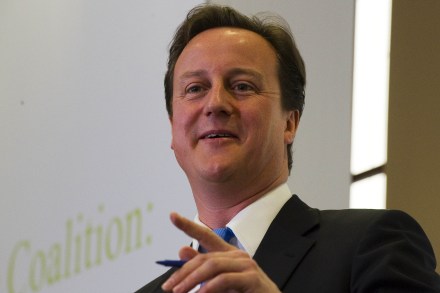
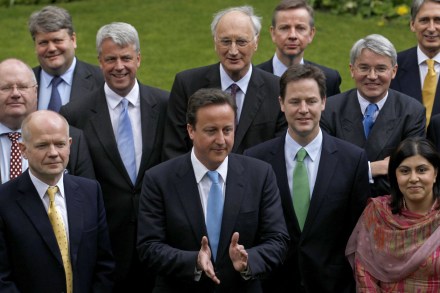
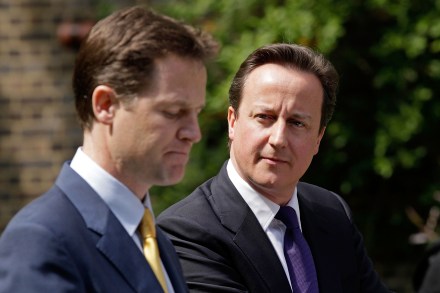
Today's civil partnership between two men who look uncannily like each other will, I suspect, be remembered as a festival of misplaced optimism. Cameron overdid it a little, making out that this was his ideal outcome. It seems rude to point it out, but there were two podiums in that rose garden because he flunked the election (see Tim Montgomerie's superlative report for details). The cost of his failure to win is having to do a deal with Nick Clegg. The country didn't vote for a new politics: the Lib Dems did worse than last time, so polls show most voters would have preferred Cameron to have formed a minority government. This is an alliance designed to stop Cameron fighting an election again soon, and repeating last week's jarring experience.

A heckle which might reverberate across the campaign

From our UK edition

Mark the date: the first major heckle of the election campaign happened today, and Gordon Brown was the victim.  The perp was one Ben Butterworth, and he was angry at how his children can't get into their choice of state school – a frustration which will be shared by thousands of parents across the country.  I wonder what they'll think when they see that Brown ignored the man. The Tories will seize on this with considerable joy.  Their plans for widening school choice are – as the leader says in tomorrow's magazine – the best reason for voting Conservative.  Mr Butterworth might just have made himself the poster boy for that argument.

Closing the gap between state and independent education

From our UK edition

I do hope that Oxford will finally be free from government claims of snobbery soon. We learn today that the proportion of state school pupils it admits has fallen from 55.4 percent to 53.9 percent - but, as the university says, this is in line with the (appallingly low) proportion of state school pupils achieving three As. The problem lies with the schools, not the universities, and it helps no one to pretend otherwise. Here's one figure that you won't read in the ongoing "Oxford snobbery" story: in 1969, only 38 per cent of Oxford's places went to privately-educated children. Why? Because the private schools in those days were not places of educational excellence, but of social preference. The decline of state education, relative to private, is the problem here.

Establishing free schools will be a difficult – but worthwhile – challenge

From our UK edition

The small crowd of demonstrators from a group calling itself the Anti-Academies Alliance who gathered outside the Spectator conference on The Schools Revolution yesterday gave an indication of the opposition that Michael Gove and the Conservatives would face, were they to win the election and attempt the radical overhaul of which the British education system is so obviously in need. The thing that came across in our brief but passionate debate with the protestors was their opposition to independence, wherever it may raise its head in schools. Choice, to these people, is anathema. Undeterred, Gove’s speech majored on the virtues of independence.

Facing the protesters

From our UK edition

Given that school choice will only benefit those who cannot afford it at present, who could be against it? The answer is the Socialist Educational Alliance, who have decided to stage a protest at The Spectator's conference on school liberalisation on Thursday. They have produced a leaflet (see left, and click to enlarge). "Bring your whistles and drums" it says - 8.30am. I wonder if Ed Balls will join them, as he appears to agree with the thrust of their argument. "Defend democratic accountability," says the flier. This is the language which Labour left use: "democratic accountability" is code, of course, for political/bureaucratic control. Perhaps my friend Polly Toynbee will be there too, with a placard saying "what do parents think they know about schools?

The Tories take the fight to Labour over social justice

From our UK edition

Statistics about educational inequality in this country always tend to shock and dismay in equal measure.  And this latest piece of research from Michael Gove's office is no exception: "New analysis by the Conservatives shows that just 45 pupils on Free School Meals (FSM) make it to Oxford or Cambridge each year. One top London private school gets an average of 82 Oxbridge admissions a year – almost double the number of FSM admissions. One leading independent girls’ school produces the same number of Oxbridge entrants as the entire FSM cohort.  Just 1 per cent of FSM pupils go on to a Russell Group university." Just to be clear, the overall Oxbridge intake is about 6,000 students a year.  So 45 pupils on FSM represents 0.75 percent of that.

Ed Balls says the same stuff, differently

From our UK edition

The road to Damascus has nothing on this.  Ed Balls – in interview with the FT – has condemned the class war strategy, called for an end to Labour figures briefing against each other, and suggested that the government should be more "upfront" about spending cuts.  Hallelujah!  What a difference an attempted coup makes!  And so on and so on. But wait a minute.  What does the Schools Secretary actually say?  Worth looking at, that – because Balls hasn't so much changed his arguments as changed the way he makes them.  Take, for instance, what he says about class war: "'I’m totally against a class war strategy,' he says.

Exceeding expectations

From our UK edition

Today’s Guardian has an interesting story on the success of the New School Network, an organisation set up to get parents’ to take up the opportunities offered by the Tories’ planned school reform. The Guardian reports that 200 parents groups and 100 groups of teachers are interested in setting up schools. I suspect that take up of the Tories new schools will exceed expectations. One person involved with the New Schools Network told me recently that they would judge the policy a failure if it did not lead to the creation of a 1,000 new schools in the first two years.

Balls beats the drum for investment

From our UK edition

Oh, look, Ed Balls is talking about "investment" again.  This time it's an address on the Government's Children's Plan, and, judging by the preview in today's Independent, it's all going to be about how much more money his department is spending.  I doubt Alistair Darling will be impresssed - especially as much of that money was strong-armed out of the Treasury in the early hours of Wednesday morning last week.  And I doubt that some of Balls's other colleagues will be too amused either.  Their departments will be subject to even deeper cuts thanks to his brinksmanship. But you suspect that Balls isn't just hoping to rile his fellow ministers - he'll probably want to divert some attention away from the important u-turn which he outlined on Marr yesterday.

Public scepticism about Labour’s record on education

From our UK edition

Isn't it funny how things work out?  I imagine the government once thought they'd get credit for the ever-improving GCSE and A-level pass rates, but now results day just rekindles the debate about slipping standards - and rightly so.  Ed Balls may have tried to divert attention on to the Tories this morning, but he can't really escape the verdict of this ComRes poll commissioned by Newsnight.  Here are the main results: 67 percent of respondents said Labour hasn't lived up to Tony Blair's "education, education, education" vow. 52 percent said Labour hasn't improved the overall quality of education.  41 percent said they have. 47 percent said the standard of state education has deteriorated since 1997.  43 percent said it hasn't.