Schools

Getting tough on discipline

A fortnight ago, The Spectator asked if Cameron was fit to fight? We wondered if he had the gumption to use the political moment created by the riots to push through the radical reforms the country needs.  So, it’s only fair to note that the government has today actually done something—as opposed to just talking about—the excesses of the human rights culture. The Department for Education has stopped the implementation of new regulations that would require teachers to log every incident in which they ‘use force’ with children. These new rules would have made teachers record every time they had pulled apart two kids in a corridor or intervened to

The schools revolution in action

Harris Academies, one of the best-known new chains of state secondaries, have today posted an  extraordinary set of results. It’s worth studying because it shows how a change of management can transform education for pupils in deprived areas. Pour in money if you like, but the way a school is run is the key determinant. This is the idea behind City Academies, perhaps Labour’s single best (and most rapidly-vindicated) policy. The notion is rejected by teaching unions, who loathe the idea that some teachers are better than others. Bad schools are kept bad by the idea that their performance is due to deeply-ingrained social problems, etc. Harris has produced a table showing

The annual A-levels helter-skelter

The Gap Year has been declared dead. It’s A-levels day today, and the annual scramble for university places has been intensified ahead of next year’s tuition fees rise. According to this morning’s Times (£), the last count had 669,956 pupils sprinting after 470,000 vacancies. An estimated 50,000 students with adequate grades will not enter higher education this year as many universities have raised entry requirements to manage increased demand. This means that competition during clearance will be even more stiff than usual, particularly as universities will offer many fewer clearing places according to various surveys. Needless to say, UCAS’ website appears to have collapsed under the weight of this unparalleled

An American view of tuition fees

When I visited the US recently, I got talking to some American teenagers about university. They (like me) had just left school and were trying to decide where to go next. I explained that in the UK, the Government’s plan to raise tuition fees to £9,000 a year had led to riots. Their jaws dropped. They couldn’t understand what the fuss was about. In the US, fees can reach $40 000 a year for the private Ivy League colleges. The reaction in the UK seemed ridiculous to them. They felt we should be grateful that we didn’t have to pay $40,000. [Although, to be fair, some state universities only charge

Gove gets mathematical

Go go Gove, still trying to pack in the initiatives before summer recess. The focus today is on maths and the sciences, where the Education Secretary feels our students are falling behind. In a speech earlier, he set out a number of measures to help ameliorate the situation, including adding his name to City AM’s appeal for bankers to donate to the Further Maths Support Programme charity. But, really, it was his more general remarks that caught the ear. He emphasised, for instance, the growing gap between us and the Asian nations: “At school, British 15-year-olds’ maths skills are now more than two whole academic years behind 15-year-olds in China.

Strike Thursday nears

After the failure of today’s meeting between union leaders and Francis Maude and Danny Alexander, Thursday’s strike now seems certain to go ahead. It’ll be the biggest test so far of the coalition’s ability to withstand industrial action. The coalition has constantly emphasised that it has contingency plans in place to deal with strikes. This Thursday will show us how good these plans are. Certainly, the more schools that are kept open, the less powerful the bargaining position of the unions will be. I understand that David Cameron will use his speech to the Local Government Association tomorrow to emphasise that the deal that the government is proposing on public

Gove reaffirms his faith in free schools

Invigorating, that’s probably the best word for Policy Exchange’s event on free schools this morning. Right from Sir Michael Wilshaw’s opening address — which set out the reasons why he, as headteacher of Mossbourne Academy, is optimistic about education reform — to Michael Gove’s longer, more involved speech, this was all about celebrating and promoting the new freedoms that teachers are enjoying. There were some specifics about the schools that are opening, and the numbers of them, but very little of it was new. For the first time in a week, Gove wasn’t announcing policy, but instead referring back to it. Which isn’t to say that this was an ornamental

Profit could hasten Gove's school reforms

Michael Gove is giving a big speech tomorrow on free schools amid evidence that the policy is beginning to gather momentum. The papers report today that there have been 281 applications to set up free schools in the round that closed this month alone (sentence updated).   One of the best known of these planned free schools is the one being set up Tony Blair’s former strategist Peter Hyman. Ever since The Spectator revealed back in May that Hyman was planning to take advantage of the Tories’ reforms to start his own school, there’s been considerable interest in what Hyman is up to. In today’s Sunday Times he eloquently defends

Osborne throws his weight behind education reform

Pete rightly points to Michael Gove’s interview in The Times this morning as the story of the day.  Some producer interests are objecting to Gove dismissing the exam system as ‘discredited’ and his plans to return A-Levels to being a proper preparation for undergraduate study. But there’ll be no backing down. A Gove spokesman tells me that ‘’The system is discredited and it needs fixing. The public know it and support change. If some don’t like hearing that, tough. They’ll find it much more unpleasant in ten years if we don’t fix the system and they’re working for Chinese billionaires who did maths at Harvard.’ But, perhaps, the most important

Gove keeps on going

My gosh, Michael Gove is hyperactive at the moment. From his interview with James in the latest issue of the Spectator, to his recent announcements about failing primary schools and secondary school standards, this is a man who just cannot stop. So stop he doesn’t. The Secretary of State for education is delivering yet another speech on Monday. And he has another interview (£), with Rachel Sylvester and Alice Thomson, in today’s Times. The Times interview, if you can vault across the paywall, is a worthwhile read. In it, Gove draws attention to the anti-reformist bent of local authoritarians; he warns that if we fail to adequately educate our population,

Burnham burns up

Andy Burnham has caught up with Coffee House’s revelation earlier this week that the Treasury, the Department for Communities and Local Government and the Department of Education are going to have to review their position on academy funding because of a legal challenge.  Burnham is twittering, in typically hyperbolic terms, about the matter. But the reality of the situation is rather less dramatic. The coming changes will simply be a matter of preventing the taxpayer paying twice over for a service, once from the academy to the local authority (the new system) and once from the Department of Education to the local authority (the old system). Education is fast turning into one

The profit motive would boost Gove's Free Schools agenda

The promise of Michael Gove’s Free Schools programme — as distinct from his Academies programme — is slow to materialise. What seemed like the government’s most radical and important reform has stalled as expected take-up has fallen far short of expectations. 350,000 new school places are required to meet increasing demand by 2015 — to address this, the Conservatives had set their sights on setting up 3,000 new Free Schools in nine years. But, so far, there have been just 323 applications, with only a handful due to open in September 2011, and the DfE capital budget is set to fall by 60 per cent to £3.4 billion by 2014-15.

Blame the schools system, not Oxford

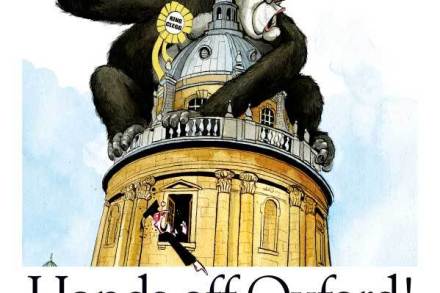
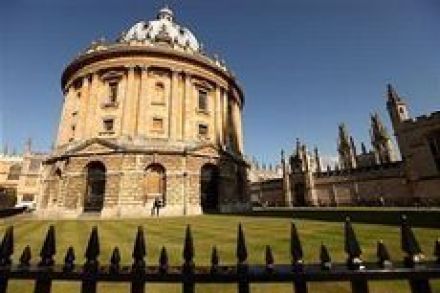
The most extraordinary row has broken out after the Prime Minister appeared to suggest that Oxford University has a racist admissions policy. He today said that, “I saw figures the other day that showed that only one black person went to Oxford last year. I think that is disgraceful.” But the university has since hit back, pointing out that, “the figure quoted by the Prime Minister is incorrect and highly misleading — it only refers to UK undergraduates of black Caribbean origin for a single year of entry, when in fact that year Oxford admitted 41 UK undergraduates with black backgrounds.” Laura Kuenssberg tweets that No10 is nevertheless sticking to

Grammar schools aren’t an answer to the social mobility problem

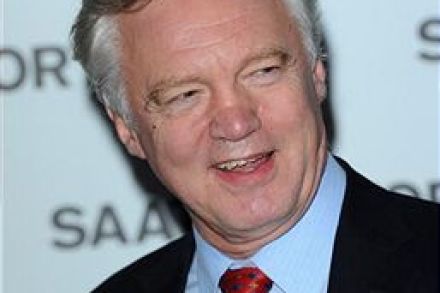
With all the talk about social mobility, it was inevitable that those who believe grammar schools were the doorway to opportunity would wade into the debate. The most prominent of these interventions came yesterday from David Davis, who said: “The hard data shows that the post-war improvement in social mobility, and its subsequent decline, coincided exactly with the arrival, and then the destruction, of the grammar school system. This is the clearest example of the unintended consequence of a purportedly egalitarian policy we have seen in modern times.” The “hard data” Davis refers to is this 2005 study by Jo Blanden, Paul Gregg and Stephen Machin for the LSE and the Sutton Trust.

Does Davis have a point about grammar schools?

David Davis has been relatively quiet for the past couple of months, perhaps nursing a hangover after this. But he’s back making a seismic racket today, with an article on the coalition’s social mobility report for PoliticsHome. He dwells on the education side of things, and his argument amounts to this: that the government’s school reforms — from free schools to the pupil premium — will not do much to improve social mobility, and may actually make the situation worse. Michael Gove may be praised as “intelligent, dedicated and wholly admirable,” but there is enough gelignite elsewhere in the piece to ruffle some coalition feathers. I thought CoffeeHousers may have

Short term solutions to Britain’s long-term education problem

The most important planks of the coalition’s social mobility strategy are its education and welfare reforms. Raising the standards of state education in this country will give far more children a chance to get on in life. While reducing the number of children brought up in workless households will, hopefully, halt the development of a hereditary non-working, benefit-dependent class.   But these measures will take time to work. Which raises the question of what should be done in the meantime?   One thing would be allowing academics to use discretion in admissions. We don’t expect the England cricket selectors to pick the side based solely on county averages and we

Another phase in Gove's revolution

Michael Gove has just finished announcing to the Commons his proposed replacement for Educational Maintenance Allowance. The new scheme is more targeted than the old one that went to 45 percent of those who stayed in education post-16. Interestingly, it will be administered by the schools and colleges themselves. Gove’s argument is that it is these institutions that are best equipped to know which student needs how much money to support them staying in education. This drew predictable opposition from the Labour benches which wanted a top down, national scheme. On top of this discretionary fund, every student who is receiving income support will receive £1,200 a year. This new

The grade inflation scam

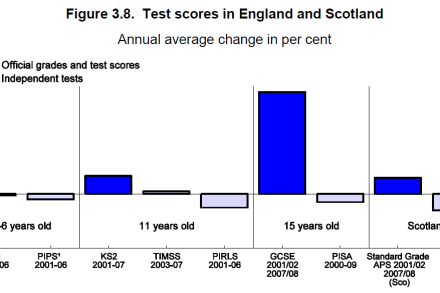
Today’s OECD Economic Survey of the UK (download the complete pdf here ) contains some devastating passages about our education system. As it’s 148 pages in size, we thought CoffeeHousers might appreciate some highlights. Here’s your starter for ten: “Despite sharply rising school spending per pupil during the last ten years, improvements in schooling outcomes have been limited in the United Kingdom.” This is rather a staggering indictment of Tony Blair’s “education, education, education” policy. But what about the ever improving exam results that we hear about each summer? Again, the OECD:   “Official test scores and grades in England show systematically and significantly better performance than international and independent

The pace of the schools revolution

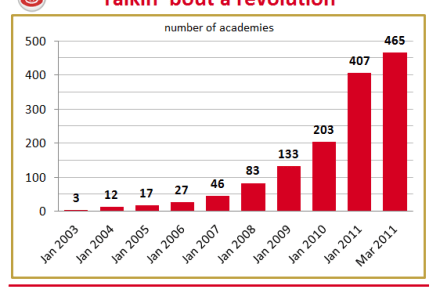
What a difference a year makes. When Michael Gove spoke at a Spectator conference on schools reform twelve months ago, his policy ideas were just that: ideas, to be deployed should the Tories reach government. Today, at a follow-up conference, they are being put into practice in the fiery crucible of state — and doing quite well, at that. As tweeted by Andrew Neil, Gove has announced that the number of academies — existing state schools that have seized on the independence being offered to them — now stands at 465. That’s some way up on the 203 academies there were last year. And it’s even a significant rise on

Clegg's cure for the tuition fee trauma

The Liberal Democrats are still traumatised by what happened over tuition fees. Nearly every fringe meeting contained a long discussion of the issue and how the party could have handled it better. Clegg’s plan to heal the wound is to show that the new system will go hand in hand with a broadening of access to the best universities. The deputy prime minister seems to be straining for a fight on this issue. In his speech, he laid into those at Oxbridge ‘who shrug their shoulders and say: That’s just the way things are’ about how dominated these institutions are by the children of the well-off. He demanded, ‘fair access