School choice

Chicago Public Schools have failed. But there’s another option

Illinois recently released its 2024 Educational Report Card. The grades are, not surprisingly, bleak. Eighty schools reported not a single student who reached grade proficiency in math. Of the state’s low-income students, only 24.6 percent are proficient in reading, and 13.7 percent in math. The Chicago Teachers Union – with impeccable grammar and punctuation – blames insufficient funding: “[Governor JB] Pritzker cries poor, he is leaving $10 billion in billionaire and big tech tax breaks on the table. Reversing just a fraction of that windfall would provide [Chicago Public Schools] and all Illinois schools the funds they need to thrive.” Not that the CPS or the CTU have proven themselves emblems of fiscal responsibility.

Elites keep making education about themselves

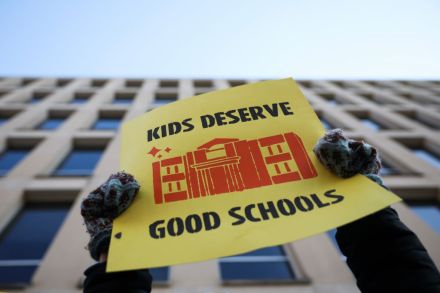
This month, Congress put school-choice funding on offer to the states as part of the Big Beautiful Bill. Progressives have bashed the provision for the harm they claim school choice will do to under-resourced school districts. But the program saps not a dollar from public schools, which shows the protest for what it is: elitist bluster. The same progressives who fumbled their schools’ Covid responses, instituted woke curriculum and pushed adolescent gender transitioning should not decree to parents which school is best for their children. Public schools have not earned Americans’ trust over these past few years; many private schools have. Under the new measure, families can receive a tax credit for donations to an approved scholarship-granting nonprofit organization.

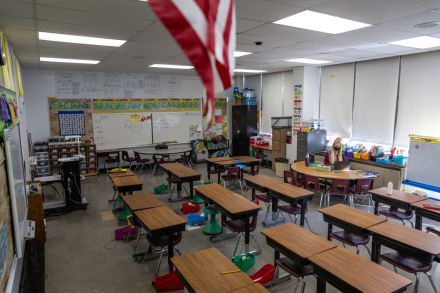
Elementary school

Why Democrats back the wrong side of 80-20 issues

“80-20” issues have become a catchphrase recently. Most voters on those issues favor one policy by overwhelming margins and oppose the other. The “winning side” may poll anywhere between 60 and 90 percent, depending on the issue, but they are all conveniently grouped under the same label of “80-20.” These lopsided issues have three striking features. First, there seem to be more and more of them, especially on contentious social issues and law enforcement. Second, the same constituency that supports the 20 percent side of one issue frequently supports the 20 percent side of other issues, even those that are substantively quite different. Once an issue is depicted as “progressive,” for example, it generates that support.

Trump is right to eradicate the Department of Education

Teachers’ unions have donated millions upon millions over the years almost exclusively to Democratic candidates and left-wing organizations. So it’s no wonder Dems, realizing their cash cow could be on the verge of drying up, are losing their minds over President Trump signing an executive order yesterday to begin eradicating the Department of Education. If Americans get a real taste of school choice (Trump still needs a Congressional vote to end the agency), the left knows there will be no going back. Senator Chuck Schumer called the order “one of the most destructive and devastating steps Donald Trump has ever taken.

Education

Is there a solution to chronic absenteeism in schools?

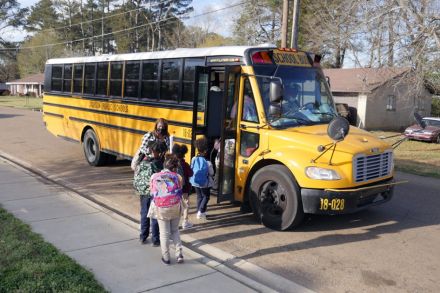
I hated going to school so much as a kid that to this day, the sight of Back to School! signs printed in cutesy kiddy font on glowing school-bus yellow that fill stores every August strikes me with dread. I want to punch them. My elementary school years were fine; I attended a teeny-tiny Catholic school where I think most of the dedicated teachers qualified for food stamps. I knew my classmates so well that they were essentially extended siblings (and a couple of them still are). I graduated first in my class (out of ten) and was star of the pathetic basketball team. High school was a Catholic school too, but insular and snooty. I was an outsider there, from “over the mountain.” I wasn’t bullied or anything, but no matter what, I always felt like I was imprisoned.

absenteeism

The one bright side of the looming debt crisis

By almost every historical indicator, the US is clearly approaching a debt crisis. The federal government’s aggregate liabilities now exceed its gross domestic product. The annual interest required to service federal obligations is greater than what Congress spends each year on defense. And projected annual deficits for the next decade are well ahead of estimated revenues by more than $2 trillion. Many state legislatures are deeply underwater as well, despite receiving generous Covid related bailouts from President Biden’s 2021 American Rescue Plan Act. California’s temporary $100 billion surplus in 2022, for example, has morphed into a projected deficit of $68 billion over the next two years.

dollar debt

Donald Trump ‘the anointed one’ at the Road to Majority Conference

Donald Trump spoke at the Faith and Freedom Coalition on Saturday, with a few speakers deeming him “the anointed one.” Trump spoke for approximately one hour and twenty-five minutes. The coalition slotted multiple hype-men right before he appeared, including Republican governor Kristi Noem. The former president hit all his usual talking points — the economy, the border and immigration, Joe Biden, Ukraine, Israel, his cute "tic-tac" trick — and made sure to mention the Ten Commandments, and said, “We answer to God in heaven,” not to political leaders. There were at least two impressive instances in which Trump expertly responded to the inclinations of the crowd.

faith freedom donald trump

How progressivism locks the left into a suicide pact

For decades the American left has attempted to build a winning political coalition by convincing as many factions as possible that they have somehow been victimized by a white power structure — more particularly, by an American and European white male power structure. The goal has been to provide the Democratic Party with a large base of aggrieved voters while simultaneously giving its traditional allies in the media, academia and government a persuasive social justice (or more recently “anti-colonial”) narrative. But ever since Joe Biden’s inauguration as America’s forty-sixth president, when his promise to be the country’s conciliator quickly disappeared behind a sharp left turn, progressivism’s self-defeating internal contradictions have become increasingly apparent.

progressivism ledft

Will school choice destroy the Democratic Party?

Only occasionally in American history does an issue surface that challenges not only the values of an established political party but the party’s ability to function. If any such issue has emerged in our own time, it's clearly school choice. The evolution of such a diverse educational marketplace — private schooling, homeschooling and tutoring, among other options — will severely reduce the Democratic Party’s election workforce, squeeze its finances and even discredit its basic philosophy. Consider first the workforce. If nothing else, the widespread subsidy of K-12 grade schooling in venues not run by teachers' unions would deplete the enormous army of campaign workers that Democrats have come to depend upon during every election cycle.

school choice

Should Pennsylvanians pay billions for public school sex abuse cases?

The Pennsylvania legislature is gridlocked over a proposed amendment to the state constitution that would lift the statute of limitations on child sexual abuse cases for two years. If it passes, people would be able to sue over child sexual abuse regardless of the number of years that have passed since the alleged abuse occurred. A pair of Villanova University economics professors published an economic analysis of the bill, which they project will cost Pennsylvania — i.e., the taxpayers — between $5 billion and $32 billion, as many of these claims would likely be against public school employees.

Don’t believe everything you hear about the ‘teacher shortage’

According to the mainstream media, there’s a national teacher shortage, though ongoing reports of this “catastrophic” phenomenon have left me skeptical. On one hand, there does seem to be a shortage of almost every type of worker these days, yet on the other, public school teaching has traditionally been a comfortable sort of job, offering a pretty predictable schedule, plenty of time off, benefits, and the rewarding opportunity to improve children’s lives. Where I live, teaching is considered a high-class career. It has its fair share of challenges, no doubt, but it's also not a sector where I would expect to see a shortfall of employees.

Universal school choice would transform real estate

A new Arizona law which funds all the state’s K-12th grade children to attend a school of their family’s choosing, public or private, has been widely hailed as a landmark education reform, although evidence suggests the benefits will go far beyond academics. Studies by the Manhattan Institute, New Jersey’s E3, and Connecticut’s Yankee Institute all show that subsidizing students to use alternative placements would save any state millions each year. But perhaps the most unexpected promise of universal school choice is the impact it would have on area real estate markets, simultaneously lowering the cost of what families must pay for a desirable home, improving the value of distressed areas, and equalizing the quality of life between rich and poor communities.

The school choice moment is now

There’s been a lot of professed outrage lately over woke school boards. According to Republican candidates for office, they're infiltrating children’s curricula with critical race theory, recruiting drag queens to read at story hour for pre-schoolers, and engaging in other forms of — shall we say — “incompetence.” But the real heroes pushing back against left-wing ideologies in government schools are the parents, when it ought to be lawmakers. Outspoken parents in New Jersey made headlines when they protested their school district removing holiday names from the school calendar. Voters in San Francisco — yes! — recalled school board members who thought renaming schools “with a connection to colonialism” was more important than educating kids.

What Florida gets right

There’s a saying in Florida: “the further south you go, the more north you get.” Those familiar with the state’s geography know this reflects the reality that most of the southern regions of the state — Palm Beach, Miami, Naples, Fort Myers — have large cohorts of migrants from up north. There is even a logic to who moves where. Northerners from New York, New Jersey, Connecticut and the other New England states come down Interstate 95 and end up in southeast Florida while Midwesterners from Illinois, Ohio and Michigan travel down I-75 and settle in the southwest part of the state. This migration is not a new phenomenon. Over the past twenty-five years, Florida’s population has boomed unlike anywhere else in the country.

florida

Why a post-Covid world might not be so bad

No one need ask why the strict public health regime to manage Covid — masks, mandates, quarantines, and required inoculations — has begun to collapse. Between angry truckers, unfavorable polling for continued lockdowns, the perception of a Wuhan coverup, changing reports of vaccine effectiveness, and declining hospitalizations, even President Biden and blue state governors realize they have but two options: pretend to be leading a return to normalcy or face an unpredictable grassroots rebellion. The interesting question for Americans is not why the sudden prospect of a return to normalcy but what “returning to normalcy” really means.