Saudi arabia

For Pester of TSB, like Patterson of BT, the only way is exit

From our UK edition

Should he stay or should he go — or will he already have gone by the time you read this? These are frequently asked questions about chief executives whose businesses hit troubled waters. It’s true that the higher you rise, the higher the risk if you don’t deliver, but it’s not always true that bosses should walk the plank whenever something major goes wrong: sometimes it makes more sense to stick around, take the flak and solve the problem. However, in the cases of Gavin Patterson of BT (ousted a week ago) and Paul Pester of TSB (still in post as we go to press), it would be fair to say the only way is exit.

Why has Mohammad bin Salman gone so quiet?

From our UK edition

Has Saudi Arabia Crown Prince Mohammed bin Salman been assassinated, had a breakdown or gone into hiding? Or is that just wild internet conjecture? I ask only because he has barely been seen in public since prolonged heavy gunfire was heard at the royal palace in Riyadh in the middle of the night on April 21. At the time Saudi state media dismissed reports on Twitter and elsewhere the shots were the sound of a coup taking place, insisting instead the semi-automatic gunfire was merely aimed at a recreational drone that had flown too close to the palace walls.

Saudi Arabia must become a new Dubai

From our UK edition

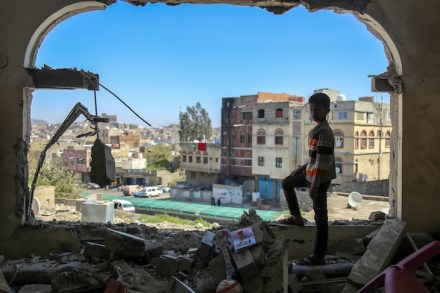
Although probably not possessed of the liberal sensibilities that would see him accepted for membership by, say, the Soho House group, Saudi Arabia’s Crown Prince and de-facto ruler Mohammed bin Salman, or MBS as the 32 year-old is known, is nevertheless largely good news, certainly compared to what has gone before. Commentators who are so outraged by the headline grabbing foreign policy initiatives that bear his fingerprints – the disastrous proxy war with Iran in Yemen, for example, or the blockade of Qatar, or the softer line on Israel, or even the cosying up to Trump’s White House – that they cannot see the good work he is doing are missing the point. Foreign policy, although important, is by no means Saudi Arabia’s most pressing problem.

Why are Harvard and MIT selling out to the Saudis?

It’s all relative with Saudi Arabia. Everyone who matters is related to everyone else. Even relative to the degraded standards of Afro-kleptocracy and Arab dictatorship, the Saudi state is nothing more than the al-Saud family business, plus its clerical and military appendages. And relatively speaking, the Saudis are hypocrites even by the low standards of Arab governance. They have always divided the world into those with whom they are prepared admit economic relations, and those with whom they claim not to have relations of any kind, but secretly do. The former include Saudi Arabia’s slave class of imported servants and construction workers, oil-hungry governments.

saudis harvard

The prince of PR…

From our UK edition

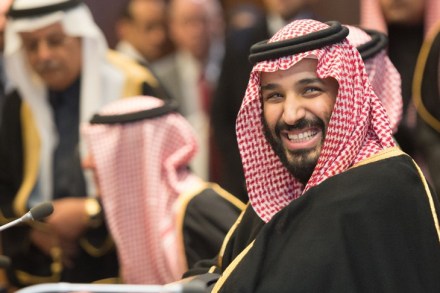
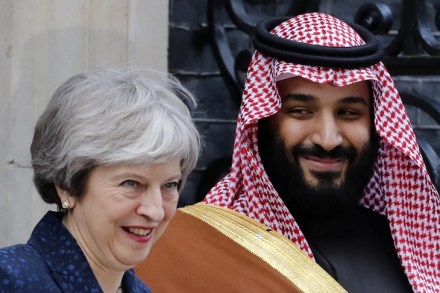
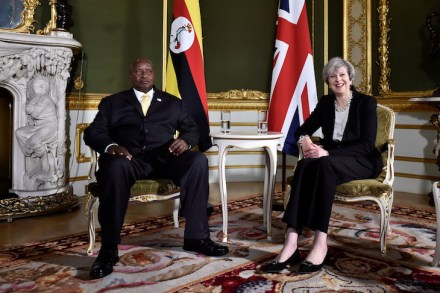
This week, Mohammad bin Salman, also known as MBS, is on his not-quite-state visit to Britain. A parade down the Mall and a state banquet could only be afforded to his father, old King Salman, who made MBS crown prince last June and has given him unprecedented latitude to liberalise Saudi society, lock up his enemies and light fireworks abroad. MBS arrived in London on Wednesday fresh from visiting one friend, Egypt’s General Sisi, and will go on to see another, Donald Trump, on 19 March. Theresa May’s aim will be to show that Britain can thrive outside the EU, but she should think twice before co-opting this new strongman who reputedly encourages his courtiers to call him Iskander — the name by which Middle Easterners know Alexander the Great.

The Spectator Podcast: Prince Charming

From our UK edition

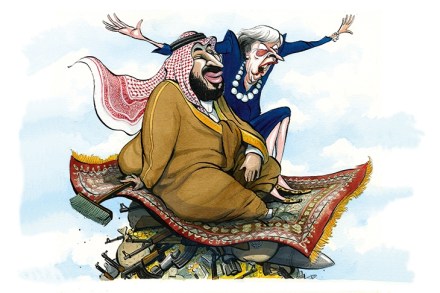
On this week's episode of The Spectator Podcast, we look at the new Saudi Crown Prince as he visits the UK. Is he the great moderniser that some imagine, or are we sweeping the more unpleasant elements of his regime under the carpet? We also consider the many strands of Labour's Brexit position, and look at a rocky week for British sport. First, Mohammed bin Salman, known to some as MBS, is making his first trip to the UK this week since assuming the role of Saudi Arabia's Crown Prince last year. He has been heralded by some as the radical modernising force that the country has been calling for, whilst others are concerned about lack of counsel and the ruthlessness of his course. What's the truth?

… and of progress

From our UK edition

In an interview this week, Mohammad bin Salman offered an extraordinarily frank assessment of how to combat terrorism. It means rooting out Islamist ideology, he said, as much as sharing intelligence. He presumably would take this blunt message to MI5 and MI6 in his meetings with those agencies, as well as to Theresa May’s National Security Council. This should provide plenty of food for thought to the cynics who argue against being taken in by his much-trumpeted embrace of a more moderate Islam. We have a Saudi crown prince who is being more frank about Wahhabi-inspired terrorism than the British. Just last year, the UK government saw fit to suppress a report that found a link between Saudi-funded mosques and Isis-inspired terrorist attacks.

The West has abandoned human rights

From our UK edition

The Crown Prince of Saudi Arabia Mohammed bin Salman is in Britain, and the argument over the next few days is as predictable as a wet bank holiday. The left will point to the immorality of Saudi Arabia oppressing its own population and killing Yemeni civilians with, on occasion, arms made in Britain. The right will say that is rich coming from a movement led by Jeremy Corbyn, the supposed supporter of women’s, gay and trade union rights, who has taken the money and appeared on the propaganda channels of Iran, a country that oppresses all three and much else besides. No one should yawn, however. Familiarity breeds ignorance as well as contempt. It blinds us to the reality that the old world where universal human rights were valued is no longer the world we inhabit.

Guardian’s Saudi dilemma

From our UK edition

The crown prince of Saudi Arabia, Mohammed bin Salman, is in town today for a three-day state visit with a charm offensive from the British government and royal family. Proving that he is a very modern prince, Mohammed bin Salman has also managed a media PR blitz with pro-Saudi Arabia adverts in a host of papers and media outlets. The Guardian is one of the many papers to do so today: https://twitter.com/Tweet_Dec/status/971309288223330304 Only Mr S can't help but wonder how Grauniad columnist and Saudi critic Owen Jones will react? Jones has been heavily critical of any government, politician or company working with or taking money from the Saudi regime. Will Jones now boycott the Guardian?

Is Mohammad bin Salman a friend to the West?

From our UK edition

Amid the avalanche of news coming from Saudi Arabia, the most important has been overlooked. A few weeks ago Riyadh ceded control of the Grand Mosque in Brussels, leased to the Saudis in 1969 and since then instrumental in promoting Islamic supremacy, anti-Christian and anti-Semitic hatred in the heart of Europe. The deal had given Saudi-funded imams control of the religious education received by the Muslim immigrant community in Belgium, in return for cheaper oil. It was a pact with the Wahhabi devil then typical of European governments. And we are still paying the price. When Islamic States called for Muslims to launch jihadist slaughter throughout the European continent, the most radicalised sections of the local Muslim populations were ready.

High life | 1 February 2018

From our UK edition

Gstaad I caught a whiff of it as it rolled in from the east, the smell of hypocrisy being different from others that penetrate our olfactory nerves in everyday life. It was coming from Davos and it had a Graeco-Roman flavour to it. The prime ministers of those once upon a time great countries, Greece and Italy, asked for a Marshall Plan for Africa to solve the root cause of the migrant crisis that threatens the old continent’s existence. Just think of it, dear readers. Tsipras and Gentiloni, the former a liar, the latter unelected, both leading two basket-case countries, asking for a vast programme of wealth transfer so that Europe and the rest of the world can enjoy visits by African oligarchs, colonels, generals and their whores enjoying their new-found wealth.

High life | 7 December 2017

From our UK edition

As the song almost says, what a difference a year makes: 2017 is not over yet, but it’s been a lousy one so far. Losing two very close friends was a real bummer, for starters. Then the Brexit negotiations and the Trump presidency revealed that I had declared victory too soon. This time last year I was singing about what a great year it had been, what a great mood I was in, and so on. The British people had decided that they no longer wished to be led by and take orders from a peanut vendor from Luxembourg called Jean-Claude Asshole. Yippee! One year on, the asshole, in cahoots with British left-wing rabble, seems to have confused the issue enough that the hapless Theresa is upping the ante for Britain to become independent again. Not so yippee!

Portrait of the week | 9 November 2017

From our UK edition

Home An air of crisis hung over the government. Priti Patel, the International Development Secretary, was told to fly back immediately from Africa after a series of secret meetings with Israeli political figures was revealed. Sir Michael Fallon had already gone as Defence Secretary, to be replaced by someone called Gavin Williamson, an MP since 2010 and Chief Whip since last year. Sir Michael’s departure followed a complaint that Andrea Leadsom, the Leader of the House, was said to have made to the Prime Minister about a remark some years ago — when she had said she had cold hands, he said: ‘I know where you can put them to warm them up.

The Spectator Podcast: Desert storm

From our UK edition

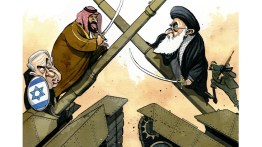
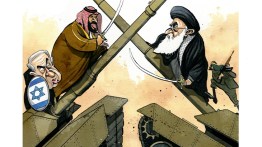
On this week’s episode, we turn our attention to the Middle East and the unlikely alliance of Saudi Arabia and Israel as they stare down a common enemy. We also consider whether the old adage ‘the night is always darkest just before the dawn’ holds for Theresa May, and wondering why there hasn’t been a great musical about British history. Last week saw a massive anti-corruption push in Saudi Arabia oust a number of princes. The putsch was initiated by Crown Prince Muhammed Bin Salman, and in this week’s magazine cover story John R. Bradley looks at how the young prince has attempted to align his country with Israeli interests in order to squeeze out a mutual antagonist: Iran.

Salman’s Arabia

From our UK edition

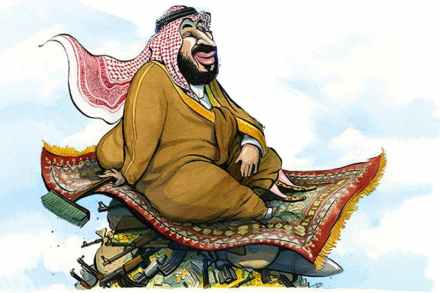
There are two ways of seeing the extraordinary rise of Saudi Arabia’s Crown Prince: the blood-stained debut of a new dictator, or the long-overdue emergence of a reformer with the steel to take on the kingdom’s old guard. The British government is firmly in the second camp. Mohammad bin Salman is just 32 years old, and his effective seizure of power means he defines the kingdom for a generation. He’s seen in Whitehall as a history maker, whose ruthless impatience might not only liberalise his country but create an alliance with Israel that could change the region. Minsters talk about MbS (as he’s known in Whitehall) with admiration and awe. He recently laid on a trade fair, and the British delegation was amazed to hear a band playing upon arrival at the airport.

Desert storm

From our UK edition

Until last weekend, the Ritz-Carlton in Riyadh’s exclusive Diplomatic Quarter was colloquially known as the Princes’ Hotel. It was a luxurious retreat from the heat, where royals could engage in the kind of wheeling and dealing with the global business elite that had made them millionaires on the back of the 1970s oil boom. No deal could be brokered without paying a bribe to at least one prince. Last Saturday that era of boundless opportunity and total impunity came to a dramatic end. The VIP guests were booted out, the front doors were shuttered, and heavily armed security forces took up positions around the perimeter. A Saudi who lives nearby sent me a message about what he thought was an unfolding terrorist incident.

High life | 7 September 2017

From our UK edition

After the heat in Greece, the Alps are cool and green and very comfortable. My sensei Richard Amos is over here and we squeezed two weeks of intensive karate training into three days. Nothing makes me feel better than the sense of total exhaustion after a hard day’s fighting. We do kihon, kata, and then we let fly in kumite. Except that recently I’ve caught him diving, as they call it in the ugly game. Fight like a man, I say, through gritted teeth. He picks up the tempo but my suspicions remain. The sensei (teacher) is taking it easy on the sempai (senior). I hate it but it’s the way of our world, the best one there is, the world of martial arts and of the bushido spirit.

What are Corbyn’s Venezuelan critics actually doing to help?

From our UK edition

The victims of foreign dictatorships have become chips in our political games. In our corner of the rich world, for instance, the suffering of Venezuela matters only because Jeremy’s Corbyn’s enemies can use it to attack his support for the Chavist regime when it was unchallengeable, and his cowardly equivocation when the inevitable catastrophe followed. Saudi Arabia matters only because leftists can use it to damn the British establishment’s bootlicking support for the House of Saud and its suppression of democratic, women’s and minority rights. Yet the smallest concern of the Venezuelans is the praise the western far left lavished on their corrupt and massively incompetent dictators.

Iran is our natural ally

From our UK edition

The Saudi town of Awamiya — like so many countless cities across Iraq, Syria and Yemen that are witnessing an unleashing of the ancient hatred of Sunni for Shia — now exists in name only. Last month, days before an assault on its Shia inhabitants by the Saudi regime, the UN designated it a place of unique cultural and religious significance. But under the guise of fighting Iran-backed terror cells, the Saudis then subjected Awamiya’s entire civilian population to the indiscriminate use of fighter jets, rocket-propelled grenades, snipers, heavy artillery, armoured assault vehicles and cold-blooded executions. More than a dozen Shia, including a three-year-old boy, were killed. Hundreds of young men were rounded up.

Bending London’s listing rules to win Saudi favour smacks of desperation

From our UK edition

Now here’s a tricky question. The world’s largest oil company, potentially worth six times as much as ExxonMobil and ten times as much as Royal Dutch Shell, wants to list its shares on a major stock exchange next year, and has indicated that the choice is between London and New York. The company’s initial public offering of just 5 per cent of its shares promises a $100 billion deal that will generate a fee bonanza for bankers, lawyers and PR men in the chosen marketplace, with several more tranches to come. Clearly London should go all-out to win this lucrative and prestigious piece of business, which would reconfirm the City’s pre-eminent place in the financial world.