SAS

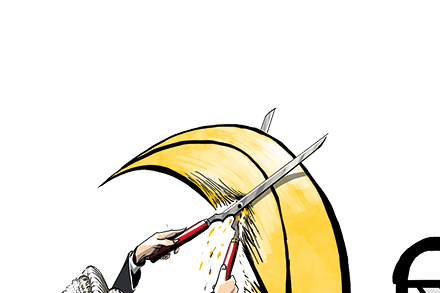
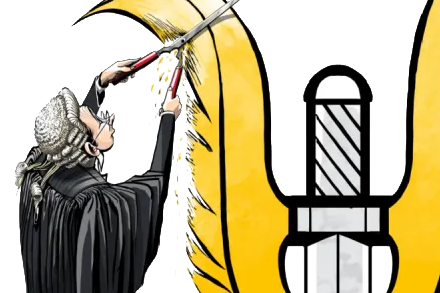
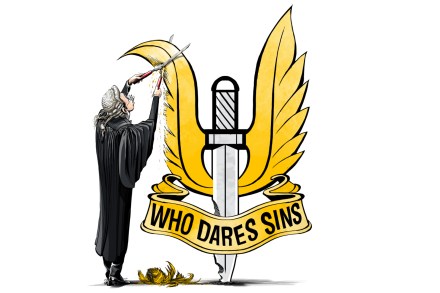
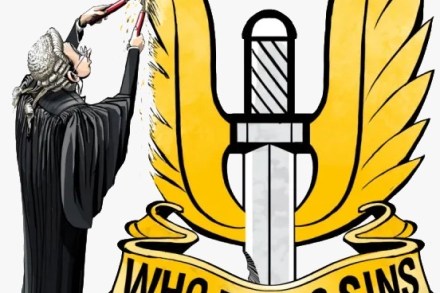
Trump believes Britain has betrayed the SAS

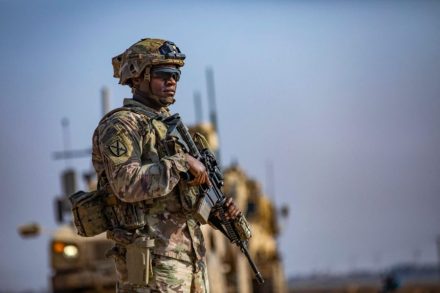
The Special Air Service, Special Boat Service and other elements of UK Special Forces are held in the highest regard by the Pentagon and by US special operators. British and American special forces have forged a bond of trust over decades with joint high-risk operations and combined training. A recent visit to Washington made clear that the American leadership on both sides of the political divide, and within the military and intelligence services, believe the current British government has broken that alliance. America views the SAS and SBS as equal to its own tier one special forces operators in Delta Force and SEAL Team Six. The eight saber squadrons of the SAS and SBS contribute a significant amount of the special forces’ manpower relied upon by both countries.
SAS

Was Maduro’s capture the greatest special forces raid in history?

On this occasion no one can accuse Donald Trump of hyperbole. The President praised the Delta Force team that seized Venezuelan leader Nicolás Maduro as "incredible." The operation to capture Maduro – codenamed "Absolute Resolve" – was months in the planning, and Trump watched it unfold in real time. "They broke into places that were not really able to be broken into," he said. "I’ve never seen anything like it." According to the New York Times, the operation began last August when CIA officers infiltrated Venezuela and began gathering intelligence about the habits and movements of Maduro. They were assisted by stealth drones high in the sky overhead and the information collated was used to construct a full-scale model in Kentucky of the president’s compound.

The BBC’s war on the SAS

From our UK edition

The SAS is under fire, not from terrorists or insurgents, but from ill-informed commentators and our state broadcaster. Our Special Forces are globally respected, they have been a vital part of Britain’s national security capability for nearly 80 years and they run enormous risks so that we might all be kept safe. Nevertheless, an exercise in making sure that they, like all who serve the Crown, are held properly to account risks being used by the ignorant, the sensationalist and the malicious to undermine the regiment and weaken our security.

The great betrayal of the SAS

From our UK edition

We should all feel scared to our bones about the persecution of the SAS, soldiers harried through the courts for jobs they did many decades ago. It’s not that the SAS should be allowed to behave like trigger-happy psychos, but as Paul Wood wrote in this magazine before Christmas, Special Forces are now being hounded and punished for simply following orders and conducting operations. And what will we soft sofa-sitters do when no one wants to be a soldier any more? Wood described in particular the plight of 12 soldiers of a Specialist Military Unit (SMU) deployed in Ireland in February 1992 to apprehend a gang of IRA terrorists – the East Tyrone brigade of the Provisional IRA (PIRA).

Steven Pinker: The inside story of my Covid ‘bio bet’

From our UK edition

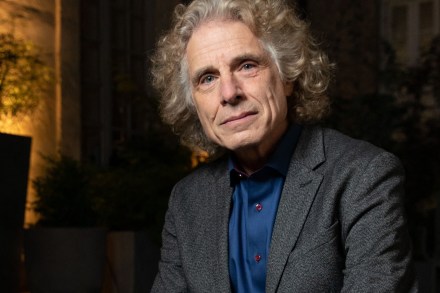
Betting men Sir: The bet between Martin Rees and me that Matt Ridley recounts pits two kinds of scruples of disinterested rationality against each other (‘Wuhan wager’, 7 December). One is the scientific ethos that calls for factoring in all relevant information in updating one’s degree of credence in a hypothesis. The other is the logic of the epistemological tool of betting, which demands an agreed-upon fixed criterion and deadline for resolving the bet. My degree of credence has been influenced by Matt and Alina Chan for the lab leak hypothesis, but also by counter-arguments from Peter Miller for the zoonotic theory.

SAS betrayal, the battle for Odesa & in defence of film flops

From our UK edition

48 min listen

This week: SAS SOS The enemy that most concerns Britain’s elite military unit isn’t the IRA, the Taliban or Isis, but a phalanx of lawyers armed with the European Convention on Human Rights (ECHR), writes Paul Wood in The Spectator. Many SAS soldiers now believe that if they kill a terrorist during an operation, they’ll spend decades being hounded through the courts. Paul speaks to former SAS soldiers who say that stories of men being ‘dragged back to be screamed at in interview rooms’ are ‘flying around the canteens now’. Soldiers feel like ‘the good guys have become the bad guys – and the bad guys are now the good guys’. This is hurting morale and may eventually hit recruitment.