Romans

The glorious versatility of Dijon mustard

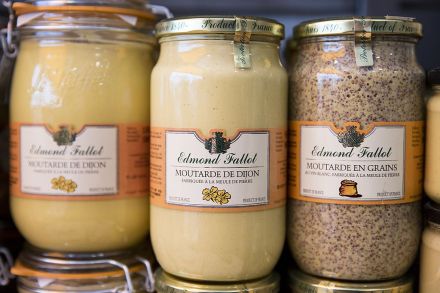
Not just salami, air conditioning and dental fillings: among their many contributions to civilization, the Romans also gave us Dijon mustard. Somewhere about the 4th century, it seems, the vinegar makers of Dijon were granted the right to use the exclusive mustard recipe composed by Palladius, son of Exuperantius, Prefect of the Gauls (or so Samuel Chamberlain informs us in his Bouquet de France of 1952). Palladius was one of those fascinating Roman gentleman-farmers who are also poets and scientists. He owned farms in Italy and Sardinia and had a particular interest in fruit trees. He penned a popular treatise on agriculture that stayed on the best-seller (or at least most-read) list until well into the Middle Ages.

The Roman roots of ‘colony’

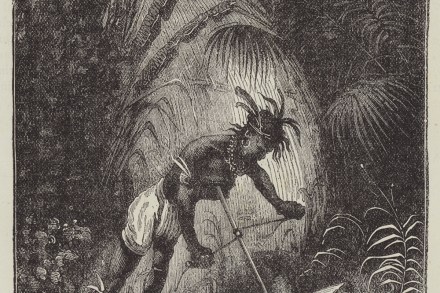
The word “colony” meets with a sharp intake of breath these days, but “province” raises no eyebrows. How very odd. The ancient Greeks invented the western notion of the colony. But “colony” is the term the Romans applied to it and is of Latin derivation, from colo, “I cultivate, inhabit” and so colonia. The ancient Greek term was apoikia, literally “a home apart, away”, or perhaps a “home from home.” Greeks established these apoikiai widely around the Mediterranean, mainly from the 8th to 6th centuries BC, clustering along the coasts of Turkey, northern Greece, all around the Black Sea, southern Italy, the eastern Adriatic, Sicily, parts of southern France and Spain, and Cyrene, as Plato said, “like frogs around a pond.

colony

Going Greco-Roman in Boston

In a way it felt like a walk around campus on graduation day: one last stroll through the Museum of Fine Arts, Boston before the mayor’s medically nonsensical, legally dubious, morally atrocious mandates force museums, restaurants, gyms and more to oblige entrants to prove that they’re vaccinated against Covid-19. I could comply, but I will not. “There’s nothing more American than coming together to ensure we’re taking care of each other,” said our unctuous new mayor in her typical passive-aggressive fashion. Perhaps, but there’s nothing less American than commanding such sentiments from City Hall and punishing us who see through the ruses of power. The commencement, then, was that of a new relationship between your reporter and his adopted city’s art holdings.

Boston