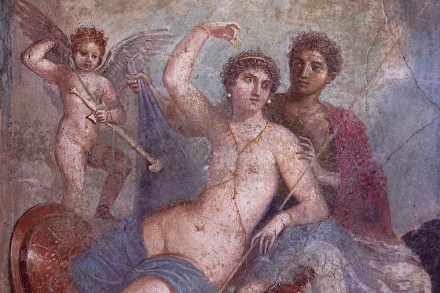
How to paint like the ancient Greeks
From our UK edition
Last week David Hockney was cited as an example of a great English artist who insisted on working, like ancient Greek sculptors, in a well-established tradition. But how did Greek painters work? Let Pliny the Elder remind us. According to Pliny, Apelles (fl. c. 330 bc) from the island of Cos ‘surpassed all painters before and after him’. Court painter to Alexander the Great, he published volumes on the principles of painting – he favoured a palette of white, black, red and yellow – and was modest enough to recognise excellence in others: indeed, he thought a certain Protogenes his equal (he bought his paintings to sell as his own), except in one respect – that he (Apelles) ‘knew when to remove his hand from the picture’.