Roman polanski

The Maureen Lipman Edition

From our UK edition

36 min listen

Dame Maureen Lipman has been a fixture of stage and screen for over five decades. She has been a member of Laurence Olivier's National Theatre company and the Royal Shakespeare Company; she is well known for her roles in acclaimed films like Educating Rita and The Pianist; and most recently she has had an award-winning run in soap Coronation Street. For a generation she will always be 'Beattie': the grandmother from the BT adverts. On the podcast, Maureen talks to Katy Balls about her journey from 'the cobbler of Kazimierz Dolny to the cobbles of Corrie'. They discuss selling comedy as a commodity, whether you can separate art from the artist and her most recent role in a Christmas panto.  Produced by Patrick Gibbons. Photo credit: Jay Brooks.

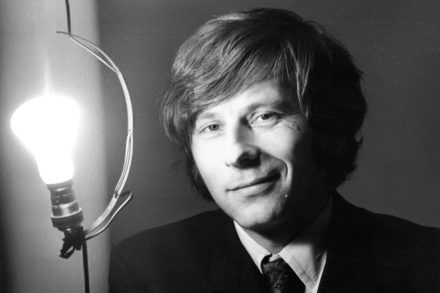
Roman Polanski at ninety: what will be his legacy?

How should we assess the reputation of a late-career movie director? In the case of Roman Polanski, who turns ninety on August 18, we can clearly tick the box denoting a solid body of work. He’s responsible for half a dozen enduring films, and one — 2002’s The Pianist — that rightly won him an Academy Award. Readers may have their own candidate, but for me Polanski’s first full-length feature, 1962’s Knife in the Water, remains at the top of the list. It’s a beautifully crafted, if at times noticeably low-budget, thriller that offers the classic Polanskian brew of claustrophobia, latent menace, voyeurism, class antagonisms and sexual tension, in this case set aboard a small yacht.

roman polanski

Should we judge a work by the character of its creator?

From our UK edition

‘Most of my heroes are monsters, unfortunately,’ Joni Mitchell once said, ‘and they are men.’ The singer-songwriter was able to detach the maker from the made. Should we do the same? Is it ethical? Even possible? These are the questions Claire Dederer deftly considers in Monsters, which puzzles through the problem of what we ought to do about great art by bad men. Ideally, nothing. Early on in her quest, Dederer longs for someone to invent an online calculator: The user would enter the name of an artist, whereupon the calculator would assess the heinousness of the crime versus the greatness of the art and spit out a verdict: you could or could not consume the work of this artist. Alas, said calculator has yet to be programmed, so it’s down to her to do the maths.

Woody Allen’s non-retirement retirement

Even if you ignore the endless controversies associated with him, it is undeniably true that Woody Allen has lost his touch. With the partial exceptions of Midnight in Paris and Blue Jasmine, the director has not made a good film since the early '90s. The last few pictures he's made — Rifkin’s Festival, A Rainy Day In New York, and the like — have been seen by so few people that they seem more like self-indulgent home movies than commercial works. Therefore, it comes as no surprise that, announcing his fiftieth film, the Paris-set crime thriller Wasp 22, Allen, at the age of 86, also allegedly said that he expects it will be his last picture. He told the Spanish newspaper La Vanguardia, "My idea, in principle, is not to make more movies and focus on writing.

Hollywood, fist-fights and getting canceled

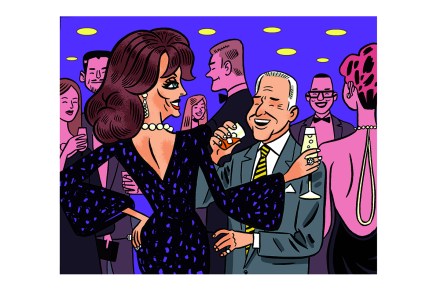
Introductions Scene: a drawing room in London. When the recording starts, Taki is already mid-anecdote... Taki: I was sent out to Monte Carlo to speak to Roger Moore. The Spectator offered to pay all my expenses. I said thank you, I’ll pay my own. I went and had a terrific drunken dinner with Roger who really spilled the beans, cos we were buddies. I came back. The tape was empty because I’d never turned the recorder on. Joan: I’d known Roger since I was fifteen, because my father was a big agent in London and I came back from school — oh, fourteen actually, because I left school at fifteen — and there’s the most gorgeous man I’ve ever seen standing there. He came over and said, “How do you do? You must be Joan, my name is Roger Moore.

Joan Collins

The mob mentality of the elite

From our UK edition

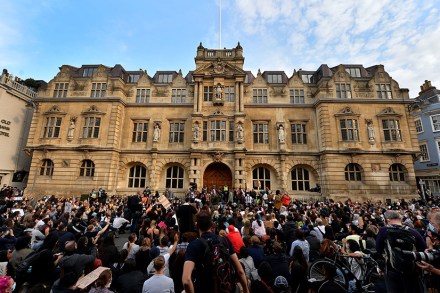
Gstaad I thought of Nietzsche while the mayhem and destruction of monuments was going on. Decadent bourgeois society was in the great man’s sights, but then he went bananas. Later on, young Nietzscheans believed that what was needed to save the world was an insurrection of sons against their fathers. But things do change, and mostly for the worse. Imagine if Mr N. and his followers were around today — the past four weeks to be exact. They’d be exhorting fathers to kill their sons. And daughters. My higher thoughts were interrupted by a telephone call from a woman who spoke with what sounded like a parody of a female voice.

America has turned into a bad joke

From our UK edition

Gstaad     Rumours about the virus are flying around this village. First there was talk of a hotel being temporarily quarantined, then a shindig given by a fat social climber where one of the guests was said to be infected. So far these seem to have been false alarms but still the fat old rich who don’t ski are panicking, staying indoors and incommunicado. This is good news. Even better news is that I’ve been skiing with my son and have never had a better time, although he did have to wait for me at times. The snow was unexpectedly good and there was plenty of it. My trouble is that I look down from a south-facing verandah and see green fields.