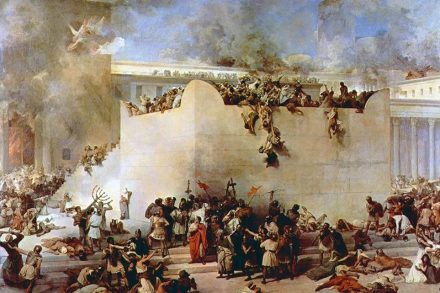
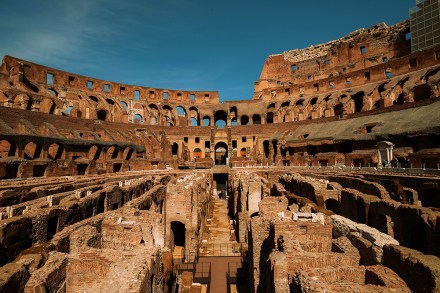
Roman empire

A glutton’s guide to Venice

I have been writing about restaurants that are in or near cultural landmarks: museums, opera houses, historic sites. This column is an exception, as it is about one of the few restaurants in the world that is a cultural landmark in its own right: Harry’s Bar. It is an even more remarkable fact given that the restaurant is in the midst of probably the most culturally dense city in Europe, Venice. I must declare that I have eaten at Harry’s at least once, sometimes twice, on every one of the many trips I have made to Venice since 1977. I love it. Not everyone does – or maybe it’s more accurate to say that not everyone gets it. I took a friend there on his first visit and he complained that “the chairs are too low, the drinks are too small and the prices too high.

venice

How the Roman ranking system actually worked

For otherwise healthy plebs in the Roman world, survival depended on four Fs: farming (the sole source of food and money), fighting, family and friends. Everything else that made life worth living meant having some degree of political control over your own existence, which could be summed up in a fifth F: freedom, or political equality. But the elite had little time for such goodwill towards men. For the plebs, there was the rub. In the 20s BC Livy began writing a history of Rome from its foundation in 753 BC. It was first ruled by a series of seven kings (none actually Roman) who were finally thrown out as tyrants in 509 BC.

roman ranking

No, Joy Reid: Rome didn’t fall due to a lack of ‘diversity’

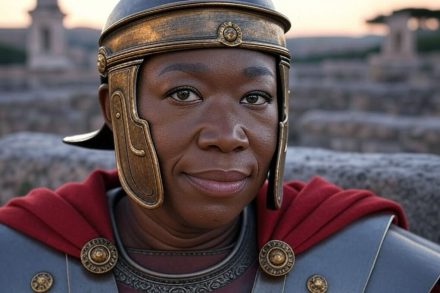
Former MSNBC host Joy Reid recently delivered a peculiar history lesson to her social media audience. In her mind a reproach to Donald Trump, Reid warned that the Roman Empire “died because it wasn’t diverse enough,” implying that sticking with “just white folks” leads to inevitable civilizational decline. If history were written by cable news soundbites, we might soon learn that Napoleon lost Waterloo because he lacked a DEI department.In reality, Rome didn’t fall because of a lack of diversity. Nor is Europe today crumbling because of too many white people. Societies fail for many reasons, but skin color has never been one of them.

Joy Reid

The Roman Empire’s years of glory

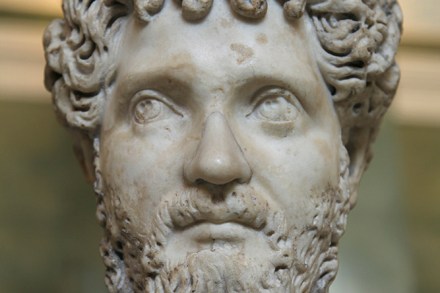
The Roman emperor Domitian began life as a spare. At the end of the first century CE, while his brother Titus was the heir to their father Vespasian, the younger boy’s “sense of resentment and frustration had festered,” writes Tom Holland. “Rather than stay in Rome, where his lack of meaningful responsibility was inevitably felt as something raw,” Domitian moved away with a wife whom his family disliked, “doomed forever to be a supernumerary,” paranoid, attracting gossip, avoiding any company in which “innocent mention of baldness” might be viewed as “mockery of his own receding hairline.” In most judgments by posterity this Prince Harry of the early empire fulfilled all this lack of early promise. Big brother Titus became emperor only briefly.

Roman

Netflix’s Barbarians taught me those Romans had it coming

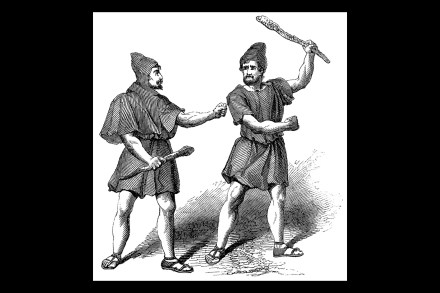
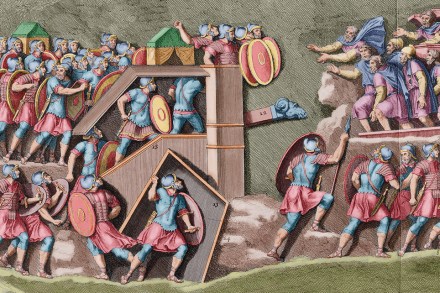
Of all the times and places to have been on the wrong side of history, I can’t imagine many worse than to have been a Roman legionnaire in the Battle of the Teutoburg Forest in the year 9 AD. It was the Romans’ Isandlwana — a devastating defeat inflicted by native forces on what was theoretically the world’s most sophisticated, best trained, and almost insuperable military power.Over the years since I first learned about arrogant, tricked, doomed Roman commander Varus and his three legions (about 20,000 men, almost none of whom got out alive), I’ve often mused pityingly on how it must have felt: trapped in the gloomy forest, hemmed in by a bog, waiting to be slaughtered by hammer, ax or javelin by the hairy, painted, blood-crazed Germanic barbarians.

barbarians