Roe v. wade

Pro-abortion vandals attack the Capitol Hill Pregnancy Center

On Friday, June 3, assailants vandalized the Capitol Hill Pregnancy Center, not far from Cockburn's Washington home. An unknown party splashed a gallon of red paint on the center’s front door and doormat, as well as egging the place and spraying graffiti on the walls that said, “JANE SAYS REVENGE.” “As the day unfolded, there was a lot of positive outreach," Janet Durig, the pregnancy center’s executive director, told Cockburn. "We’ve had people asking from all over the area asking if anything is damaged or needs to be replaced.” She also said, “The police were extremely helpful.

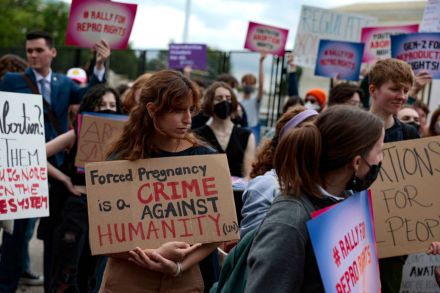
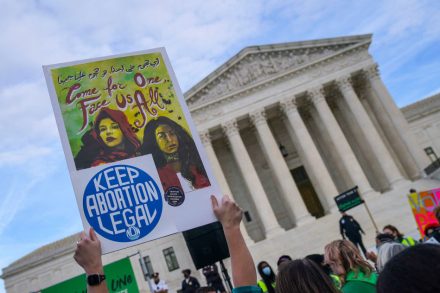
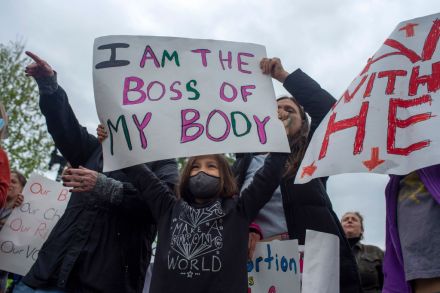
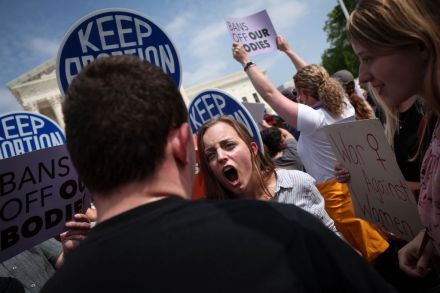
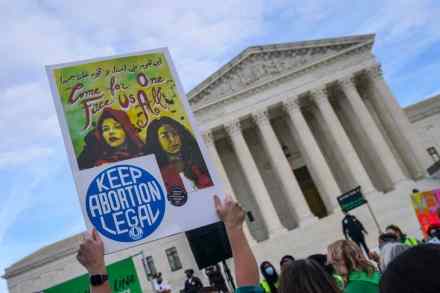
Marchers hold up signs during a Mothers Day rally in support of Abortion (Photo by Jemal Countess/Getty Images for Supermajority)

Hunt down the Supreme Court leaker

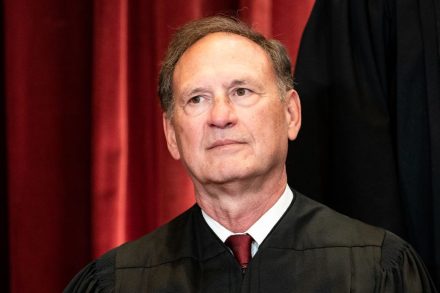
It's been almost a month since Politico scooped its bombshell leak, an unprecedented revelation of a draft majority opinion in a still-pending Supreme Court case. That leaked draft opinion, penned by the stalwart Justice Samuel Alito in the case of Dobbs v. Jackson Women’s Health Organization, would finally overturn 1973’s infamous Roe v. Wade abortion decision. Alito’s draft opinion does not go far enough, at least as far as the proper pro-life end goal is concerned, but it is a praiseworthy development and an admirable start toward an abortion-free America.

texas

Martyrs win the culture wars

The culture war is suddenly going well for conservatives. Ron DeSantis stripped Disney of some of the woke corporation’s privileges in Florida. Elon Musk is taking over Twitter. Roe v. Wade appears doomed. And a backlash against Critical Race Theory in schools and transsexuals in women’s sports looks set to benefit Republicans mightily in November’s midterm elections. These are crucial battles. But they are not the war. The war is between race and sexuality on one side and traditional religion on the other. At any rate, those are the great causes with which the cultural left and right tend to identify. The progress of the war is seen in the retreat of Christianity and the advance of racial and sexual agendas on all fronts.

martyrs

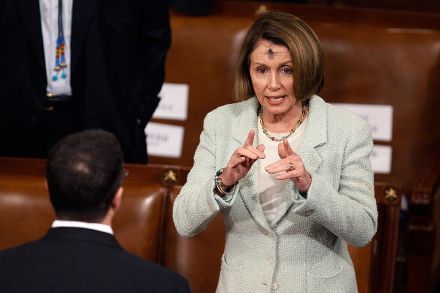
Why does Nancy Pelosi want communion anyway?

San Francisco Archbishop Salvatore Cordileone’s recent announcement that Nancy Pelosi has been barred from receiving communion brought fresh to Cockburn’s mind a memory he has of once having accidentally attended church with the Speaker of the House (and lived to tell about it). Sometimes alcohol can stir in one a devotional feeling, and so it was that Cockburn found himself at Mass one day at Holy Trinity Catholic Church in Georgetown, seated a few rows behind Pelosi. When the time came, Cockburn refrained from receiving communion, but wondered as he watched Pelosi head toward the altar whether anyone should tackle her to the ground to prevent the sacrilege.

Abortion and our fear of loss

Something felt off about Mother’s Day this year. For one weekend every May, we post social media tributes and bow to marketing campaigns thanking our moms, letting them know they’ve given us something that can never be repaid. But that same weekend, the national news cycle was caught up in the drama — and the fear — generated by the mysterious leak less than a week earlier of a draft majority opinion written by Supreme Court Justice Samuel Alito that would overturn Roe v. Wade and return the issue of legal abortion to the states. By that Sunday, we’d seen maternity clinics and Catholic churches vandalized, protests in front of the homes of Supreme Court justices, and ominous warnings from the mainstream press explaining what women stand to lose if Roe falls.

abortion roe

The left doesn’t think women can do it all

Americans just got a window into why the left holds the “right” to an abortion to be so sacrosanct. During an exchange between Senator Tim Scott and Treasury secretary Janet Yellen, Yellen told Scott, "What we are talking about is whether or not women will have the ability to regulate their reproductive situation in ways that will enable them to plan lives that are fulfilling and satisfying for them. One aspect of a satisfying life is being able to feel you have the financial resources to raise a child." What message does that send to young women? That money, not starting a family, is how one lives a life that is fulfilling and satisfying. That one cannot lead a life that is meaningful with a burden, er, baby.

Why the Alito opinion is too normie

Justice Samuel Alito’s leaked majority opinion in this Supreme Court term’s marquee abortion case, Dobbs v. Jackson Women’s Health Organization, ought to be applauded by pro-lifers. In many ways, the opinion represents an epochal triumph for the conservative legal movement that I, despite being a clear part of, have often been quick to criticize. If Alito’s five-justice coalition holds — and it remains an “if” until the moment the opinion is formally released — then the decades-long architects of the movement will deserve credit for finally fulfilling one of the movement’s raison d'êtres, the overturning of the odious Roe v. Wade decision.

Alito

Abortion and the great American middle

Not one American in a hundred has read Roe v. Wade, and perhaps no more of us really understand how a Supreme Court majority of seven justices barred — or, if you prefer, relieved — everyone else from coming to political terms on abortion. Think of Roe as a dispensation from the fraught business of democratic decision-making. It appears that respite is now nearing an end. Europe has set the example. It's where the US seems headed — into years of political fights in one jurisdiction after another, but in states rather than countries. Only with time has most of Europe managed to settle into norms usually established by legislatures reaching compromise aside from any creed, whether that of the Catholic Church or Planned Parenthood.

drunken sailors

A party of extremists

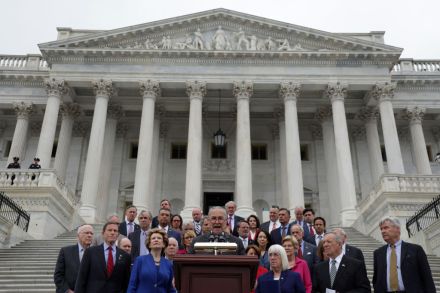
Yesterday, in the US Senate, Democrats let their abortion extremism hang out. No more faking it about "safe, legal, and rare": the new standard is "I mean, do you feel like it?" After the leak of Justice Alito's draft opinion overturning Roe v. Wade, it was inevitable that Chuck Schumer would introduce some kind of abortion legislation. Even if his bill couldn't hurdle over a filibuster, the Democrats could as least use it as a planted flag in the culture war to come. Their base has spent the last week running into traffic yodeling about right-wing fascism. And given that a majority of Americans support some kind of legal abortion, surely there was room to maneuver here. Instead, Schumer decided to tap into his party's dark id.

The abortion insurrection

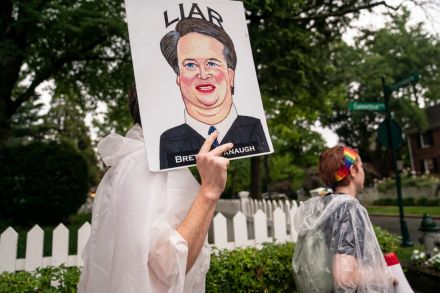
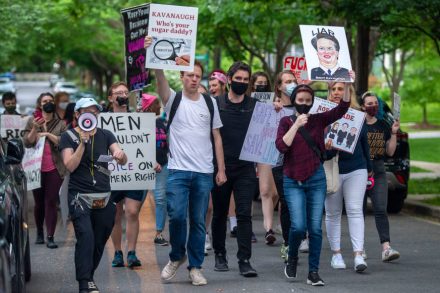
Pro-abortion activists are proving themselves a greater threat to the country than a man smiling and carrying Speaker Nancy Pelosi's lectern through the Capitol building or a parent protesting at a local school board meeting. Yet the latter two have been treated far more harshly by the Biden administration because, well, they don't have the right politics. After a draft Supreme Court opinion overturning Roe v. Wade was leaked to Politico last week, pro-abortion groups used intimidation and violence to try to retain the "right" to kill their unborn children. The prevailing theory is that the leak itself was done to mobilize opposition to the opinion and get the justices to change their minds.

Marchers hold up signs during a Mothers Day rally in support of Abortion (Photo by Jemal Countess/Getty Images for Supermajority)

What’s so ‘progressive’ about abortion?

From the UK Spectator this week comes a pair of essays by Douglas Murray and Melanie McDonagh praising the American abortion debate. That debate can be difficult to admire when you're standing at the bottom of a culture war looking up. But as both Murray and McDonagh note, at least here in the States it's expected that we'll disagree about abortion, whereas throughout much of Europe it's regarded as a settled matter. Why is abortion in America still such a live issue? One reason, I think, is that in most other first-world countries it's been the subject of democratic deliberation, with people finding middle ground through their legislatures or referenda.

The abortion debate turns brutal

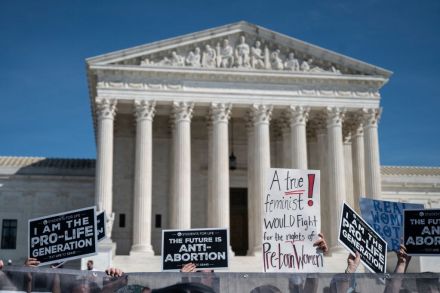
Not too long ago, pro-choice activists wished for abortion to be “safe, legal, and rare.” Their argument was that no one was really pro-abortion but that the procedure was a morally complicated but regrettable necessity. In fact, they would have been insulted by the label “pro-abortion." The reaction to the leak of a Supreme Court opinion that would overturn Roe v. Wade shows those days are long past. Take, for example, a tweet from a rabbi scolding those who claim that “nobody is PRO-abortion!” Comparing abortion to an appendectomy, she answers her imagined interlocutor: “Both are life saving medical procedures Why wouldn’t I be ‘pro’ a life-saving medical procedure?

The left’s great abortion freakout

Can the left-wing hysteria over the Supreme Court's leaked opinion on abortion get any more ridiculous? Corporate media have claimed that the potential overturning of Roe v. Wade marks only the beginning of a slew of conservative judicial decisions that will ban everything from sodomy to birth control. "Next they'll go after gay marriage and maybe Brown v. Board of Education," Joy Behar postulated on The View. “They want to send us back to the dark ages,” 85-year-old woman Eleanor Oliver, who procured an illegal abortion in Washington, D.C. in the 1950s, told a Washington Post columnist. The justices who have reportedly endorsed the draft opinion have been called “barbarous and cruel.” The prospective ruling has been accused of racism.

Abortion and the culture war to come

I'm not ready to celebrate the death of Roe v. Wade just yet. The reason has more to do with baseball than it does with the Supreme Court. I'm a lifelong Boston Red Sox fan, which means I know what it's like to think you're about to win only to be crushed yet again. I remember well game seven of the 2003 ALCS when the Sox battled the Yankees 11 innings deep only for Aaron Boone to finish it with a walk-off home run. The next year, when Boston won the World Series for the first time since 1918, I didn't breathe until Keith Foulke threw to first for the final out. So it is now with Dobbs v. Jackson, the most important Supreme Court case of my life.

Alito

What happens after Roe?

Earlier this week, Politico published a leaked Supreme Court majority opinion overturning Roe v. Wade by ruling in favor of Mississippi’s ban on abortions after 15 weeks. The leak is “unprecedented,” as Politico notes, and whoever provided the draft of the opinion should be fired or (if it was a justice) impeached. The court has not yet ruled on the case, and opinions can change. But it seems unlikely that Samuel Alito, Clarence Thomas, Neil Gorsuch, Brett Kavanaugh or Amy Coney Barrett, who are reported as favoring the ruling, will change their position. So what happens after Roe is struck down — if it is struck down? Abortions will continue to be available in states where they are legal. Roe provided federal protection for abortions.

A night of pro-life jubilation

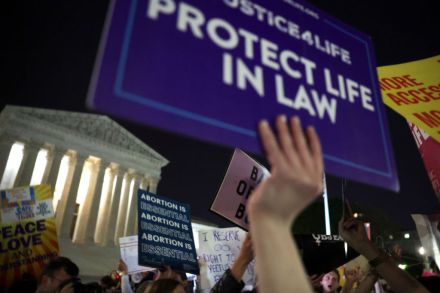
“Everybody want to know what I would do if I didn’t win,” said Kanye West, the only 2020 presidential candidate to truly grapple with the horrors of abortion, as he accepted his award for Best Rap Album at the Grammys in 2005. He paused. The room was silent. Then Ye dropped the bomb: “I guess we’ll never know.” The crowd erupted in applause. That’s the energy I felt Monday night at the Supreme Court as the world learned a majority of justices was prepared to strike down Roe v. Wade. You’ll find no nuance here. The pro-choicers lost, and I’m going to inject 500ccs of their tears straight into my veins. Cope and seethe. At around 9:30 on Monday, I was already in my pajamas, settling in for a quiet night with my wife. Then she showed me her phone.

The Supreme Court case that could end Roe v. Wade

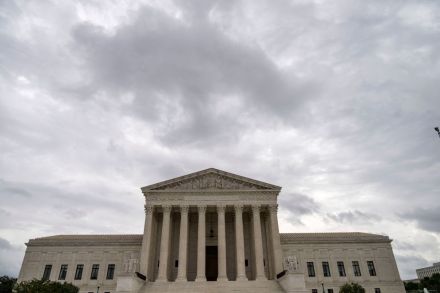
Nearly 50 years after Roe v. Wade unleashed a constitutional right to abortion and redefined modern American politics, Dobbs v. Jackson Women’s Health Organization has arrived as its foil. In a term already packed with high-profile cases ranging from gun rights to religious liberty to the death penalty, the Supreme Court has announced it will hear arguments in Dobbs on December 1. In doing so, the Court has opened the door to overturning Roe and its sister case, Casey v. Planned Parenthood, sending the question of legal abortion back to the states. The case itself centers on a 2018 Mississippi law that, with limited exceptions, bars abortions after the 15th week of pregnancy.

roe

The battle over abortion has only just begun

The battle to overturn Roe v. Wade is nearly over. The battle to end abortion is about to begin. When the Supreme Court declined to block a Texas law banning abortion after six weeks, the pro-life movement won its first significant victory in decades. Next year, SCOTUS will rule on a Mississippi law that directly challenges Roe v. Wade. If Roe survives, the fight to overturn it is over, at least for our lifetimes. Abortion as a constitutional right will become truly settled law. If Roe falls, or is narrowed, the fight will turn to the states. Either way, the war is about to enter a new phase, and to that end pro-lifers should keep three things in mind. 1.

abortion

Texas keeps on resisting Roe

President Biden had no censorious words concerning the Taliban as the evacuation catastrophe in Kabul unfolded, but he sure let ’er rip Thursday when the Supreme Court let stand, for now, a new Texas law blocking early abortion procedures. Out came the dictionary of excoriative synonyms: ‘extreme’, ‘blatantly’, ‘outrageously’. Ripping up any reminders of freedom in Afghanistan is a smaller game, in Bidenesque terms, than ripping out, or extracting from the womb in some other manner, the smallest particle of human life. Such is the mode of modern politics, we might note, sadly. The Texas law, which went into effect at midnight August 31, is the latest attempt by a supposedly sovereign state to mitigate the effects of Roe v.

roe texas

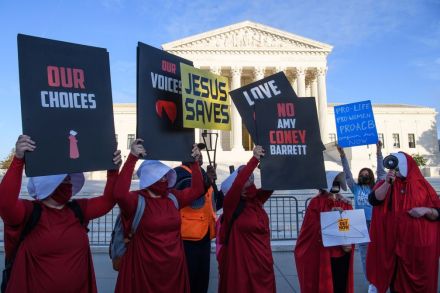
Will Amy Coney Barrett save America — or wreck it?

Americans hate the Supreme Court. You wouldn’t think so from a look at the polls, which usually show that the court is far more popular than the elected branches of government. But history tells a very different story. The conservative movement as it exists today was formed in large part as a reaction against the liberalism of the Supreme Court under chief justices Earl Warren and Warren Burger — both of whom were Republicans, as it happens. The progressive movement of the early 20th century and the populist movement of the late 19th century were also spurred to varying degrees by the character of the Supreme Court at the time, which was seen as conservative and elitist. Franklin D.

amy coney barrett