Rod liddle

Diary – 11 July 2019

From our UK edition

I am beginning to feel like a sort of fairground curiosity: one of those pickled things in jars that Victorians stared at. It is Boris’s fault. Because I once had a close friendship — all right, all right, a tendresse — with Mr Johnson, I am pointed at, photographed, and harried in the aisles of shops. Soon members of the public will be tearing off bits of my clothes — something Russian peasants used to do with anyone who had met the Tsar, as if this would bestow some of Batiushka’s divine status. Tabloid journalists doorstep me, believing I have the answers. I am a female Zoltan Kapathy; not so much an imposterologist as a Borisologist. My present policy is to pretend that I am insane.

Women’s work

From our UK edition

I don’t know which day Rod Liddle travelled down from the northeast and found nothing but women’s voices cluttering up Radio 4, as he wrote about in last week’s magazine. But his description is not one I recognise. If anything we still hear too much from male commentators, male presenters, male writers, male comedians. In recent years, for instance, the gender-balance of contributors to the Today programme has improved from the 18 per cent of female guests just a decade ago, but there’s still a long way to go before we need to apologise for wanting to hear more from women. Very often they speak truth to power (because not in power themselves) as did Vera Brittain in her searing account of the impact of the first world war, Testament of Youth.

Letters | 8 March 2018

From our UK edition

Pipeline politics Sir: In his article ‘Putin’s gamble’ (3 March), Paul Wood quite rightly mentions that one of the key reasons why Russia played hardball in Syria was Assad’s willingness to block the efforts of Qatar to build a natural gas pipeline through the country to supply Europe. This would have undermined Russia’s market power in Europe, and weakened Russian leverage over Europe when defending its actions in Ukraine. Some of the strategic issues at play in Syria exist in Libya, but to a lesser degree. Libya supplies Europe with gas from large offshore deposits through the GreenStream pipeline to Italy.

For one night only: Rod Liddle at the London Palladium

From our UK edition

If Rod Liddle is one of your guilty (or not so guilty) pleasures and you’ve been toying with the idea of subscribing to The Spectator, then we have the perfect excuse. We do reader events every so often, the most popular of which have been with Rod Liddle. They have both sold out in a flash. The last one, a thousand-seater venue, was filled within four days – we barely had time to put an advert in the magazine. This time, we’ve booked Rod again – but this time in the 2,300-seater London Palladium on Tuesday 15 May at 7pm. It will be the biggest event ever held by The Spectator. Tickets will go on sale soon, priced at £35 (or £22.50 for our subscribers). But if you’re not (yet) a subscriber, we’d like to make you an offer.

High life | 13 July 2017

From our UK edition

I was going through my paces in Hyde Park, sweating out the booze, raising the heartbeat with short wind sprints, keeping my mind off the weekend’s debauchery and the ensuing Karamazovian hangover. I sat down on a bench, took off my sweaty polo shirt, opened the Daily Telegraph, and took in some rays. A police officer approached me — but with a smile. ‘Are you by any chance Taki?’ he said. ‘Guilty as charged, constable, but this time I’m clean.’ He smiled broadly and asked if he might sit down. Well, Constable Hackworth turned out to be straight out of The Blue Lamp. A Spectator reader, he somehow recognised my 80-year-old countenance and complimented me on my training.

Letters | 27 April 2017

From our UK edition

Aid is not the answer Bill Gates says he is a huge fan of capitalism and trade (Save Aid!, 22 April) but then spoils it by repeating the received wisdom about aid: ‘If you care at all about conditions in Africa – the population explosion, measles, polio — then don’t suggest there is a private-sector solution to these problems. It’s outrageous.’ No. It is not outrageous. A vigorous private sector is the only answer to African development. I have spent my life in Africa, working in 18 of its countries, usually deep in the bush. I have watched numerous aid programmes fail once the external funding is removed, and have spent much time thinking about and discussing why this should be so.

Letters | 9 March 2017

From our UK edition

On Scottish independence Sir: Alex Massie writes of the order permitting a second Scottish independence referendum: ‘Having granted such an order in 2014, it will be difficult to refuse Mrs Sturgeon’s demand for another’ (‘Back into battle’, 4 March). Surely that is precisely why Mrs May should refuse another? It was the SNP who described the 2014 vote as a chance in a lifetime. The only thing way in which Brexit could have changed matters is if it had been a fundamental and unforeseeable upset. Alex Massie, from this and his previous writings, clearly believes it was. But the Conservatives, at the time of the Scottish vote, had promised to hold a Brexit referendum if they won the 2015 general election, so Brexit was certainly on the cards.

The Spectator’s Notes | 1 December 2016

From our UK edition

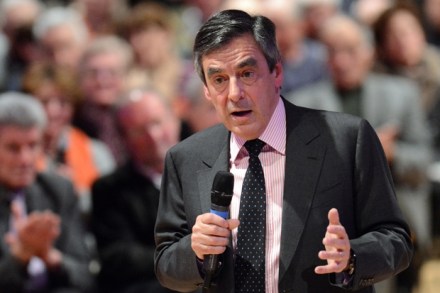
It seems perplexing that François Fillon, now the Republican candidate for the French presidency, should be a declared admirer of Margaret Thatcher. Although she certainly has her fans in France, it is an absolutely standard political line — even on the right — that her ‘Anglo-Saxon’ economic liberalism is un-French. Yet M. Fillon, dismissed by Nicholas Sarkozy, whose prime minister he was, as no more than ‘my collaborator’, has invoked her and won through, while Sarko is gone. In this time of populism, M. Fillon has moved the opposite way to other politicians. He says his failures under Sarkozy taught him that France needs the Iron Lady economic reforms which it has never really tried.

Letters | 6 October 2016

From our UK edition

Studying grammars Sir: Isabel Hardman (Politics, 1 October) states that no reputable research backs up the belief that grammar schools promote social justice. I am not sure she is correct. For instance, Lord Franks’s 1966 report on Oxford University recorded an accelerating rise in the share of places taken by state school pupils at that university in the 1939–1966 period. This increased from 19 per cent to 34 per cent, excluding the semi-private direct grant schools. Include the direct grants and the figure rises from 32 per cent in 1939 to 51 per cent in 1965. This change, reversed in the comprehensive years after 1965, coincided with the introduction of a national system of academic selection throughout the United Kingdom.

Real life | 6 October 2016

From our UK edition

After a year dealing with estate agents I can only say: a plague on all their houses, except the one of mine they’re trying to sell. I do hate being obvious and lashing out at oft maligned groups because it really is too clichéd. I belong to several of these hated groups myself, after all. Journalists, they get it in the neck all the time. And hunters. See Rod Liddle last week or Liz Jones the weekend before that for some classic examples of how the left rip me to shreds whenever I dare to suggest that I would like to keep the countryside a nice place in which to live.

The best thing about Brexit? It’s not my fault

From our UK edition

Brexit Britain fills me with calm. Six weeks on, there’s no point pretending otherwise. Losing is far better than winning. I am filled with enormous serenity at the thought of this terrible, terrible idea being not my fault at all. I didn’t expect to feel this way. Although there were signs, now I think back, on the night of the vote. I was at Glastonbury, obviously. (‘Of course you were!’ cried Rod Liddle, when I saw him a few weeks later.) Of course I was. There, with the rest of the metropolitan, liberal, bien-pensant yadda yadda. I found out at about 2 a.m., after a pleasant evening doing pleasant Glastonbury things. I’d wandered backstage, to meet a journalist friend who had secured access to Wi-Fi and a television.

The naked dinner

From our UK edition

Bunyadi caters to folk for whom public nudity is somehow thrilling; I am here because A begged to go and bashed the steering wheel of the Honda Civic with his fist. I am not only nude, which is odd, because being sexually exciting is not my journalistic identity, but, worse, I have accepted a freebie. There was no other way to get in. I asked Rod Liddle, who fashioned an anti-Bunyadi polemic a few weeks ago, to accompany me. He muttered ‘skidmarks’. Then he said no. It is a glowering ex-nightclub in Elephant and Castle, south London; a black building on a corner with the windows taped up. It looks like a pub trapped in a bondage situation. There is an unnecessary velvet rope. (There is no queue.

Letters | 14 April 2016

From our UK edition

In defence of Charles Sir: As a former full-time member of the Prince of Wales’s office, and a part-time equerry for 20 years, I can identify with some of HRH’s interests, just like Geoffrey Wheatcroft (‘How to save the monarchy’, 9 April). In my case we share a passion for churches and other historic buildings. I also share some of Mr Wheatcroft’s frustrations — the chaos of the prince’s office has at times driven me to distraction. As the product of a Yorkshire grammar school, I have never considered myself part of any ‘Highgrove set’: the prince calls me ‘Matthew’, and I call him ‘Sir’.

Letters | 14 January 2016

From our UK edition

Borderline case Sir: Alex Massie (‘The painful truth for Ruth’, 9 January) correctly identifies the challenges facing the Scottish Conservatives. But he is wrong to say it will ‘never’ be the moment for a Tory revival. Tax devolution is a game-changer. For the first time in years, the Conservative party gets to fight a Scottish battle on its strengths of economic competence; meanwhile, the SNP finally gets to demonstrate how to eliminate austerity and raise public spending — all without raising taxes. (In a low oil-price environment.) Toxic Tories? Not half as toxic as Labour are now. Post-referendum, voter positions are deeply entrenched and a party that can’t even agree on the basics (the Union, tax credits, Trident) is rightly held in contempt.

The Spectator’s Notes | 3 December 2015

From our UK edition

Speaking on the Today programme on Monday, Sir David Attenborough, who wants a global agreement to control carbon emissions, pointed out that ‘Never in the history of humanity have all the people of the world got together to deal with a particular problem and agreed what the solution could be. Never, ever, ever.’ He is right. But he seemed to defy the logic of his own observation. They never have. Probably, since the truth is best arrived at through disagreement, they never should. The key point is that they never will. So it is a waste of time to try. When someone commits suicide, those close to that person naturally reproach themselves. In politics, and similarly contested areas of life, people reproach others too.

Letters | 24 September 2015

From our UK edition

Have faith, Nick Sir: Rarely have I read an article as powerful as Nick Cohen’s (‘Why I left’, 19 September). As a lifelong Tory, all I feel qualified to say is that I think I understand. I am certain, however, that Messrs Corbyn, McDonnell et al will soon be consumed by the fire of their own hatred, and disappear in a puff of acrid smoke. Have faith in the British electorate, Nick. Jem Raison Shipston on Stour, Warwickshire No mention of Paula Sir: With regards to Simon Barnes’s article about drugs in sport (‘Our drugs cheat’, 19 September), I have not ‘outed’ Paula Radcliffe as anything, let alone as a drugs cheat.

Letters | 10 September 2015

From our UK edition

Biblical suggestions Sir: I wish to offer a couple of comments on Matthew Parris’s observation that although his ‘Christian atheism’ provides him with a moral framework, he feels the urge to help people in need, yet feels let down because Jesus offers no guidance about who to help and to what degree (‘Christianity is silent on my great moral dilemma’, 5 September). Jesus wants us to use our minds and our experiences, rather than simply applying set rules, and here is an example of how this works. Take the golden rule of ‘Do unto others’, add to it the Good Samaritan, and stir in the parable of the sheep and the goats, and there’s a fighting chance that the Syrian refugees will not be left to drown.

Virginia Ironside’s diary: Fifty Shades is a story of redemption (but I still won’t watch it)

From our UK edition

All this fuss about Fifty Shades of Grey! I wonder how many people have actually read all three books? Sado-masochism is only half the story. When you’ve waded through the entire oeuvre, if such appalling writing can be dignified with that term, you discover that the whole story is one of redemption. The ostensibly wicked, but aptly named, Christian is actually a tormented man who was cruelly abused by his mother and re-enacts this cruelty towards his lovers. But with a good woman (and a baby), pervy dungeons vanish and love conquers all. Pure Mills & Boon. These days I don’t go to films. I watch the trailers instead and I’ve saved myself hours of misery.

Spectator letters: Camila Batmanghelidjh defends Kids Company

From our UK edition

In defence of Kids Company Sir: Your piece ‘The problem with Kids Company’ (14 February) bears an important message: charities need to be transparent and accountable. That’s why Kids Company was independently audited twice last year alone, and our financial structures and functioning put to the test. We also have auditors working alongside us, verifying our outputs and outcomes in relation to our government grant. All such audits have been positive. Several pieces of independent research were carried out capturing our clinical work and our staff wellbeing — two of these found our staff satisfaction and productivity to be above 90 per cent. Some 600 staff, almost 10,000 volunteers and 500 clinical students worked at Kids Company last year.

Spectator letters: Oxfam’s Ebola appeal; what Cumberbatch should have said; and why Prince Charles is right and wrong

From our UK edition

In defence of Oxfam Sir: Mary Wakefield rightly praises Médecins sans Frontières but makes many misinformed claims about Oxfam and aid in general (31 January). Contrary to her suggestion, money donated to Oxfam and other charities’ emergency appeals must be spent solely on that crisis. This is stipulated by the Charity Commission and confirmed by our publicly available audited accounts. It is regrettably not possible for our website to provide a running commentary of developments in Liberia, but the British public can rest assured that their generous support is helping to save lives and to put lives back together.