Rod liddle

I could never dislike Rod – even when he threatened to punch me 

From our UK edition

I remember being in The Spectator’s offices on a Tuesday afternoon not long ago when I noticed a group of staffers clustered round a computer screen. One let out a guffaw of laughter, followed by another, then another. People sitting nearby demanded to know what was so funny and someone started reading it out. Before long, the entire room was roaring with laughter – proper, hysterical, uncontrollable laughter. Rod Liddle had filed his column. I was envious, obviously, but also laughing with everybody else. Rod was one of those writers it was impossible to dislike, however successful he became, because reading him gave you so much pleasure. That was true even if you didn’t share his politics, provided you had a sense of humour.

I didn’t want to like Rod Liddle

From our UK edition

One of the joys of being director of digital at The Spectator, back in 2015, was seeing the magazine proofs before they went to print. Rod Liddle’s column was the first thing I looked for, always the one I was most eager to read. He made me laugh every single time, something very few columnists are able to do. I was annoyed I liked those columns, because I didn’t want to like Rod Liddle. All I knew of his personal life was through the scandal that followed him leaving his wife during the so-called ‘Sextator’ years. I took a dim view of that. Although we both worked for The Spectator, I didn’t actually meet Rod for a long time because, woke snowflake that he was, he only ever worked from home. The first time we met was at a Spectator summer party, years later.

‘The Middlesbrough Shakespeare’: Why I loved Rod

From our UK edition

I met Rod 22 years ago this month. We had been selected as team-mates on a gameshow pilot, and, halfway through the morning’s filming, we went for a fag break. He said to me: ‘This is crap, shall we go to the pub?’ We scarpered and spent the rest of the day in a Covent Garden pub, working our way through the drinks list and chatting away like chipmunks. He would tell me that all the best people treat their bodies like bins (and all the worst like temples) I’d never been starstruck by anyone before I met Rod. However famous or talented actors are, their job is to say stuff written by other people. Rod, however, was a legend to me. I began reading his Guardian columns at university.

Rod had one great regret

From our UK edition

In 2019 I had to explain to Iain Dale – live on LBC – that Rod Liddle’s suggestion in his Spectator column that elections should be held on Islamic holy days to deter Muslims from voting was not a serious proposal. Neither was his idea that students be drugged by their parents to the same end. It was humour, and they were jokes. When he was in hospital a few weeks ago, I visited Rod with some cake. While he munched away, he expressed a sense of regret that he could have been a great writer. Rod always thought his true calling was writing fiction, rather than journalism, and always wondered if he’d sold his soul by following the money. He was right – he did have the makings of a British Houellebecq.

‘I asked for a substitute for the f-word. He suggested the c-word’: the joy of editing Rod

From our UK edition

It was in Westminster Magistrates’ Court, where I was sitting waiting for the judge’s verdict, that I decided I needed a better way of handling Rod Liddle’s column. As editor of this magazine, I had inherited one of the greatest writers; a force of nature loved by his readers for his bravery and candour. But it sometimes led to difficulties: in this case, criminal prosecution. The judge had a choice: prosecute our owners, the editor, or the magazine. The magazine was fined. ‘Rod was right,’ I was told by Aidan Barclay, who as proprietor had nearly ended up in the dock himself. ‘But truth is no defence. Not any more. You need to spot these things before they blow up.’ Our lawyers were kept busy, too.

Rod’s genius? Driving his enemies nuts

From our UK edition

There is a reason the death of Rod Liddle has provoked such a swirling tide of grief among his millions of followers, including readers of this magazine, and that is that in the last 25 years Rod came to occupy a crucial position in journalism, and indeed in our country as a whole. His columns became a haven, a refuge, in which he gave us permission to think things that are in fact common sense, but which have for some reason become taboo. He gave us a renewed permission to laugh – at him, at ourselves, at our collective absurdities – at a time when laughter is increasingly controlled and often suppressed.

Cambridge has fallen

From our UK edition

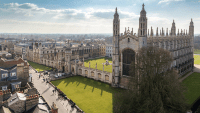
‘What distinguishes Cambridge from Oxford,’ A.A. Milne said in 1939, ‘is that nobody who has been to Cambridge feels impelled to write about it.’ Four decades later, Tom Sharpe would prove him wrong about Cantabrigian reticence with Porterhouse Blue – his riotous satire of the conflict between an idealistic new master and the stuffed shirts of the senior common room. It’s a shame that Sharpe isn’t around to enjoy the Jason Arday scandal – a farce so absurd that even he may have dismissed it as being too silly. When Arday was announced as Cambridge’s professor of sociology of education, he was lauded as the university’s youngest-ever black professor. His biography had a whiff of Hollywood. Arday had been diagnosed with a developmental disorder at the age of three.

To be a Spectator reader was to love Rod

From our UK edition

Since becoming Spectator editor there was one observation I heard more often from readers than any other: ‘Rod is the first page I turn to every week.’ Whatever people’s politics, background or other interests, to be a Spectator reader was to love Rod. Rod did his best, of course, to be unloveable. At least in print. Nothing, and no one, apart from possibly Millwall, was spared from his criticism. Savage, foul-mouthed, merciless. But also hilarious, superbly well-informed and honest. Above all honest. There are all sorts of enlightened souls in and around journalism who pretend to that virtue.

Rod’s bravery made others brave too

From our UK edition

How do you produce the type of person who cares deeply while seemingly not giving a damn? With great difficulty, it turns out. Plenty of people imagine that they can say what they think, but very few do. For most people, some real or imaginary social punishment lies on the horizon: a dinner they won’t be invited to; a club of which they fear they will never become a member. Rod Liddle was one of the happy few who was free. He was free to say what he thought. He was free to voice unpopular opinions and – often harder – he was free to voice popular opinions. When the whole world seemed to be falling on his head he had a perfectly contented attitude towards it.

My debt to Rod Liddle

Rod Liddle got me into journalism. We always had The Spectator lying around the house when I was young. I soon learned to turn to him first, as most good readers of the magazine do.  My father and I would often read his columns aloud to each other and laugh ourselves into fits. That was Rod’s sublime talent: he made people LOL, long before the internet did.  My first job was at the Catholic Herald, and my then-boss Damian Thompson advised me to improve my writing by copying out the articles of my favorite columnist. I chose Rod, obviously, though of course I could never dream of imitating his style or imaginative wit. I particularly enjoyed his fascination with "the nematode worm which stabs itself to death with its own penis.

rod liddle

As mad as it gets

Rod Liddle, associate editor of The Spectator, has died aged 66. This is the first column he wrote for the magazine on March 9, 2002. It's always a life-affirming moment – for me, at least. The aeroplane has groaned and wheezed its way up, up, above the city and – improbably, to my mind – established a sort of equilibrium with the ethereal new world around it. The engines begin to sound more at ease. Perhaps I won't die this time, after all. And then, the seatbelt signs flick off, and from somewhere far down the aisle, towards first class, there comes the chinkety-chink-chink of the trolley. So, I am not going to die – and, better still, I'm going to be given a nice drink.

My night with Rod Liddle

From our UK edition

‘I was 12 when I first got laid.’ ‘Where was that?’ ‘In Middlesbrough.’ ‘How the hell did you get lucky at 12 in Middlesbrough, when I only managed it at 15 and on my father’s boat off Cannes in 1952?’ ‘It was a dark and stormy night.’ This was no tortured confession by some doomed poet or gender-confused feminist, just party banter between the great Rod Liddle – who went Bulwer-Lytton on me – and the poor little Greek boy. The setting: the Old Queen Street garden where The Spectator is located and where we celebrated the sainted editor’s 50th birthday. Before I get to that, though, what is it about Middlesbrough? Is it the water, the climate or the girls that helped Rod lose his virginity so early?

The wisdom of Rod Liddle

From our UK edition

New York At a chic dinner party for some very beautiful women, your correspondent shocked the attendees by quoting an even greater writer than the greatest Greek writer since Homer – Rod Liddle – and his definition of why royalty matters: because it is ‘anachronistic and undemocratic’. Hear, Hear! A particularly attractive guest, Alissa – on a par with Lily James – took me aside and asked me if I really believed what the greatest writer ever, Rod Liddle, had written and I had just quoted. She also asked whom I had in mind as the greatest Greek writer since Homer, and I answered: ‘Moi.’ I then sat down and patiently if not too articulately, owing to a large intake of vodka, explained: God is also an anachronism, but I believe in him as do billions of others.

Durham students’ Rod Liddle protest in pictures

From our UK edition

After eighteen months of Covid, there were some who feared the age-old tradition of the campus leftie had died out. Fortunately the furore about Rod Liddle has revived the inglorious habits of angry undergraduates at Durham University, with dozens of students assembling today to protest the travesty of a columnist's after-dinner speech. Mr S has covered the ups and downs of this sorry tale these past five days, with today's Durham demo being the culmination of efforts to undermine Principal Timothy Luckhurst of South College for inviting Rod to speak at high table. Among the highlights include Jonah Graham, Durham SU's Welfare and Liberation Officer, asserting to the assembled throng that 'this is not an issue about free speech...

Durham University to probe Rod Liddle speech

From our UK edition

The masters of Durham University have reacted with Olympian swiftness to the hysteria which greeted Rod Liddle’s dinner speech at South College on Friday night. Students professed themselves to be ‘literally shaking’ at The Spectator columnist’s comments on sex and gender issues — poor darlings. The adults in and around campus, meanwhile, were equally eager to vent their sense of horror. The local Labour society insisted that 'Our university doesn’t owe hate a platform’ and the Students’ Union demanding the resignation of the College Principal Tim Luckhurst.

Diary – 11 July 2019

From our UK edition

I am beginning to feel like a sort of fairground curiosity: one of those pickled things in jars that Victorians stared at. It is Boris’s fault. Because I once had a close friendship — all right, all right, a tendresse — with Mr Johnson, I am pointed at, photographed, and harried in the aisles of shops. Soon members of the public will be tearing off bits of my clothes — something Russian peasants used to do with anyone who had met the Tsar, as if this would bestow some of Batiushka’s divine status. Tabloid journalists doorstep me, believing I have the answers. I am a female Zoltan Kapathy; not so much an imposterologist as a Borisologist. My present policy is to pretend that I am insane.

Boris and The Sextator farce

From our UK edition

Fourteen years ago, almost to the day, Lloyd Evans and I received a note from Boris. It was the press night of Who’s The Daddy?, our play about the various sex scandals that had engulfed The Spectator in the previous 12 months, and we were terrified about how he’d react. As the editor of the magazine, he would have been within his rights to sack us, given how disloyal we’d been. We had portrayed him as a sex-mad buffoon with a portrait of Margaret Thatcher on his office wall that turned into a pull-down bed — in constant use throughout, needless to say. Not only that, but we’d sent up numerous other members of staff, including Kimberly Fortier, the publisher, Petronella Wyatt, the deputy editor, and Rod Liddle, the magazine’s star columnist.

Letters | 11 July 2019

From our UK edition

Crisis in Hong Kong Sir: It was inspiring to see Hong Kong protesters raising the British flag as a symbol of freedom and liberation — a vivid image of the fondness in which it is held, even more than two decades after our surrender of the territory (‘A question of liberty’, 6 July). However, raising the colonial flag in the legislative chamber was no mere nostalgia but also a challenge to our government. Are we going to stand by today and betray that trust? The British government might be wary of criticising Beijing’s overreach in Hong Kong in case China tightens the screws further against ‘foreign interference in internal affairs’. But that horse has long since bolted.

Women’s work

From our UK edition

I don’t know which day Rod Liddle travelled down from the northeast and found nothing but women’s voices cluttering up Radio 4, as he wrote about in last week’s magazine. But his description is not one I recognise. If anything we still hear too much from male commentators, male presenters, male writers, male comedians. In recent years, for instance, the gender-balance of contributors to the Today programme has improved from the 18 per cent of female guests just a decade ago, but there’s still a long way to go before we need to apologise for wanting to hear more from women. Very often they speak truth to power (because not in power themselves) as did Vera Brittain in her searing account of the impact of the first world war, Testament of Youth.