Rock and roll

The misery of working with Chuck Berry

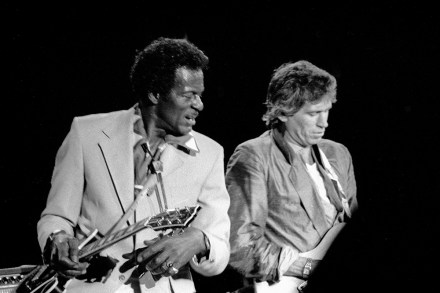
In Ian Leslie’s John & Paul, the creative relationship between the titular Beatles is treated as a platonic love story. Matt Thorne widens the paradigm with seven more pairings, variously rivalrous, amorous, respectful, disrespectful and occasionally frankly tenuous. The 11 American and three British musicians here have careers that collectively cover seven decades of popular music. There are three dynamics at play. First, there are the Thucydides tensions, where a waning power tangles with a rising one. Frank Sinatra invites Elvis Presley to join him on a television show; Keith Richards throws a filmed concert with Chuck Berry. (Richards, for once, is the younger partner.) The older player is not always generous.
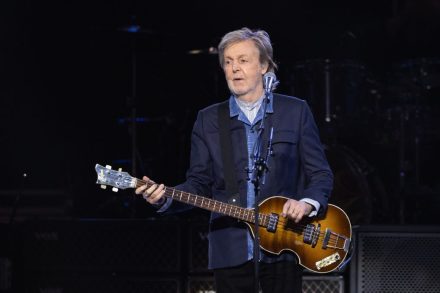
When will the Beatles bandwagon end?

The Beatles broke up in 1970, but you wouldn’t know it from the activity of the last few years. In no particular order, we have had an underwhelming valedictory single, “Now and Then,” raised from the dead thanks to the wonders of artificial intelligence and Peter Jackson alike; an eight-hour – eight!– documentary, Get Back, resurrected from the footage of the Let It Be sessions; and now, an all-singing, all-dancing reissue on Disney+ of the Nineties Anthology documentary series, which has been promoted with the fourth volume of offcuts and rare tracks from the band’s career, appropriately titled Anthology 4.

Springsteen’s Born to Run turns 50

Bruce Springsteen chuckled when I asked him about the making of Born to Run. “I was just a kid in my 20s trying to keep a record deal together – there was nothing more to it than that,” he told me. One way to see the Springsteen of the summer 1975, just before Born to Run released, is to imagine a wispy-bearded, 25-year-old man hanging around a beachfront New Jersey bar, telling you about his life. He relates slightly improbable tales of having attended a local Catholic high school, where one of the supervising nuns expressed her misgivings about his scholastic performance by stuffing him upside down in a garbage can in the classroom.

We’ve underestimated Francis Rossi

From our UK edition

I have a friend who insists that had Status Quo hailed from Düsseldorf rather than Catford, they would nowadays be as critically revered as Can, Faust, Neu! and those other hallowed Teutonic pioneers of unyielding rhythm from the 1970s. Maybe so. Very probably not. Canned Heat and ZZ Top seem more reachable comparisons. But it’s true that ‘the Quo’ have been underestimated and unjustly derided throughout their six-decade career, not least by themselves. The band has happily perpetuated their position as rock and roll neanderthals: a 2007 album is titled In Search Of The Fourth Chord. There was always a little more to it than that. Personally, I have always divined a terrible sadness at the heart of their music.

My adventures in experimental music – by David Keenan

From our UK edition

David Keenan acquired his craft as a music writer, he says, from reading the crème de la crème of critics who milked rock music for all it was worth during the 1970s – Lester Bangs, Griel Marcus, Paul Morley, Biba Kopf – before deciding that rock criticism was not his bag. In the preface to this weighty collection of his music journalism, he says he considered himself more of a ‘rock evangelist’. The pieces originally appeared between 1998, when Keenan was writing for hardcore music magazines such as Melody Maker, MOJO and the Wire, and 2015, after which he checked out of regular reviewing duties to pursue his career as a novelist. Luckily for him, his debut novel This Is Memorial Device proved a smash hit.

So long, Marianne Faithfull

From our UK edition

Anyone of a certain age is aware of the urban legend that links Marianne Faithfull, a Mars bar and Mick Jagger. But Marianne’s death yesterday at the grand age of 78 (given her lifestyle, how did she get that old?) really does remove one of the last living links with the golden age of rock and roll in its wildest youth. For Marianne embodied every cliche associated with rock excess: the lover of three of the original five members of the Rolling Stones (Mick, Keith Richards and Brian Jones), she also took on David Bowie, but had the good sense or taste to reject the amorous advances of Bob Dylan and Jimi Hendrix.  After the affair with Mick ended, Marianne had a lost weekend in the 1970s lasting for five years while she was deep in the throes of heroin addiction.

Jeff Beck was that good

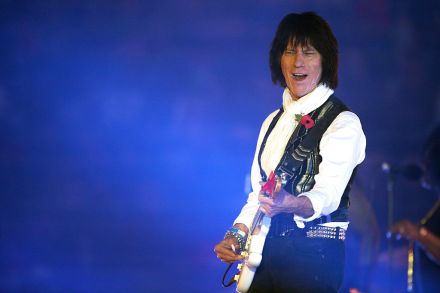
Relatively few rock musicians would care to replace Eric Clapton in a band, or to veer spectacularly off course to record a free-form jazz-inflected album that defied prediction to sell two million copies, or for that matter to laughingly turn down an invitation to become a fully fledged member of the Rolling Stones. The British guitarist Jeff Beck, who died this week at the age of 78, did all of these things and more. A brilliantly gifted instrumentalist, he never kept still musically. To call Beck the David Bowie of the guitar world would be to confer a somewhat misleading sense of consistency on a maverick who seemed to reinvent himself with every album, and sometimes every song.

Bob Dylan — from respected young songwriter to Voice of a Generation

From our UK edition

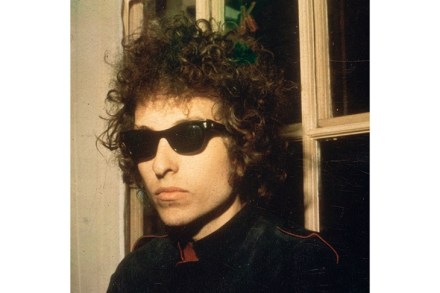
Clinton Heylin is the eminence grise of Bob Dylan scholars: co-founder of Wanted Man (the magazine dedicated to studying Dylan’s life and work), long-time editor of its quarterly magazine the Telegraph, compiler of Stolen Moments: The Ultimate Dylan Reference Book and also the author of Behind the Shades, which, when first published in 1991, was rightly praised as the most reliable account of Dylan’s life and career up to that point. Dylan has accomplished a great deal since then, including becoming a Nobel Laureate, so it’s not surprising that Heylin should want to bring his account up to date, especially since a large new collection of Dylan material has recently been deposited in the Gilcrease Museum in Tulsa.