Restaurants

Great Colorado restaurants, now with Michelin nods 

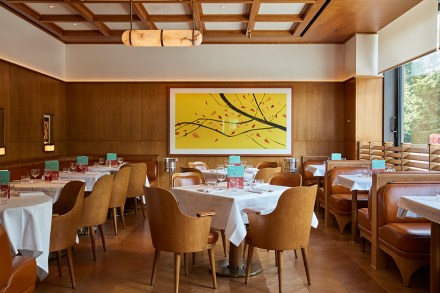
I’ll fight you to the death on this one: Colorado’s dining scene is hotter than a habanero.  A land-locked state within spitting distance of the culinary vacuum that is the Midwest (sorry, Chicago) might not spring to mind for its food scene. But nods from the Michelin guide prove the Mile High City and wider Colorado have a story to tell, minted in September 2023. I hopped in the Subaru and sampled a smattering of them, from Denver’s farm-to-table outposts, to whimsical epicurean adventures in Aspen, via stylish Italian brunches in Boulder. Denver Glo Noodle House 4450 W 38th Ave, Denver, CO 80212 As a tourist, you’ve got to hit Denver Biscuit Company for brunch, once.

colorado food

‘You can stare at a cow you will soon eat’: The Newt, Hadspen, reviewed

From our UK edition

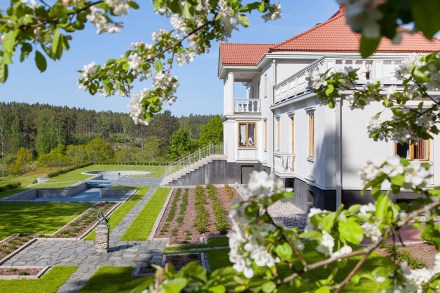
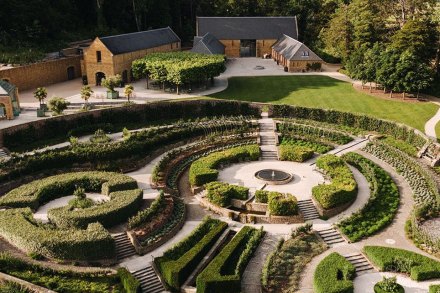
The Newt is an idealised country house in Somerset which won the World’s Best Boutique Hotel award last year. It is small, beautiful and mind-meltingly expensive, even for the Bruton Triangle and its mooing art galleries. Poor Somerset! It never wanted to be monied enough to have a triangle, but the rich make their own mythology. Since they paint every-thing grey – and now green, I learn at the Newt – they need it. A triangle fills the day. The Newt is for people who think that Babington House is stupid (it is) and though the Newt has its own issues – like the King, its taste is almost too immaculate – you never feel that the chief executive of a media conglomerate will bounce past you on a space hopper eating a fishfinger sandwich and shouting into an iPhone.

Meeting Eric Ripert, chef of America’s best restaurant 

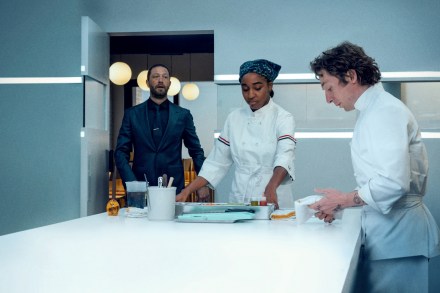
For Eric Ripert, cooking is like jazz. Ad-libbing, balance, motion. “One day the garlic is very pungent, one day it is not pungent. One day the onion is very juicy and sweet, one day it’s less, so you have to adapt all the time,” says the celebrated chef, who is the co-owner of Manhattan’s Le Bernardin, a close friend of the late Anthony Bourdain and a TV personality in his own right. “So, it’s very similar to music — I do not play the same notes all the time, I take a lot of freedom and liberties. Because I can.” Ripert is French but has — like his storied restaurant — become a New York institution. The chef lives on the Upper East Side with his glamorous, dark-haired wife Sandra (a real-estate broker who is Brooklyn born-and-raised, of Puerto Rican descent).

Ripert
Megève

Megève’s enduring magic

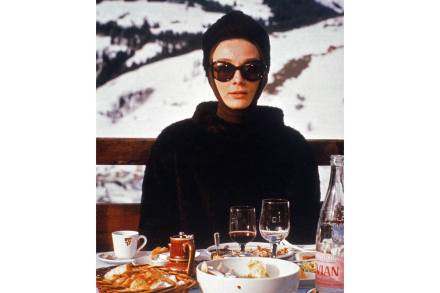
Kitted out in black Givenchy, huge sunglasses blocking out the snow glare, Audrey Hepburn is lunching al fresco in the French Alps when a meet-cute with Cary Grant ensues. It’s the opening scene of Charade, filmed just over sixty years ago in Megève — the chichi winter resort for both Hollywood royalty and true bluebloods during the 1960s. Back then, Brigitte Bardot, Yves Montand and Jean Cocteau were often seen swooping down its pistes. Imagine a snow-dusted Saint-Tropez and you’re on the right track. This medieval market town was hardly destined to become a darling of the beau monde. Megève was something of a backwater (the name even translates to “village in the middle of the waters”) until 1920, when Baroness Noémie de Rothschild spotted its potential.

Opening a bottle with… Angela Hartnett

Quizzed on how to assimilate to new cultures, travel writer and celebrity chef Anthony Bourdain once said: “Drink heavily with locals whenever possible.” The “Opening a bottle with…” series is about getting pickled with people far cooler than I am, in new places. To me, booking a ski trip at the start of the year is the ultimate luxury. With my birthday falling on the first of January, when the ball drops, I feel a sense of melancholy. As hangovers descend and diets begin, I want to carry on celebrating.  In European ski resorts, they keep the festivities going well into March. Christmas lights and religious displays stay twinkling. Fresh snow combats the winter blues. Everyone’s happy to share a bottle of good wine.

angela hartnett

‘Is it France? I don’t know’: Hôtel de Crillon, Paris, reviewed

From our UK edition

Hôtel de Crillon sits on the Place de la Concorde, a vast square renamed for bloodshed, then the lack of it – it was the Place de la Révolution, with knitting and bouncing heads. Now it is placid, and the Crillon is the most placid thing in it. No one does grand hotels like the French, except perhaps the Swiss, who have nothing better to do. Hôtel de Crillon was one of twin palaces commissioned by Louis XV before the French butchered his grandson and his wife outside them: it looks like Buckingham Palace but prettier and with possible PTSD. It has been a hotel for 115 years and next to it our Ritz and Savoy look grubby, needy even, but they were built for the bourgeoisie. They have a different kind of grandeur, a kind I prefer.

‘I pity MPs more than ever’: the Cinnamon Club, reviewed

From our UK edition

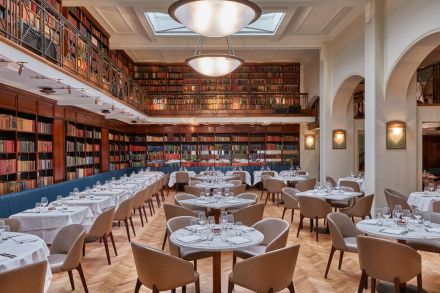
The Cinnamon Club appears on lists of MPs favourite restaurants: if they can still eat this late into a parliament. It lives in the old Westminster Library on Great Smith Street, a curiously bloodless part of London, and an irresistible metaphor wherever you are. When once you ate knowledge, you now eat flesh, but only if you can afford it. Now there is the Charing Cross Library, which lives next to the Garrick Theatre, and looks curiously oppressed. Perhaps soon it will be a falafel shack and knows it. There is also the Central Reference Library, which could be a KFC, and soon will be. Public spaces are shrinking. They will all be online soon, and we will see how that goes. (It will be bad.) The Cinnamon Club, which identifies as ‘fine dining’, seeks finesse. What for?

‘The lasagne is perfect’: Hotel La Calcina, Venice, reviewed

From our UK edition

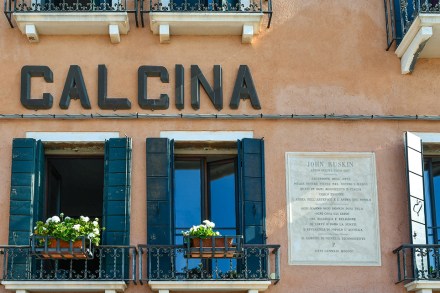
Pensione La Calcina is one of John Ruskin’s houses in Venice. He stayed here in 1877, after completing The Stones of Venice and going mad, and there is a plaque for him on the wall: a stone of his own. It is next to the Swiss consulate on the Zattere, but never mind them. I think the Zattere is for people who have tired of Venice. It has a view to the Giudeccacanal, and the waterbus to the airport: to the exit. You can breathe here. I am staying in San Marco, where I can’t. My son falls from a water gate into a canal, and Italian grandmothers tut at us, and we get sick, which my friend says is ‘very chic in Venice’. Before we get sick, we eat at La Calcina.

‘The chocolate soufflé is too good for people’: Pavyllon at the Four Seasons Hotel, reviewed

From our UK edition

One in, one out, as Rick says in Casablanca. Le Gavroche, which was the first restaurant in Britain to win three Michelin stars – and this was before Michelin stars indicated poor mental health in gifted chefs – closes in January, which is serious news in the land of London restaurants: a kind of Congress of Vienna with Michel Roux bowing out with the blood of infinite chickens on his knife. I don’t love Le Gavroche the way other critics do but I admire it, even if it means ‘urchin’, which is not witty when you consider its prices. There was a scandal involving staff’s tips going to management – an ongoing obscenity, though this one was resolved – and I also think that if you desire French food you could just go to France. It’s not far, at least in miles.

‘The potential for jeopardy’: Pullman Dining on the Great Western Railway, reviewed

From our UK edition

I am lazy and nosy, and so I spend a lot of time on the GWR service from Penzance to London Paddington. Each journey is a play with a unique atmosphere. Some are seething, particularly in summer when an eight-carriage train cannot fit everyone who wants to swim in the ocean but dine in west London that same night. Some are non-committal; some restful. I rage at usual things: luggage in the disabled space, which is almost always occupied by the non-disabled, though they may be fat; videos played without headphones; young people swearing at older people because they grapple with a rage they cannot understand. You can measure the social contract on any long train journey, and I have. It’s broken.

‘The food is as good as you will find in London’: Saison at Raffles London, reviewed

From our UK edition

The Old War Office (bad acronym OWO) on Whitehall is now a Raffles hotel: you can stay in Winston Churchill’s office if that helps you sleep at night. I’m not sure I could, but this is the rational endgame of privatisation: you can sleep inside British history, which is quite close to sleeping through it. War isn’t the jolly marketing riff it was five weeks ago, and the atmosphere in the OWO reflects this. Even so, you need the money of a (fleeing) Tory donor to stay here, and perhaps they won’t notice that pre-war is outside their door in the form of children setting off fireworks and picking fights with the police during marches ‘for’ Palestine.

‘They do better spaghetti bolognese in Hampstead for a tenner’: The Lobby at The Peninsula, reviewed

From our UK edition

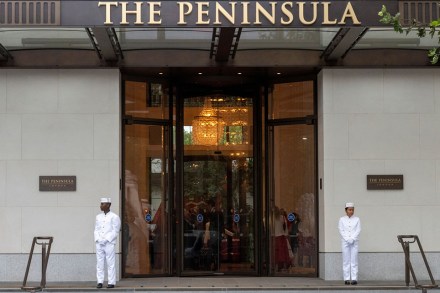
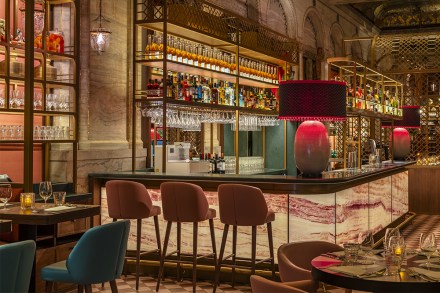
The Peninsula is a new hotel at Hyde Park Corner. It is part of the trend for absurd expense: rooms start at £1,400 a night and express the kind of preening mono-chrome blandness that will be the London of the future. It is a building of great ugliness – I would type the names of planners who allowed it, but on these pages it is incitement to violence. It sits on its six-lane round-about between the Lanesborough hotel and a long peeling red-brick late Victorian terrace that once appeared in a Stephen Poliakoff film about how things always fall apart. This food knows nothing of beauty, delicacy or comfort: it’s a grift It isn’t really a hotel, I think, staring: it doesn’t have that much identity.

‘Well-priced and skilful’: Masala Zone, reviewed

From our UK edition

There are cursed restaurants and cursed women, and this makes them no less interesting. One is Maxim’s in Paris, which knows it – it gaily sells ties in a charnel house decorated for the Masque of the Red Death – and another is the Criterion at Piccadilly Circus, which doesn’t. One day it might meet its destiny, which is to be an Angus Steakhouse (this might lift the curse, the Angus Steakhouse has its own magic) but it isn’t there yet. Restaurant after restaurant favours hope over experience here: Marco Pierre White (Mark White) passed through, spilling acronyms about. I suppose it serves it right for being in the neo-Byzantine style. Don’t restaurant developers watch horror films?

Fine food in a fine restaurant: Origin City reviewed

From our UK edition

Origin City is a good name for this restaurant, whether it knows it or not. It is at West Smithfield, the only surviving wholesale market in the City of London (I do not count Borough, which is a snack shack impersonating a greengrocers and is only spiritually in the City). Covent Garden sells face cream – Eliza Doolittle didn’t need it – and Billingsgate awoke one morning to find itself on the Isle of Dogs. Somehow the cows hung on in West Smithfield. We owe them a lot but I would say that, I am a restaurant critic. Somehow the cows hung on in West Smithfield. We owe them a lot This is the most interesting part of the City of London: St Bartholomew the Great, of God and Four Weddings and a Funeral – the one where Charles was punched, fairly – and Cloth Fair.

As gaudy as Versailles: The Duchess of Cornwall in Poundbury reviewed

From our UK edition

Poundbury is the King’s idealised town in Dorchester, built on his land to his specifications: the town that sprung out of his head. (‘My dream,’ says Harry Enfield in The Windsors, ‘was always to build a mixed-used residential suburb on the outskirts of Dorchester.’) It is so fascinating that I dream, briefly, of moving in for the completeness of the vision – who doesn’t want to live inside art? – and the portrait of the British class system in housing. Here it is, at last, laid out like a textbook: journey’s end. We order via app and pay in advance: there is a shortage of what tabloids call flunkeys It is becalmed on a Sunday evening, and sun saturated: there is almost no one about. Perhaps the residents are indoors, enjoying the lushness of their fittings.

Bruton is suddenly the place to be – and I have a theory why: At the Chapel reviewed

From our UK edition

At the Chapel, Bruton, is a restaurant and hotel in a former chapel in Bruton. This was once an ordinary town in Somerset, with a note in the Domesday Book, a ruined priory and a famous dovecote on a hill. Bruton is known for a flood in 1917 – it was the second-largest one-day rainfall measured in the UK – but another calamity was coming. In 2014 the art gallery Hauser & Wirth, with branches in London, Zurich and New York, decided it needed a premises in Bruton, and a restaurant called the Roth Bar and Grill. There is also an Instagram-friendly farmhouse to rent on this site. When I toured it, the price was £666 a night, including the art and, I hope, a food gift basket and, I suspect, an ancient native Briton graveyard.

A Margherita in Tolkien’s Middle-earth: Pizza in the Courtyard at Sarehole Mill reviewed

From our UK edition

Sarehole Mill is four miles south of the centre of Birmingham. If this were a fairy tale, and it should be, it would follow that Birmingham swallowed Sarehole a century ago, like a dragon and its prey. I like Birmingham: I like its optimism, its violence and its multiplex, which can match any American Midwest mall in competitive dystopia and idiocy. Birmingham has energy, and that swallowed Sarehole, but unfortunately for Birmingham, there was a writer who cared: John Ronald Reuel Tolkien.Sarehole was his childhood palace, and now, more reluctantly I would imagine, his memorial pizzeria.

‘Thinks of the diner, not the chef’: Claridge’s Restaurant, reviewed

From our UK edition

The BBC made a very odd documentary about the renovation of Claridge’s: The Mayfair Hotel Megabuild. They filmed, agog, as the hotel grew eight new storeys – three above, and five below – between 2014 and 2021 while staying open: guests slept and ate, unaware of ‘Narnia doors’ to the building site. (That Narnia is where guests aren’t indicates what Claridge’s employees cannot put into words without spontaneously combusting.) Labourers dug the basement by hand and impersonated the Artful Dodger when management toured. The BBC described the new penthouse at length without mentioning that it is gross, with a grand piano in a glass box on a terrace like a Richard Clayderman-themed nightmare. A roof was assembled off-site and stuck on as for a doll’s house.

Big Little Bavaria on Thames: Bierschenke bierkeller reviewed

From our UK edition

I am not sure the vast Bierschenke bierkeller in Covent Garden is successful, even if it is skilful: I worry it is the wrong place for it. People go to Covent Garden to buy gym clothes, watch musical theatre and pick up men, not to find Wagner and pigs and the drumbeat of the earth: Covent Garden is more Kit Kat Club than Twilight of the Gods with sausage. I am not saying you must be into Götterdämmerung to enjoy this restaurant. It just helps. There is no atmosphere I can find, and I think this is deliberate: a beer hall is an existential void to fill  It used to be in the City of London, and that worked. City men are savages, mining for gold: they would absolutely kill a pig. That is what beer halls are, base: wheat, fat, sweat.

Hold the haggis: the changing face of Scottish food

From our UK edition

Ask someone south of the border for their thoughts on Scottish cuisine and they’ll inevitably offer up thoughts of two Gaelic gastronomic inventions: haggis and deep-fried Mars bars.  Despite the wealth of produce available – and exported – from the country, Scottish fare has struggled to shake its tartan-clad clichés Despite the wealth of produce available – and exported – from the country, Scottish fare has struggled to shake its tartan-clad clichés. Take a table in London and you’ll find Orkney scallops, Isle of Mull oysters, highland venison and Outer Hebridean whisky on restaurant menus, while bonnie chefs like Quo Vadis’s charismatic Jeremy Lee and industry darling Adam Handling lead the capital’s kitchens.