Renaissance

Built for eternity

From our UK edition

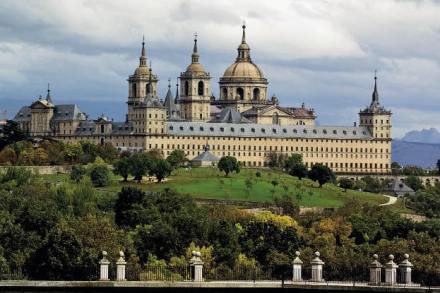
The Escorial, as a monastery and a royal palace, was the brain child of Philip II of Spain. Built in the latter half of the 16th century, about 30 miles north-west of Madrid, the huge granite complex with 4,000 rooms, 16 courtyards, a basilica, a library and picture gallery as well as the king’s private apartments, came to be regarded as the creation of a cold-hearted despot cut off from the outside world. For Richard Ford, whose 1850 Handbook for Travellers in Spain is the most learned guidebook ever written, the Escorial ‘was as cold as the grey eye and granite heart of its founder’.
The king of chiaroscuro

From our UK edition

These days, it is easy to take it for granted that Caravaggio (1571-1610) is the most popular of the old masters, yet it was not ever thus. In my Baedeker’s Central Italy (published exactly 100 years ago), he is acknowledged as having been ‘the chief of the Naturalist School’, but it is pointed out that from the outset ‘it was objected that his drawing was bad, that he failed in the essential of grouping the figures in his larger compositions.’ The first major exhibition of his works — in what has only very recently been established as the city of his birth, Milan — did not take place until 1951.