Religion

Ken’s identity crisis

From our UK edition

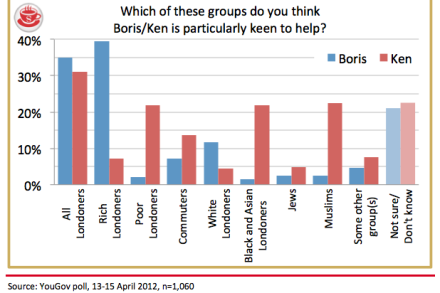
Jonathan Freedland’s column in The Guardian today, explaining why he can’t vote for Ken Livingstone, is a remarkably direct piece of journalism. Freedland states that he ‘can no longer do what I and others did in 2008, putting to one side the statements, insults and gestures that had offended me, my fellow Jews and — one hopes — every Londoner who abhors prejudice’. Now, as Paul Goodman argues, we shouldn’t overstate the importance of a traditionally Labour supporting Guardian columnist coming out against Ken Livingstone. But Freedland’s reasons for doing so are ones that, I suspect, will resonate with a significant section of opinion. The issue with Livingstone is that his politics are sectional.

Sundays should be about more than just economics

From our UK edition

The Chancellor didn't even bother to hide the thick end of the wedge as he inserted the thin end into the Sunday trading laws. He declared yesterday that restrictions on Sunday trading would be lifted for the duration of the Olympics and Paralympics on the basis that ‘It would be a great shame if the country had a “closed for business” sign on it.’ And he went on to remark, ‘maybe we will learn some lessons from it’. What might those be, do you suppose? That people, left to themselves, will shop all day, every day and should therefore be able to?

From the archives: Rowan Williams on capitalism and idolatry

From our UK edition

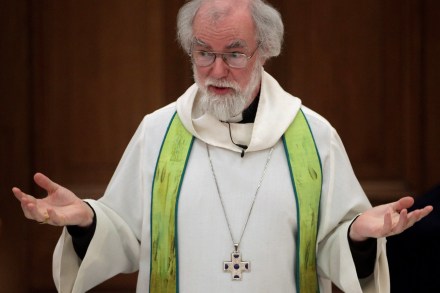
To mark today’s news that Rowan Williams will be stepping down as Archbishop of Canterbury, here’s a piece he wrote for The Spectator during the financial crash of 2008: Rowan Williams, Face it: Marx was partly right about capitalism, 24 September 2008 Readers of Anthony Trollope will remember how thoughtless and greedy young men in the Victorian professions can be lured into ruin by accepting ‘accommodation bills’ from their shifty acquaintances. They make themselves liable for the debts of others; and only too late do they discover that they are trapped in a web of financial mechanics that forces them to pay hugely inflated sums for obligations or services they have had nothing to do with.

Where Rowan went wrong

From our UK edition

Rowan Williams will step down at the end of 2012, having been Primate of All England for a decade. It is already clear that his term of office has been disastrous. Church people have affection for him, respect even. He is not blamed for the disaster, since he is only doing a job he was asked to do — not one he sought. He was a bishop of the Church in Wales almost by accident, because of his academic fame, not because he had ever wanted to be a career bishop. Nobody has accused him of ambition, though there is perhaps a little vanity there — about his poetry and his interest in the remoter depths of philosophy and theology.

Sentamu’s the right man for the job

From our UK edition

A few weeks ago, in a cover piece for the magazine, Rod Liddle backed John Sentamu as the next Archbishop of Canterbury. Given that Rowan Williams announced his resignation today, here's that article again: Who shall be the next Archbishop of Canterbury, do you suppose? They are jockeying for position at the moment, suffused with godliness and the distinct suspicion that old beardie has had more than enough and may wish to shuffle off to a warm university sinecure some time soon. The more cynical among you might not give a monkey’s and, indeed, suggest that jockeying for position to inherit Rowan’s mantle is akin to jockeying within the Romanov family to inherit Nicholas II’s mantle in about 1915.

A kind man stands down

From our UK edition

So goodbye, Rowan. The Archbishop of Canterbury has announced that he will stand down at the end of the year (leaving Britain bereft of bearded authority figures). Inevitably, people will say he failed. The Anglican Communion is at war with itself over gays and women bishops and the place of religion in a secular multi-cultural society, and he has been unable to broker any kind of peace.   But it is important to acknowledge that — even if, for all his intelligence, he often struggled to express himself clearly — Dr Williams is widely respected as a good and graceful man. I interviewed him a few years ago, and he was kind and lacking in self-importance.

The case against gay marriage

From our UK edition

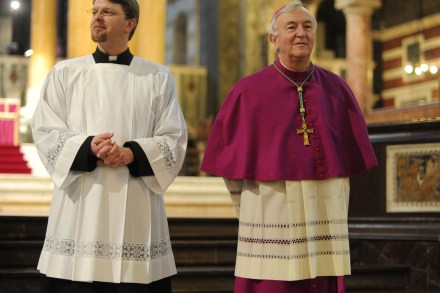
Last night, we posted Douglas Murray's conservative argument in favour of same-sex marriage. Here's the opposite view: Consultations are, for the prudent, an exercise you only engage in when you’re quite sure of the outcome. I’m not sure, then, that Vincent Nichols, the Archbishop of Westminster, is entirely wise to go all out in galvanising the Catholic community into action against the Government’s plans to legalise gay marriage. As the Daily Telegraph reports today, he is issuing a letter to be read out in churches on Sunday to urge congregations to participate in the Coalition’s consultation exercise on the proposal — against.

The conservative case for equal marriage

From our UK edition

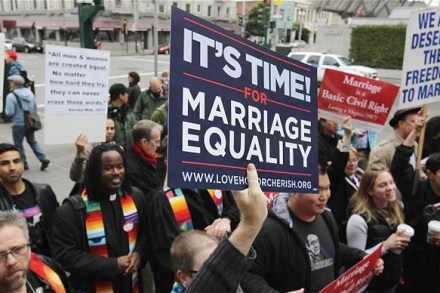
With some right-wing voices — including Catholic Cardinal Keith O'Brien, Tory MP Peter Bone and the Daily Telegraph — speaking out against same-sex marriage, here’s a piece Douglas Murray wrote for The Spectator in October arguing that conservatives should instead be welcoming it: In America a new generation of Republicans is challenging the traditional consensus of their party on gay marriage. They — as well as some of the GOP old guard like Dick Cheney — are coming out in favour. In Britain the subject is also back on the agenda with the coalition government, at the insistence of the Prime Minister apparently, planning a ‘public consultation’ on the matter.

Why Baroness Warsi has it wrong

From our UK edition

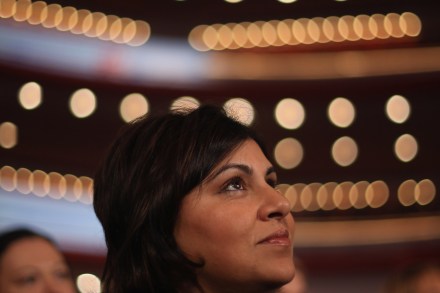
For someone who has profited so well from her religion, it is particularly striking that Baroness Warsi should claim today that our societies are suffering because of ‘a militant secularisation’ which she claims is ‘taking hold.’ And worse, she says, that ‘one of the most worrying aspects about this militant secularisation is that at its core and in its instincts it is deeply intolerant. It demonstrates similar traits to totalitarian regimes.’ Not merely ‘militant’ and ‘worrying’, but ‘similar traits’ to those of ‘totalitarian regimes.’ Before addressing the numerous ways in which Warsi is wrong, I should note the one point on which I think she is right.

Why Prof Dawkins has it wrong

From our UK edition

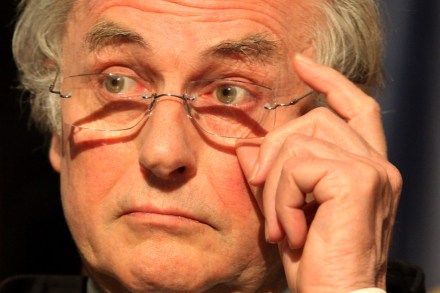
No sooner does Baroness Warsi denounce militant secularists who try to marginalise Christianity than, bang on cue, up surfaces Richard Dawkins with a survey commissioned by his Foundation for Reason and Science intended to demonstrate that Christianity is a minority pursuit. His Ipsos MORI poll, published today, is intended to unpick that bit of the 2001 census which found that more than 70 per cent of respondents identify themselves as Christian.

Romney’s continuing religious troubles

From our UK edition

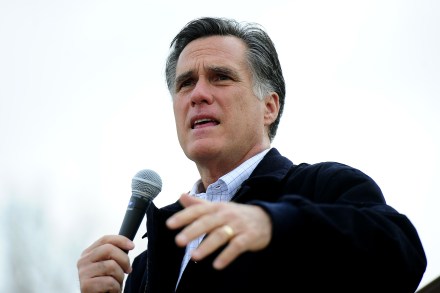
Some well-informed people — Rupert Murdoch among them — have suggested that Mitt Romney could exploit Obama’s increasingly fractious relationship with America’s Catholics to win the presidential elections in November. The so-called 'Catholic vote' is often said to be the crucial swing factor in American democracy. Romney, however, may be facing a bigger socio-religious stumbling block than Obama's: evangelicals. They don’t like him. Mainstream Protestant Republicans in the north have plumped for Mitt, generally speaking, but he has been far less successful in the evangelical south. ‘As a county’s evangelical population expands,' says Real Clear Politics analyst Sean Trende, 'Romney’s vote share declines.

Sentamu for Canterbury!

From our UK edition

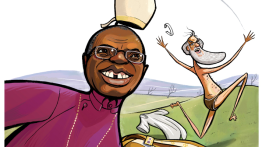
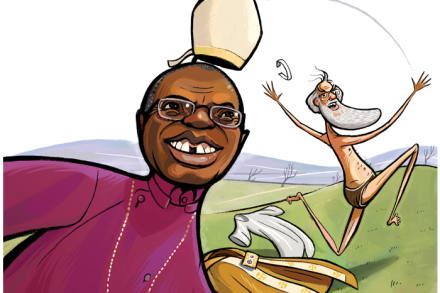
John Sentamu, the Archbishop of York, is our cover boy this week. It's the Church of England Synod next week, word is that Rowan Williams will be standing down soon, and Rod Liddle is backing Sentamu as his successor. When planning the headline, I thought about calling him the 'British Obama'. We didn't use this, as it's not a compliment — but if Britain is to have a figure who epitomises our country's inherent tolerance and open-mindedness I'd pick Sentamu above anyone else in public life. If he was made Archbishop, I really don't think there would be an uproar about the fact that he's black, or even that he came here as an Ugandan asylum seeker and still speaks with an accent.

The benefits of religion flow from belief

From our UK edition

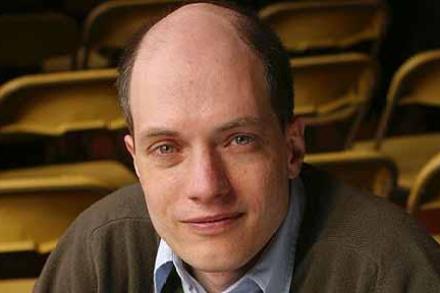
Most Spectator readers have probably heard by now of Alain de Botton's latest, Religion for Atheists, in which he argues that the benefits of religion are too great to be confined to believers — not least because he wrote the Diary column for this week's magazine. And for those who haven't yet read about the book, let alone read it, they need look no further than Terry Eagleton's brilliant demolition of the argument in The Guardian. Mr de Botton is, he makes clear, in a very long and not entirely creditable line of those who find religion intolerable for themselves but useful for others, notably the servant classes: Matthew Arnold and Auguste Comte in particular. Indeed Mr de Botton himself acknowledges that his big idea is not new.

The frontiers of freedom

From our UK edition

The problem with Nick Cohen’s very readable You Can’t Read This Book is the way that you can, glaringly, read this book. This isn’t quite as glib an observation as it sounds. Cohen’s central point is that the censors’ pens did not fall down with the Berlin Wall. And yet here he is, very obviously free to tell us about them. Cohen is a rambunctious pessimist.

Helping our unbelief

From our UK edition

Over 125 of the 320 pages in this book are either blank, or taken up with black-and-white illustrations, of subjects as various as Madonna and her former husband Guy Ritchie, slates arranged by Richard Long, Buddhist truth-seekers going for a walk in a wood, and a little boy having his Bar Mitzvah in a New York restaurant. It is in the remaining 200 or so pages that the author must persuade his readers that there is no reason why atheists should not practise a religion, or, if they are not disposed to follow one of the existing cults, why they should not make one up for themselves. It is an attractive point of view. ‘La guerre’, as Clemenceau noted, ‘c’est une chose trop grave pour la confier à des militaires’.

The evil being perpetrated against Christians in Nigeria

From our UK edition

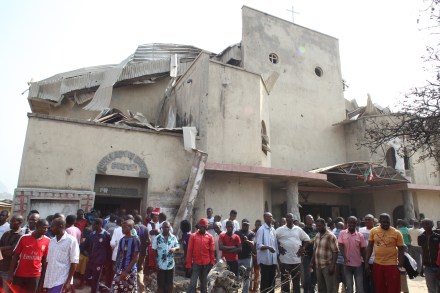
The religious cleansing against Christians is intensifying in Nigeria, where Christians have been told they have until Friday to leave the country or face attacks by Islamic extremists. As I wrote recently in the Daily Telegraph, this is a trend sweeping the Middle East. Thousands are fleeing Iraq and Egypt, but Nigeria is the scene of the most ferocious attacks. Its government condemns the attacks, but seems unable to respond to the Boko Haram menace. This from the National Review: ‘Catholic archbishop John Onaiyekan, of Abuja, Nigeria’s capital city, appealed for help. “It’s a national tragedy. We are all unsecured. It’s not only Catholic. Today it’s us. Tomorrow we don’t know who it will be,” he said.

We can’t ignore the persecution of Christians in the Middle East

From our UK edition

William Hague has transformed the Foreign Office in his 18 months in charge. He inherited a system hardwired with the dynsfunctionality of the Labour years, and it’s almost fixed. But not quite. It has not yet woken up to the wave of what can only be called ‘religious cleansing’ in the Middle East, which I look at in my Telegraph column today. Here’s a rundown of my main points. 1) The killing has begun, and could get worse. In Iraq, about two thirds of its 1.4 million Christians have now fled — being firebombed by the jihadis. Last year, gunmen entered a Baghdad church and killed 58 parishioners. To go to church in Iraq, which Christians have been doing for two millennia, now means risking your life.

Cameron’s missing the point: Christian values require Christianity

From our UK edition

The Prime Minister does God. At least, that's the gist of his first major speech on religion. Actually, the interesting thing is that a Tory Prime Minister feels that he has to make the point that he is a Christian. Other than Michael Howard, who was Jewish, most other Tory leaders could have assumed we’d take it as read that he or she was more or less CofE, including Mrs Thatcher, who was, of course, a Methodist.  Following Richard Dawkins' remark that the Prime Minister may 'not really' be a Christian, Mr Cameron responded: 'I am a committed – but I have to say vaguely practising – Church of England Christian, who will stand up for the values and principles of my faith'.

We cannot forget the riots, nor ignore their causes

From our UK edition

If I’d said that an MP had accused the Church of England of being too obsessed with gay marriage and women priests — and not worried enough about how God can keep young boys out of harm’s way — you’d probably imagine that a Tory had gone nuts. But this is the David Lammy, Labour MP for Tottenham, who has gave an interview to our Books Blog. In it, he elaborates on the theme of his new book: that his colleagues are so keen to help single mothers that they’ve lost sight of what really helps working class boys. Amongst the contributing factors, he mentions two things that may cast him out as a heretic in Labour’s secular religion: fathers, and God.   Lammy’s book, Out of the Ashes, was released yesterday. On Monday.