Religion

In defence of the CofE’s House of Laity

From our UK edition

Even friends of an Established church like myself – though I’m a Catholic – should think twice about the wisdom of the idea after the naked political interference in the affairs of the CofE in the Commons. The Speaker, who is non-religious/agnostic, was among the most overt in encouraging MPs to overturn the church’s decision not to approve women bishops. Perhaps, he suggested, they might like to refer the matter to the Equalities Minister (Maria Miller)? It was more or less to say that the equalities legislation should be brought to bear on the CofE when it comes to its way of appointing bishops. Ben Bradshaw too was all in favour of parliament getting involved. So was Chris Bryant, who is not only an ex-Anglican vicar, but by his own account an ex-Christian.

The Church of England is becoming a church in England

From our UK edition

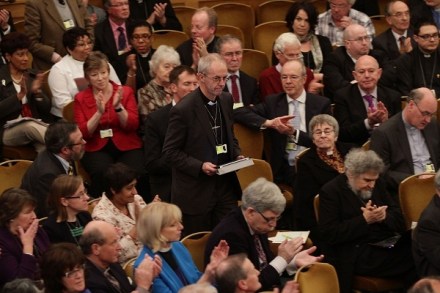
This morning’s newspapers (and indeed the airwaves) are full of apocalyptic predictions about the future of the Church of England. The failure of the General Synod to ordain women bishops has surprised plenty of bishops, many of whom express their ‘deep sadness’ about the affair to the (£) Times’ Ruth Gledhill. Yet the threat of schism on this issue is not wholly surprising, not least because the Anglican Church has rarely taken happily to reform. From the storms over Matthew Parker’s 39 Articles to this latest controversy, the C of E’s evolution has often been fractious. However, as a relatively faithful parishioner of the CofE, this affair does surprise me in one respect.

Wole Soyinka: Boko Haram must be destroyed

From our UK edition

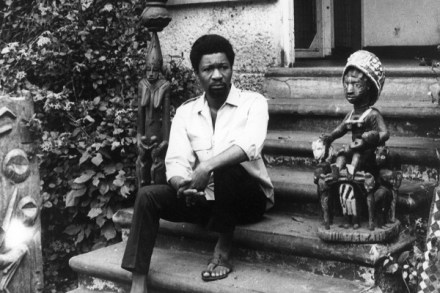
Born in 1934 in Nigeria, Wole Soyinka is the author of more than twenty plays, ten volumes of poetry, two novels, seven collections of essays and five autobiographical works. He won the Nobel Prize for Literature in 1986. He was the first black African man to win the prestigious prize His latest book, Of Africa, is a 200-page polemic that attempts to understand the contradictory nature of African politics. Two important questions that arise from Soyinka’s book are: what is Africa? And what do we understand of its history? Soyinka expends considerable effort in his book discussing how the nihilist nature of fundamentalist Islam is destroying societies in certain African nations: particularly in Somali, Mali, and Nigeria.

Sharon Olds’ fear and self-loathing

From our UK edition

Since the publication of her debut collection, Satan Says in 1980, which was awarded the inaugural San Francisco Poetry Center Award, Sharon Olds has become a prominent - and controversial - voice in American poetry. Olds’ work has been given many unflattering adjectives from her harshest critics: self-indulgent, sensationalist, solipsistic, and pornographic, to name a few. While her confessional, and overtly autobiographical style, may not be to every critics’ taste, Olds’ candid voice, describing her own troubled childhood; the human body; and a world which very often displays fear, violence, love and kindness, in equal measure, has seen her become one of the most widely read poets of her generation.

Why Old Etonian Justin Welby is good news for the CofE

From our UK edition

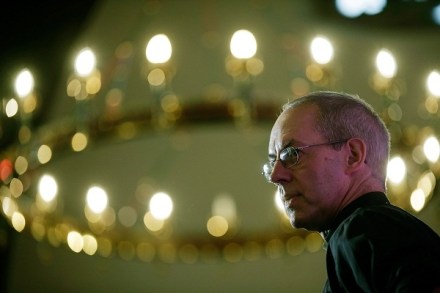
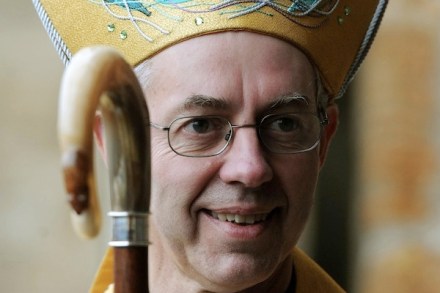
So, another Old Etonian at the apex of the British establishment: Justin Welby, the Bishop of Durham, will be the next Archbishop of Canterbury. It’s sweet, in a way. All we need now is an OE named as Bank of England Governor, and David Cameron’s alma mater will have the complete power set. But it would be wrong to be too chippy about Welby’s elevation. Representatives at Number 10 actually pushed for John Sentamu, the charismatic conservative African, who had the blessing of, among others, Rod Liddle. But they got Welby instead. And why not? He seems a worthy enough choice, regardless of his 'lack of experience' as a bishop – he's a former oil executive who saw the light.

William Rowley and the death of Prince Henry – poetry

From our UK edition

‘To the Grave’ Unclasp thy womb, thou mortuary shrine, And take the worst part of the best we had. Thou hast no harbourage for things divine, That thou had'st any part was yet too bad. Graves, for the grave, are fit, unfit for thee Was our sweet branch of youthful royalty. Thou must restore each atom back again When that day comes that stands beyond all night. His fame (meanwhile) shall here on earth remain, Lo thus we have divided our delight: Heaven keeps his spirit stalled amongst the just, We keep his memory, and thou his dust. Prince Henry was the eldest son of James I and VI (that’s first of England, sixth of Scotland). In 1612 he died at the age of eighteen. An extraordinary period of spontaneous popular mourning followed.

Thornton Wilder’s theatrics in The Cabala

From our UK edition

I was on a date once in Atlanta, Georgia. We decided on the theatre and there was only one show playing, The Skin of Our Teeth by Thornton Wilder. After a night time drive under the arms of blue mossed oaks we made it to Emory University and took our seats and the curtain rose on a Victorian living room. Cautiously, with a canine playfulness, from out behind a sofa, tromped a dinosaur. I kept thinking of this moment as I read Wilder’s first novel, The Cabala.  Originally published in 1926 before he became a renowned playwright, Wilder attempted the same tricks here. He interjects Keats, Virgil, and even incarnate Mercury, into a contemporary 1920s narrative, in order to argue that the human condition has never improved, that culture is only a jacket that fits over a skeleton.

Spreading the Word through patois

From our UK edition

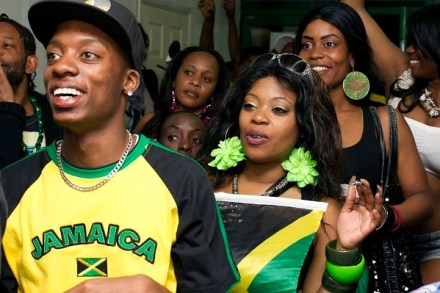
The Jamaican High Commission in London held a party last night to launch a patois translation of the Gospels. The translation, published by the Bible Society, is the culmination of 20 years work by academics at the University of the West Indies and other institutions, studying the rules of the creole created by plantation slaves and committing them fully to paper for the first time. The project has been part-funded by donations from congregations whose primary (and often only) language is patois rather than English, the language in which scripture has always been written and read in the nominally English-speaking Caribbean. This is an important cultural moment.

The Pineapple of Hate

From our UK edition

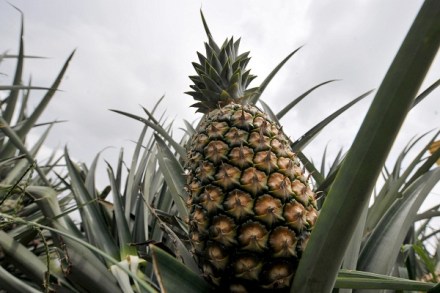
We have had the dreaded cartoons, films, teddy-bear and more. But I bet that until now nobody imagined we would ever see a (cue dreaded music) ‘Pineapple of Hate’.  Yet despite the now familiar feeling that this is all some terrible spoof, the fruit has joined the growing list of household items which can be legitimately regarded as ‘blasphemous’. As Student Rights reports, the crime-scene was the recent freshers’ fair at the University of Reading. For it was there that the Atheist, Humanist and Secular Society stall included a pineapple with the word ‘Mohammed’ on it. I always doubted that the Danish or French cartoons looked much like the prophet of Islam.

Review – John Saturnall’s Feast, by Lawrence Norfolk

From our UK edition

Lawrence Norfolk has always liked to centre his novels around a mixture of existing and constructed myth, and then let the action which happens centuries later be informed by or feed back into this network. His first book in twelve years, John Saturnall’s Feast, explores how the Civil War affected the career of a 17th century chef, the kitchens of great country houses and the symbolism of food. Its mythic centre is a pagan rite belonging to a pre-Christian British people, in which serving and eating food was the basis of an egalitarian community. In Charles I’s reign the one person left alive with the key to this feast is an orphan called John Saturnall, who has gone to work as a kitchen boy at the local manor.

No surrender for Salman

From our UK edition

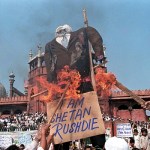
As the Middle East reels and Parisian satirical magazine Charlie Hebdo up their security, one man who knows more than most about the absurd over-reaction of vast swathes of the Arab world has offered some advice. Speaking to Sky News, Sir Salmon Rushdie is not backing down: ‘To tell you the truth, I’m a little tired of religion demanding special privileges. I have all sorts of people attacking me, it doesn’t inspire me to go out and commit an act of violence.’ Rushdie points out that any other idea can be discussed, satirised or taken seriously. ‘It’s very important in England, and Europe and America, where we are fortunate enough to have our say without fear of arrest or worse, we need to stand by that. That’s what you do in a free society.

Britain should call for reform of existing blasphemy laws

From our UK edition

Around the time that speculation was mounting about Tony Blair's possible return to British politics last month, I went to a public discussion about faith and public life by the man himself and Rowan Williams in which Charles Moore was both participant — or should I say, combatant — and moderator. It was, as you’d expect, a lively affair in which the two Catholic converts took radically dissimilar views on most things, and Islam in particular. In retrospect, one of the remarks that strikes me as remarkable was Mr Blair’s throwaway contention that inter-faith discussion should be conducted on terms agreeable to the faiths in question.

The poetic lies against Old Ironsides

From our UK edition

‘How the War Began’ by Thomas Jordan, 1663. 'I'll tell you how the war began: The holy ones assembled (For so they called their party then Whose consciences so trembled). They pulled the bishops from their seats, And set up every widgeon; The Scotch were sent for to do feats With oat-cakes and religion. They plucked communion-tables down, And broke our painted glasses; They threw our altars to the ground, And tumbled down the crosses; They set up Cromwell and his heir, The Lord and Lady Claypole; Because they hated Common Prayer, The organ and the maypole.' Three-hundred and fifty years ago, in September 1662, congregations in churches all over England were getting used to hearing services from the new Book of Common Prayer.

Salman Rushdie’s ‘The Satanic Verses’ revisited

From our UK edition

The publication of Joseph Anton (tomorrow), Salman Rushdie’s much anticipated memoir, has given newspapers cause to revisit The Satanic Verses. The commentary focuses on the bloodthirsty and backward response that the book continues to provoke. The novel has become a totem in various political and religious ‘debates’ (a word that is hopelessly misplaced in this perverse context of fatwahs and feeling). It is appropriate that Rushdie is celebrated as a champion of liberalism and rationality. There is no doubt that The Satanic Verses is among the most important books ever written. But, is it one of the finest? Despite the reams of brilliant and brave writing on the Rushdie affair, the question is seldom asked.

Channel 4 cancels Tom Holland’s history of Islam, but the extremists will not win

From our UK edition

In what may prove to be the most depressingly predictable story of the year, we learn that Channel 4 has chosen to cancel a screening of Tom Holland's programme 'Islam: the untold story' tomorrow night  because of threats to the author and presenter. If there is a reason why so many stories and facts to do with Islam remain 'untold' it is simply because of this. None of the people who threatened Tom Holland even have to mean it — the threat is enough to ensure that Channel 4 don't go ahead. I don't blame them, and have seen this happen too many times, in too many different countries, to be surprised.

A tale of two Smiths: Zadie Smith and The Smiths

From our UK edition

It is lit-fiction season: that time of the year of when the premier novelists of the age dominate the market. Ian McEwan, Pat Barker, Zadie Smith, Sebastian Faulks and Rose Tremain all have new books out, and Salman Rushdie’s much anticipated memoirs are to be launched this week, so many newspapers are devoting themselves to regurgitating stale observations about The Satanic Verses ahead of the main and keenly guarded event. Of the new books, Zadie Smith’s NW is garnering the most plaudits, or at least that seems to be the case.

Briefing: the Christians taking their fight to Europe

From our UK edition

Away from the drama of the reshuffle, the European Court of Human Rights is hearing the pleas of four British Christians, who are arguing that UK law inadequately protects their right to manifest their faith under articles 9 and 14 of the European Convention on Human Rights. The applicants’ cases are well known. Nadia Eweida, a British Airways employee, was asked to remove or conceal the crucifix that she wore around her neck in line with new uniform prescriptions. She did so on several occasions, but eventually refused and was sent home. She lost her workplace discrimination claims on grounds that she had breached her employer’s regulations without good cause.

The Visit – Shiva Naipaul Prize, 2007

From our UK edition

The 2007 Spectator/ Shiva Naipaul Memorial Prize was won by Clarissa Tan. The prize, named after the late Trinidadian author, is for 'the most acute and profound observation of a culture evidently alien to the writer'. The judges that year included William Boyd, Matthew d’Ancona (then editor of The Spectator) and Mark Amory (literary editor of The Spectator). Clarissa is now a staff writer at The Spectator. To find out more about the Shiva Naipaul competition, and how you can enter, click here.   The Visit Clarissa Tan I wish to write about a place of which I know everything yet nothing, where everything is familiar yet strange, a place where I feel I go too often, but never quite enough. This place is the same for everyone, only different.

Entertaining Dr Murdock – Shiva Naipaul Prize, 2000

From our UK edition

The Spectator/ Shiva Naipaul Memorial Prize for the year 2000 was won by Mary Wakefield. The judges included Antony Beevor; Patrick Marhnam; Boris Johnson, then editor of the magazine; and Mark Amory, who was and still is the Spectator's literary editor. Mary is now Deputy Editor of the Spectator. The Shiva Naipaul prize is awarded for travel writing, and other past winners include Hilary Mantel, Miranda France and John Gimlette. To learn more about the prize and how you can enter, click here. Entertaining Dr Murdock Mary Wakefield There's a narrow road heading east out of Denton, Texas, across the hot dust and prickly yellow grass.