Reform party

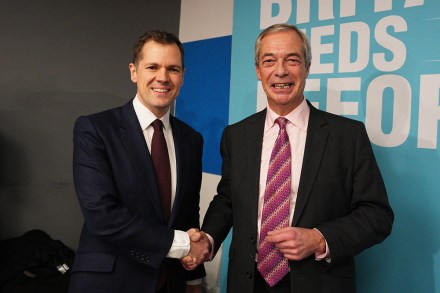
Robert Jenrick: Why I defected to Reform

Those pondering why Robert Jenrick defected to Reform UK have focused on the political momentum of Nigel Farage or the performance of Kemi Badenoch, but the key conversation was the one he had with his father on Boxing Day. ‘He’s a very straight talker,’ Jenrick explains when we meet at Reform’s headquarters on Tuesday afternoon. ‘He said, “If you weren’t in politics and there was a general election to-morrow, which party would you vote for?” I said, “Reform.” He said, “If you weren’t in politics, weren’t a candidate, had no particular loyalty, who would you want to be prime minister if the choice was Keir Starmer, Kemi Badenoch and Nigel

The Tories and Reform should present a united front

In the summer of 1643, as the dispute between Charles I and parliament raged on, Sir William Waller wrote to his friend Ralph Hopton to lament with ‘what a perfect hatred’ he detested ‘this war without an enemy’. The hardening of hearts between the Conservatives and Reform UK resembles a similarly self-defeating civil war – a family dispute more public and bitter even than the Fall of the House of Beckham. Just over a year ago, Robert Jenrick narrowly lost the Tory leadership contest to Kemi Badenoch. For some, his defection to Nigel Farage’s party was the overdue exit of a shameless careerist who never accepted coming second. But for

Reform’s real race problem

I think it was Zadie Smith who I first heard point out that race is in America what class is in Britain: the conversation underneath every conversation. When I first heard that remark I slightly baulked. Not least because one had rather hoped that class would be less of a thing in Britain in the 21st century. I suppose it is, although you do still meet people who treat the English language as though it is a minefield in which one incorrect vowel will suddenly take them out. But if the class stuff still lingers in Britain, the good news is that we now have the American race obsession too.

Letters: The real reason Gen Z aren't having sex

No EU turn Sir: Before Dr Brian Mathew’s letter on ‘How to restore prosperity’ appeared (10 January), the FT printed an article making it clear that Britain’s powerful financial services industry would not be included in the government’s much-vaunted ‘reset’ with the EU. It quoted figures from the City saying that this was ‘the last thing they wanted’ and explaining they were doing much better outside EU regulation. The article contained a reported comment from the government to the effect that they had taken note of the City’s views and that financial services would not now be included in their cherished initiative. It may be worth recalling here that Ed

The 14 questions that will define British politics in 2026

Contemplating a new year always raises questions. Was there a Third Protocol? What was wrong with Oral-A? Can Keir Starmer survive 2026 as prime minister? It is the biggest question in politics this year and the fact that it does not have an easy answer illustrates the mess Starmer has got himself into over the past 18 months. A few days before Christmas, a senior figure in No. 10 outlined how Labour’s high command still believes the winds will change for the party in 2026: a ‘virtuous circle’ of falling interest rates and inflation, more investment, growth, and rising confidence in the government among the public and the Parliamentary Labour

Will Keir still be Prime Minister in a year?

Keir Starmer will start the new year as he means to go on: by attempting to convince his troops that he is still the best man to lead them. The Prime Minister will begin 2026 by hosting Labour MPs at Chequers. The motive behind the outreach is simple. ‘The only question that matters this year,’ says a non-invitee, ‘is whether Keir can cling on.’ It was not so long ago that a peacetime prime minister with a healthy working majority was thought to be unassailable. No longer. The defining moment in parliament these past 12 months was the summer welfare rebellion. After 120 Labour MPs threatened revolt, the £5 billion

‘We must not be the Tory party 2.0’: Nigel Farage on his plans for power

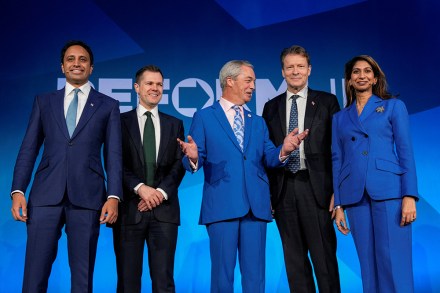
Nigel Farage is signing football shirts when I arrive at Reform’s campaign headquarters in Millbank Tower, the building where New Labour prepared for power before 1997. The black shirts are emblazoned with ‘Farage 10’ in gold. ‘Someone called them Nazi colours,’ the leader complains. ‘This always happens when we do well.’ As favourite to be the next prime minister, Farage is sanguine. ‘They’re a special edition, £350 each.’ How many is he signing? ‘—king hundreds,’ he says, pulling his punches on the profanity. Seven hundred to be precise, a cool £245,000 for party coffers. This is the same week the party registers a £9 million donation from the crypto millionaire

Is Reform racist?

Sarah Pochin’s gonna take a lot of coachin’. You can’t just turn up on the telly and say you’re sick of all the blacks everywhere. And the Asians. Un-accountably, perhaps, you will be accused of racism, the definition of the term having been extended rather further than my interpretation: to discriminate against an individual on the grounds of his or her race. There will be outrage among the deluded; there will be faux outrage among the opportunistic. Your own party leader will slap you down by saying, in effect: ‘Well, she’s right, obvs, but you can’t say stuff like that.’ And her own leader is not wrong. The Overton window

The pathology of politics

Researchers from Imperial College London this week released an analysis of the health of voters in the UK. In a publication associated with British Medical Journal, the experts claimed to have found that people who vote for Reform are disproportionately sick. I am sure that the researchers in question could not possibly have enjoyed coming to their conclusions. But they reported that the conditions Reform voters are most likely to suffer from include obesity, chronic obstructive pulmonary disease and epilepsy. The scientists did not go so far as to claim that voting Reform makes you epileptic. As every smart-aleck first-year at Imperial could tell you, correlation does not imply causation.

The real war is to come for the Tories

British politics often resembles a golden-age murder mystery, with multiple parties sitting anxiously on the sofas/green benches waiting for the detective/electorate to crack the case. The Reform, Labour and Tory conferences provided a plethora of clues. But just as Sherlock Holmes solved ‘The Adventure of Silver Blaze’ by diving into the significance of the dog that didn’t bark, just as much can be learned from what didn’t happen over the past few weeks. First, there was no serious leadership challenge from the pretenders in Labour or the Conservatives. Andy Burnham turned up in Liverpool with a knife between his teeth, only to discover he neither had a seat nor the

What’s really behind Reform’s rise

It is the question dominating bars and fringe debates this party conference season: what exactly is driving Reform UK’s popularity? Various explanations are proffered: the collapse of the two-party system, fickle voter tastes, the rise of populism across the West. But these are symptoms of a much greater shift: the new information age, unleashed by the internet. In a nation whose politics have long been characterised by venerable institutions, Reform, born in 2020, can claim to be Britain’s first successful e-party. Like most apparent overnight successes, Reform has in fact been years in the making. For much of the 2000s, Nigel Farage struggled to get anywhere with his Eurosceptic messaging.

Letters: The shale gas illusion

The shale illusion Sir: Your leading article rightly makes the case for extracting as much of our North Sea resources as we can (‘All at sea’, 6 September). However the enthusiasm for developing shale gas is misplaced. As energy minister, I commissioned work to establish how much of the onshore gas in-place could be recovered. The truth is just a small proportion – maybe 10 per cent. An energy policy based on shale would put our energy security at risk. Economically, at a time when global gas prices are expected to fall, UK shale would simply not be competitive and projects would fail. It is no accident that none of

Danny Kruger: ‘There’s no going back for the Tory party’

‘The Conservative party is over.’ Until recently, such talk could be dismissed in Westminster as typical Nigel Farage hyperbole. But the decision of Danny Kruger to defect to Reform UK this week has left some Tories wondering if their party’s condition is fatal. Kruger – MP for East Wiltshire since 2019 – wrote speeches for David Cameron, corralled troops for Boris Johnson and ran Robert Jenrick’s leadership campaign last year. Until this week, he was seen as one of the Tory party’s most prominent thinkers. He is the biggest defection to Reform yet. When we meet in his new party’s headquarters, Kruger is reflecting on the brutal business of politics.

Is the countryside racist?

Crossing the floor Danny Kruger defected from the Tories to Reform, the first sitting MP to do so. Which parties have gained, and lost, the most MPs from defections since 1979? Direct defections, ignoring MPs who have resigned the whip to sit as independents:                                               Lost       Gained Conservative                        16                    1 Labour                                   32                    7 SDP                                          3                 26 SNP                                          3                    0 Liberal Democrat                  0                    3 Alba                                         0                    2 Change UK                             0                    8 Ukip                                         0                    2 Referendum party                  0                    1 Labour have lost the most, thanks to the defections to the SDP in the 1980s. Since 1987, the Tories have suffered the most. Land fill How much of Britain’s agricultural land is used for

The return of Keir vs Andy

When Labour MPs met to hear from their leader on Monday, there was one group who felt particularly aggrieved. In the government’s reshuffle following the resignation of Angela Rayner, the party’s powerful north-west caucus had suffered a ‘machine gunning like nothing else’, in the words of a senior party official. Some 40 per cent of the reshuffle casualties are from this region. The changes risked, in the words of one aide, ‘reopening the whole Keir and Andy psychodrama’. Within hours, Andy Burnham, the mayor of Greater Manchester, had duly attacked Keir Starmer’s new ‘London-centric’ line-up. Lucy Powell, a close Burnham ally, who was sacked as leader of the Commons, announced

Why I gave up on the Tories

The days between my leaving the Tories and joining Reform were an odd uneven time. It was the hardest decision I have ever made – I’d been a Conservative party member for 30 years, after all. Before the announcement, only three people knew what I was planning to do. In Westminster almost everything leaks so we kept the information tight. Once I had made up my mind, Nigel Farage and I held several clandestine meetings in a secluded room in a Mayfair members’ club to decide how to break the news. I initially rather fancied defecting on the eve of the Conservative party conference, for maximum impact. But in the

Portrait of the week: Angela Rayner resigns, Poland downs Russian drones and Israel bombs Qatar

Home The government shuddered when Angela Rayner resigned as housing secretary, deputy prime minister and deputy leader of the Labour party after being found to have breached the ministerial code by Sir Laurie Magnus, the independent adviser on ministerial standards. He said she had followed advice from a legal firm when not paying enough stamp duty on her new flat in Hove, but ignored a recommendation to seek expert tax advice. Sir Keir Starmer, the Prime Minister, called her ‘the living embodiment of social mobility’. He then threw himself into a great big cabinet shuffle, in which Yvette Cooper became Foreign Secretary and was replaced as Home Secretary by Shabana

The glorious campness of Reform

It’s a very serious and rancorous time in Britain. Social strife is simmering. The asylum system is at breaking point. The lines on the economics graphs are all going in unsettling directions – the ones you’d prefer to see going down are going up, and vice versa. And inevitably the Overton window is shifting. Though perhaps not in the way any of us expected. Reform is currently odds-on to form the next government. Nigel Farage’s party meets for its conference in Birmingham this week at 35 per cent in the polls. But that’s not because it’s bracingly right-wing. Or not just. It’s because Reform is camp. At a time when

Can anyone save Britain from self-destruction?

Tens of thousands of people turned out on the streets last week to protest against mass immigration. The protestors were promptly labelled ‘racist’ by their own government, ‘far-right’ by the New York Times and as having links to ‘neo-Nazis’ by the Guardian. The protests in question happened in cities across Australia, including Sydney – but frankly those sentences could have been written about similar protests in Britain and in almost any western country. Coincidentally, the past weekend also saw the ten-year anniversary of the German chancellor Angela Merkel opening the doors of Europe, saying ‘We can manage’ and allowing Europe to become the home of anyone in the world who

Letters: I’ve earned my final salary pension

Waning interest Sir: Michael Simmons correctly points out that the Treasury’s large-scale issuance of inflation-linked debt is adding heavily to the government’s interest bill at a time of relatively high inflation (‘Borrowed time’, 30 August). What he may not know is how complacent the Treasury has been about this matter. On the day Vladimir Putin invaded Ukraine in February 2022, I was interviewed for the role of chairman of the Debt Management Office. I suggested that a post-Covid inflation surge had started and that additionally oil prices might increase significantly because of the invasion leading to a need for higher interest rates. Pointing out that nearly a third of UK