Ralph vaughan williams

A cultural alliance: Lessons in Harmony, by Jonathan Coe, reviewed

From our UK edition

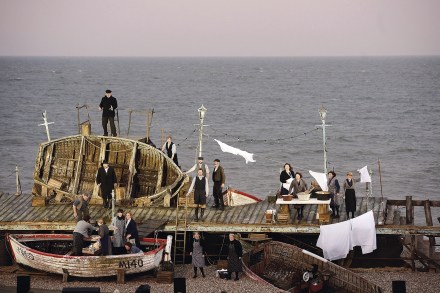
In January 1905, Ralph Vaughan Williams, aged 33 and not yet famous as a composer, visited the Norfolk port of King’s Lynn in order to gather folk songs as source material. Unsurprisingly, the tweed-suited, Cambridge-educated man felt out of place among East Anglia’s hop-pickers and farm labourers. Yet in a dilapidated quarter of the town he found himself transfixed by a fisherman who sang a shanty about a teenage cabin boy tortured and killed on the high seas by the ship’s captain. ‘The Captain’s Apprentice’ made such an impression on him that he wove its haunting, doom-laden melody into his ‘Norfolk Rhapsody No 1’ of 1906. In today’s terms, the song had been ‘sampled’. The composer’s week-long stay in King’s Lynn altered the direction of his life.
Ralph Vaughan Williams: modernist master

From our UK edition

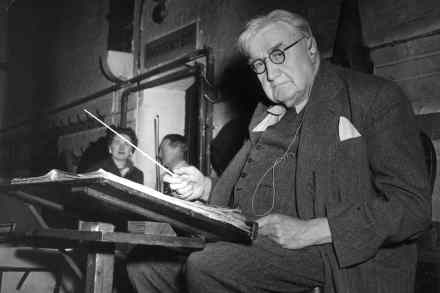
To look at a picture of Ralph Vaughan Williams is like contemplating an image of a mountain. Not the elegant, keen-eyed Edwardian intellectual whom we sometimes glimpse on CD sleeves or in concert programmes; I’m thinking of the portraits from the last decade of his long life. By the 1950s ‘RVW’ had been the father of British music for so long that he already seemed like part of the landscape, and he looked it too. The craggy jowls, the weathered thatch of grey hair; that questioning gaze — and beneath it all, those great, tumbling scree slopes of rumpled tweed. In his 150th anniversary year he’s still there, towering in the middle distance of national memory.

Community music-making is the jewel in the British crown

From our UK edition

Music is a universal language. The style that has enraptured me since childhood, classical music, has always had an international dimension, and has taken me around the world in the decades since. But even in those early boyhood encounters I became aware of music and musicians from many different lands and eras. Apart from the beauty and excitement of the music itself, the art form became an early gateway for me to languages, history, geography, philosophy, theology and much more. There were clearly a lot of Germans to grapple with (Bach, Beethoven, Brahms) — and some French (Debussy, Ravel) —as well as Italians (Vivaldi, Verdi) and lots of Russians too (Tchaikovsky, Stravinsky, Shostakovich). But where did my own country figure in all of this?