Quarantine

The Canadian wildfire is a reboot of Covid panic mode

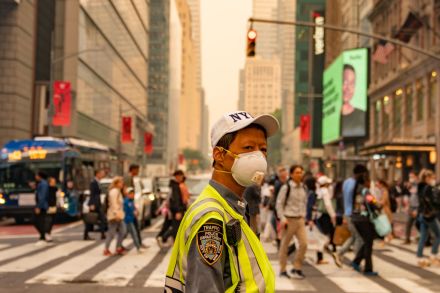
I was skeptical when my children arrived home from school Wednesday and informed me they could not play outside, irritated when they used the faculty fearmongering to demand screen time, irate when we pulled into the drop-off line Thursday morning. There was the crossing guard in an N95, a teacher in the same. A small boy was wrapped in useless cloth, dragged to the front steps by a mother sporting a surgical mask and a smart business suit. Evidently, cartoonish shoulder pads are making a comeback after a three-decade slumber, but mass panic barely had time to take a nap here in Washington before bureaucrats roused it in the name of public safety. It feels as though we are living in a horror movie and a particular one at that: the rushed sequel to a surprise box office hit.
wildfire canada covid

Reading during a pandemic

The experience of having Covid is, by now, well-documented. You spend seven to ten days in your room or house feeling ill and sorry for yourself. The world outside becomes a distant dream, and one of the few pleasures of spending twenty-four hours a day in bed is the time to read. This winter, the Omicron bell tolled for me — as it seemed to do for half of the global population. I was very lucky with the virus: after two days of unbelievable complaining and texting everyone I knew to tell them I was either like Beth in Little Women or a fevered Marianne in Sense and Sensibility, I recovered from my gothic heroine-like swoon and set about ploughing through novels. At the outset, there were endless articles and tweets about what one should read during a pandemic.

How’s ‘shutting down the virus’ going, Joe?

We are less than a month away from entering 2022 — so why does it feel like March 2020 all over again? Cable news networks are obsessively covering the new Omicron variant of Covid-19. They are hellbent on scaring the daylights out of any unsuspecting viewer who accidentally flips onto their programs. To be fair, the media is taking cues from the president. According to the Washington Post, the Biden administration is reportedly weighing up a seven-day self-quarantine for all travelers arriving on our shores, regardless of vaccination status, including US citizens and permanent residents. Travel bans, which fell out of fashion in the Trump years because they were "xenophobic", are suddenly back in vogue. It all begs the question: didn’t Joe Biden promise to shut down the virus?

biden quarantine

Donald McNeil described Americans as ‘selfish pigs’ in email to Fauci

There are some wondrous revelations in Dr Anthony Fauci's over-3,200-page email trove acquired by BuzzFeed and the Washington Post through the Freedom of Information Act. A number of people — particularly Republican politicians — are fixating on the several emails from other experts mentioning the possibility that the SARS-CoV-2 virus may have been engineered at and emerged from the Wuhan Institute of Virology. They are right to do so — but there are some other gems in there too. A tipster pointed Cockburn to a February 2020 email from then-New York Times science writer Donald G. McNeil Jr, in which he describes how Americans 'tend to act like selfish pigs'. In contrast, McNeil tells Fauci that 'a lot of average Chinese behaved incredibly heroically'.

mcneil

My password amnesia got me into hot water

From our UK edition

Chelsea/Gstaad Oh, to be in England! But let’s start at the beginning. I challenge any reader to claim they are more technologically disadvantaged than yours truly. Or anyone not suffering from Alzheimer’s, at least. I resisted getting a mobile telephone until my days on board a sailing boat became a nightmare. I missed get-togethers, lost friends, and finally gave in around ten years ago. More trouble followed. For example, I get pings all the time and can see on screen the names of Pugs members sending messages to each other. But I don’t know how to put in my five cents. Prince Pavlos of Greece set my phone up so that it rings, but in the meantime poor little Taki is voiceless. And it gets better — or worse rather.

Vaccines should mean more freedom – not less

From our UK edition

Do vaccines lead to freedom – or to more lockdown rules? That very question would have seemed bizarre a few weeks ago, when Matt Hancock told this magazine that he’d ‘cry freedom’ when the most vulnerable had been protected. But now, things are swinging the other way. The end of the second wave in Britain (infections and intensive care admissions are down 95 per cent from the peak) has not been followed by reopening. Instead, it’s being used as rationale to continue lockdown for months to come. The latest is international travel: the freedom to leave the country.

Portrait of the week: A royal baby, Boohoo buyouts and France legalises lunch al desko

From our UK edition

Home On Sunday 7 February, as the week began, 11,465,210 people in the United Kingdom had received a first vaccination against Covid-19 and 510,057 a second. Those aged 70 or over were invited to book a vaccination online or by telephone if they had not received one. Illegal immigrants were advised to register with a GP without risking deportation. South Africa, possessing a million doses of the Oxford-AstraZeneca vaccine, decided to suspend its use after a trial of 2,000 people (42 of whom developed Covid) seemed to indicate that it offered ‘minimal protection’ against mild and moderate cases; no one in the trial was old.

I’m living in a country that won’t let me out

From our UK edition

Anyone who’s been through customs Down Under isn’t surprised by the region’s OTT response to Covid. Having been X-rayed before boarding, one’s possessions are X-rayed off the plane. So shrill are the threatening posters, fine warnings and chiding announcements about importing bio-contaminants that on discovering an apple core in your pocket in the endless customs queue, you’re apt to throw up. The culture is obsessed with contagion. Yet Britain’s Labour leadership, who throughout this pandemic have interpreted ‘opposition party’ to mean ‘people who advocate government policy even more vehemently than the government itself’, now look wistfully to Down Under as a Valhalla where they really do Covid right.

Hancock launches his quarantine crackdown

From our UK edition

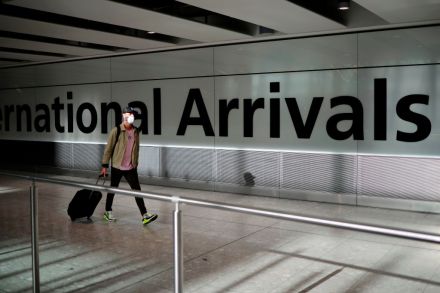
The search for the right balance on border policy continues, as Health Secretary Matt Hancock announced this afternoon a host of new measures that travellers coming to the UK will face. From Monday, all arrivals will need to take two PCR tests: one on day two and another on day eight of self-isolation. This will apply to everyone, regardless of where they are travelling in from or whether they are quarantining in a hotel or in their home. This means anyone arriving in the UK will now be taking a total of three Covid-19 tests, as a negative test within 72 hours of travel is also required.

Quarantine and the freedom paradox

From our UK edition

Who would have thought, this time last year, that the British government would be planning to detain British nationals at the airport and keep them under guard in a hotel room for a ten-day quarantine? It’s quite a departure for a country whose values have always been defined by the defence of liberty. But we’re living in exceptional times, with the Covid death count at more than 100,000 — a bigger hit, as a proportion of population, than almost anywhere else in the world. This requires deep reflection about the mistakes made and the changes needed. When the sick are still dying — at a rate of more than 1,000 a day — it’s hard to have a calm political discussion about what went wrong and how to get it right now.

Are we returning to ‘normalcy’ or ‘normality’?

From our UK edition

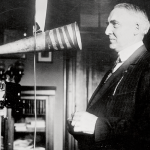
New normal Why have so many people started saying ‘normalcy’ rather than ‘normality’? — Normalcy has been traced back to 1857 when it was used in geometry to denote a state where lines were perpendicular to each other. It was rarely used outside mathematics until 1920, when the then US presidential candidate Warren Harding made a speech in Boston referring to a ‘return to normalcy’ following the Great War. He said: ‘America’s present need is not heroics, but healing; not nostrums, but normalcy.’ He was ridiculed for what was regarded by many as a malapropism. Although ‘normalcy’ is now in common use in the US, it was still the lesser-used word at the last count.

Australian border closures could work for Britain. Here’s why

From our UK edition

Melbourne Australia has been a rare success story during the pandemic. There have been around 29,000 cases of Covid, 908 of which have proved fatal. There are currently just 125 active cases in the entire country, a mere 25 of which have required hospitalisation. For a population of 25 million, this is a vastly different experience to that of Covid-beleaguered Europe and North America. No wonder the British government is considering whether it might be time to copy Australia’s approach, to help save an economy and society battered to a degree Australians can scarcely comprehend. Australia benefits from being a remote island continent with no international land borders.

The price of an ‘Australian-style’ quarantine system

From our UK edition

Richard Curtis’s iconic Love Actually airport scenes may fall on the wrong side of saccharine, but they capture something of the human story at the centre of the travel experience. As the government pursues an ‘Australian-style’ hotel quarantine scheme for the UK’s borders, we should not lose sight of these human moments. With the UK’s hospitals stretched to the limit and the population’s patience wearing thin, it is tempting to envy Australia, where images of seaside holidays and packed summer festivals filter out from the antipodes, shimmering like a desert mirage. Like many of its counterparts in the Asia-Pacific, Australia moved swiftly in the early phases of the pandemic to shut its borders, and imposed hotel quarantine systems for all arrivals.

Will fewer days fix the UK’s self-isolation problem?

From our UK edition

From Monday, the guidance for self-isolation is changing. Previously if you were told by officials (or the NHS app) you had been in close contact with someone who tested positive for Covid-19, you were expected to self-isolate for 14 days. Starting next week, this will be reduced to 10 days, and will also apply to those returning from 'high risk' travel areas that are not on the UK's 'green list'. The update was issued as a joint statement from the UK chief medical officers, who said: 'after reviewing the evidence, we are now confident that we can reduce the number of days that contacts self-isolate from 14 days to 10.' This brings the quarantine period for close contacts in line with those who test positive for Covid-19.

Homes, sweet homes

The moment lockdown restrictions eased, my wife Anna booked up trips to Europe, to visit houses and villages I thought I’d never see again, such were the initial predictions about the zombie apocalypse. I’d not been to Barenton, Normandy, for example, since last autumn, but that hadn’t stopped the plumber and the builder from sending me regular bills. It is in this decaying granite villa, stretching over four floors, that the accumulated junk from the Herefordshire Balkans has been shoved — thousands of books, crates of manuscripts and letters, the children’s toys, even the children. Oscar, the middle son, spent time here, depleting the cellar after he broke up with a girlfriend. He ran back to England terrified when a mouse leapt out of an oven glove.

homes

Killing time in Thailand

Thailand is famous for many things, some of which are unmentionable in these pages. It has long been considered the perfect location for ‘winter sun’, if you are the type of person to whom a piña colada on a white sandy beach appeals. In recent years, it has become a hotspot for hypochondriacs requiring non-essential medical care and hysterics after a nip-and-tuck (pre-COVID, the health-tourism industry was thought to be growing at 14 percent a year). Home to the orchid, pad thai, the Monkey Buffet festival (what it says on the tin), the Siamese cat and the bumblebee bat, Thailand’s gentle and healing culture has earned it a reputation as a cleaner, greener land.

thailand

The ‘last flight out’ of Spain

From our UK edition

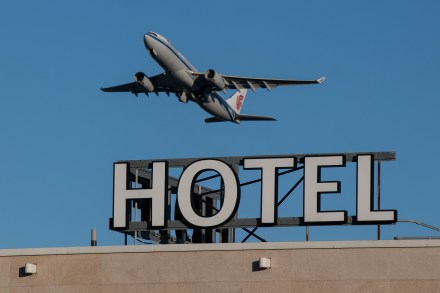
I’ve always thought the ‘last flight out’ was reserved for truly grave situations abroad – or an apocalypse film starring Will Smith or Brad Pitt. Yet somehow I unknowingly found myself on one – or one of the last – yesterday, flying from Malaga back to Heathrow Airport. I can’t say the re-instated quarantine rules for Spain came as a total shock. As the number of Covid cases started to surge in Catalonia predominately, but along the coast as well, I’d been keeping tabs on the local press. I didn’t follow along too closely – partially because it was out of my hands but also because The Vanishing Half by Brit Bennett is very hard to put down.

Who would want to come to Britain for a holiday now?

From our UK edition

All logic suggests that the 14-day quarantine for arrivals from abroad really is, as Michael O’Leary of Ryanair put it, ‘a political stunt’. The best explanation is that it was conceived in Downing Street — with minimal consultation, unless someone rang Armando Iannucci, writer of The Thick of It — as a sop to focus-group xenophobia and parental anxiety, as well as a show of grip after the Dominic Cummings debacle. Its absurdity is highlighted by news that the West Indies cricket squad is now quarantined, while 122 high-goal polo players were reported to have beaten the deadline by slipping in last Saturday on a charter flight from Buenos Aires via the Covid cauldron that is São Paulo in Brazil.

The quarantine debacle could cripple Britain’s travel industry

From our UK edition

The government’s battle cry in the fight against the pandemic is ‘Follow the science’. But it is hard to see the science behind the disastrous and potentially crippling 14-day quarantine rule which came into effect on Monday — or, rather, failed to come into effect in any meaningful sense of the word. It’s not been made available or published anywhere, and even the government’s chief scientific adviser, Sir Patrick Vallance, politely refrained from giving the ruling his endorsement, saying it was a matter for the politicians: ‘They make the policy, and they make the timing decisions.

The growing rebellion against quarantine for UK arrivals

From our UK edition

The government’s most unpopular policy on its own benches is its plan to make almost everyone arriving in this country quarantine for 14 days. Among backbenchers and the outer cabinet this policy is disliked with an increasing intensity. ‘Colleagues absolutely hate it’, one cabinet minister tells me. Some backbenchers dislike it because it will hit their own constituencies particularly hard – airlines and airports will lay off more staff because of it. Others dislike the ‘Britain is closed for business’ message it sends out. While for a growing number of ministers it has become a focus of their resentment at how policy is made with their minimal involvement – cabinet committees are meeting far less frequently than they did.