Pubs

In search of Britain’s oldest pubs

From our UK edition

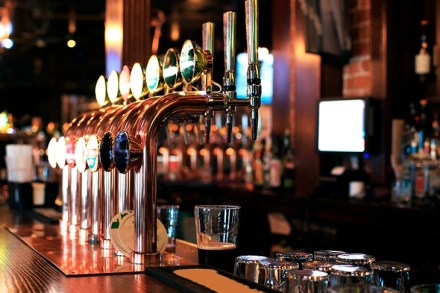
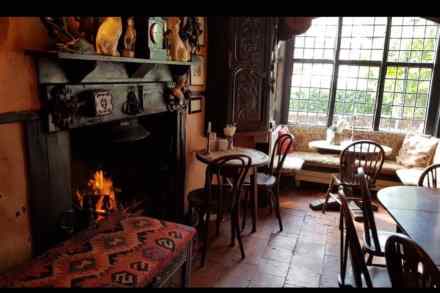
‘When you have lost your inns, drown your empty selves, for you will have lost the last of England.’ So said Hilaire Belloc. Thankfully there’s little sign of England, or indeed Britain, being down to its last pub – but which was its first? As ever with these debates, a definitive answer is hard to find: accurate record-keeping wasn’t a priority several centuries ago, when the pubs pulled their early pints. But here are a few of the boozers with a claim to be the country’s oldest.
Why do British galleries shun the humane, generous art of Ruskin Spear?

From our UK edition

Where do you see paintings by Ruskin Spear (1911–90)? In the salerooms mostly, because his work in public collections is rarely on display. Until the National Portrait Gallery closed for redevelopment it was, however, possible to study Spear’s splendid portrait of ‘Citizen James’ (Sid James) peering from a black and white TV screen, and his oil sketch of Harold Wilson wreathed in pipe smoke, the epitome of political cunning. Both were strikingly more convincing than their companion array of anodyne commissioned images. Like his beloved Sickert, Spear painted commissioned portraits but also took to making enigmatic ‘unofficial’ portraits based on press photographs — or, in the case of Sid James, a snap off the telly.

How likely is a false positive from a Covid test?

From our UK edition

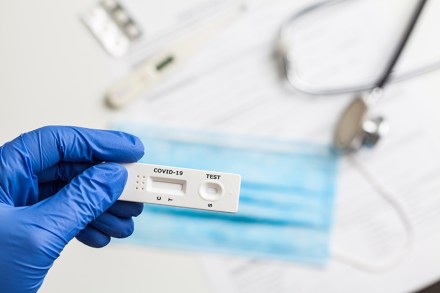
Positive thinking The government wants us to test ourselves for Covid-19 twice a week, using lateral flow kits which will be freely distributed. What is the risk of being ordered to self-isolate as a result of a false negative? — While the NHS claims that these tests produce false positives in 0.1% or fewer cases, an evaluation by Porton Down and Oxford University last year found a false positive rate of 0.3% in a hospital setting, rising to 0.39% in the community — in other words, about one in every 256 tests. — According to the Office for National Statistics infection survey, in the week to 27 March one in every 370 people were infected (not necessarily showing symptoms) — 0.27% of the population.

Why it’s a good time to invest in a pub

From our UK edition

It’s obvious from the body language of Bank of England Governor Andrew Bailey that negative interest rates — much talked about this week — are the last device he ever wants to use. Deployed with mixed success in Europe, this monetary equivalent of Pulp Fiction’s adrenaline jab in the heart is a desperate remedy against deflation, recession and banks’ reluctance to lend. UK banks have been given six months to prepare for the possibility, while Bailey has been talking up the likelihood of rapid recovery as vaccinations advance and Brexit trade disruptions fade.

It’s time to call last orders on Britain’s rubbish pubs

From our UK edition

Oxford is famous for its pubs. Inspector Morse reveals that they are as much a part of the city’s life as any of its colleges. The insatiable undergraduate demand for cheap beer has meant that pubs like the Turf Tavern and the Eagle and Child have permeated (and intoxicated) the minds of students for centuries. So when the Lamb and Flag closed last week, it was as much a story as any of those bizarre murders John Thaw used to stick his nose into. No Jag-driving detectives are needed to work out why it has shut. A year of missed terms and lockdowns dramatically cut the pub's revenue. Owned by neighbouring St John’s College, the pub has stood on its current spot since 1615. C.S. Lewis and J.R.R.

Is any song more lucrative than ‘Happy Birthday’?

From our UK edition

Last orders The new tier restrictions have made life difficult for pubs. How many are closed? — According to the British Beer and Pub Association, 16,500 of England’s 37,000 pubs have had to close for everything except takeaway owing to their being in Tier 3 areas. — Of the 21,000 pubs in Tier 2 areas, 14,000 have had to remain closed because they are unviable if they can’t serve drinkers without also serving a substantial meal. — That leaves 732 pubs in Tier 1 areas which can open more or less as normal. — The number of pubs has fallen by 22 per cent this century. However, 2019 saw the first year-on-year rise, with a net gain of 320 pubs across the country.

How we became a nation of choirs and carollers

From our UK edition

Between the ages of 15 and 17 I had a secret. Every Monday night I’d gulp down dinner before rushing out to the scrubby patch of ground just past the playing fields, where a car would be waiting. Hours later — long after the ceremonial nightly locking of the boarding house — I’d sneak back, knocking softly on a window to be let in. I’d love to say that it was alcohol or drugs that lured me out. It wasn’t even boys — or, at least, not like that. My weekly assignation was with Joseph and Johann, Henry, Ben and Ralph. My addiction? Choral music.

What can pubs serve as a ‘substantial meal’?

From our UK edition

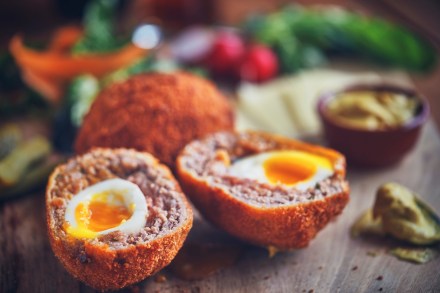
When the new tiered restrictions come into force this week, many pubs and bars around the country will be wondering if they can keep their doors open. While Tier 3 venues have effectively been forced to close, pubs in Tier 2 (which covers around 50 per cent of England) have been told they can only serve alcohol to customers alongside a ‘substantial meal’. But what counts as substantial? Environment minister George Eustice attempted to clarify this on LBC radio this morning, when he suggested that a scotch egg would probably count, as long as it was brought over on a plate.  But Mr Steerpike has noticed that ministers seemed to be a little confused when it comes to the guidance.

Wishful drinking: pubs have always been good at bending the rules

From our UK edition

In Tess of the d’Urbervilles, Thomas Hardy has a running skit about the alehouse in his heroine’s home village where her father, and quite often mother too, disappear for hours at a time. People aren’t allowed to drink on the premises, so are strictly limited to ‘a little board about six inches wide and two yards long, fixed to the garden palings by pieces of wire’. But as the locals don’t like drinking while standing outside, they all head into the landlady’s bedroom and perch on her bed, chest of drawers and washstand while supping ale.

Dublin double act: Love, by Roddy Doyle, reviewed

From our UK edition

Far be it from me to utter a word against the patron saint of Dublin pubs, Roddy Doyle. Granted he’s a comic genius, his dialogue comparable with Beckett and that this, his 12th novel, is garnering rave reviews in America. But is not Doyle’s trademark conversation between two men in a pub not just a little interminable? Love follows on from Two Pints (a play), Two More Pints and (last year) Two for the Road – two men chewing the fat on news events from 2014 to 2019. Squibs compared to Love, which is bigger, deeper, longer — but still two men in a pub. Joe and Davy, fifty-plus drinking buddies, meet again after a long gap. Davy, now living in England, is in Dublin on a visit.

Hats (and knickers) off to the hosts: The Naked Podcast reviewed

From our UK edition

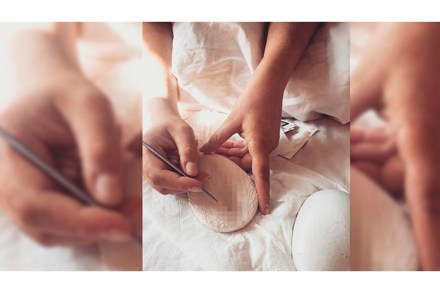
I spent half an hour this week listening to a woman make a plaster cast of her vulva. Kat Harbourne, co-host of The Naked Podcast on BBC Sounds, opened a recent episode by buzzing her bikini trimmer over the microphone before squatting over a British Airways peanut dish. Jenny Eells, her partner in crime, stood close by offering to hold up her dress. ‘I feel a bit like a voyeur, almost,’ she said, as if surprised at herself. ‘Thanks for letting me be a part of it.’ Then the mould-maker, Phoebe, put a porridgy alginate in Kat’s dish, and Jenny thought it looked ‘tasty’. Jenny and Kat are used to seeing each other naked. Most weeks, they invite on a female guest, and encourage her to strip off with them so that they can have a chat in the nude.

Has the abuse of ‘test and trace’ started already?

From our UK edition

I was followed three times in five days by men I didn’t know. During a pandemic – at any time, really – you would think they would have something better to do. They made gestures, shouted, catcalled, but I managed to lose them each time, partially because they had none of my details. They didn’t know my name, my number or my address. But what if they did know that information? What if they had been working at a bar I had gone to with friends and given my contact details over, for test and trace. That was the experience of one young woman this week. Shortly after she went to the pub, she received a message online by the bartender serving her.

Leicester has a history of lockdowns

From our UK edition

Leicester lockdowns Leicester was forced to impose the first local lockdown, in response to a reported surge in cases of coronavirus. — The city was last locked down from the rest of the country on 30 May 1645, when a 10,000-strong royalist force led by Prince Rupert and Charles I himself besieged the town and demanded it to surrender. The parliamentarians, who consisted of 480 garrisoned soldiers, 900 townsmen and 150 volunteers from the rest of Leicestershire, were heavily outnumbered. Moreover, the city’s medieval walls had mostly gone, and had to be hurriedly replaced by earth banks.

Letters: Our churches bring comfort – they must reopen

From our UK edition

Is ‘the Science’ scientific? Sir: I hope that those in the highest places will have read and will act upon Dr John Lee’s excellent summary (‘The corona puzzle’, 28 March). His article cuts through the information overload and explains the surreal situation the country is now in. Draconian decisions have been made on the basis of ‘the Science’, apparently without realising that it is not science at all. The dangers of mere extrapolations, both mathematical and humanitarian, are widely understood. Modelling is, in this instance, a sophisticated form of extrapolation and even more dangerous. A specific model cannot be dignified with the term ‘science’ until it has withstood thorough testing.

The good, the bad and the ugly: a guided tour of Westminster’s pubs

From our UK edition

My phone vibrates with a three-letter text message heralding another inevitable Westminster hangover: “MoG?”. The Marquis of Granby pub on Romney Street is an old-fashioned sort of boozer: mahogany-panelled bar with a chandeliered burgundy ceiling and a gents you have to wade through. There’s none of your poncey hipster food served on slabs of wood here; if you head to the upstairs dining room you’re having a pie and a pint. You can see why Nigel Farage loves this place for a photo opportunity. I’m meeting another journalist for an ale and a gossip, but this used to be a Tory haunt before Conservative Central Office moved from Smith Square.