Ptsd

Why I take frog poison

You picture the rainforest, naturally. A clearing at first light, a shaman with thousand-yard eyes, the canopy screeching overhead. What you do not picture is a fourth-floor flat on an east London estate, a woman wafting sage around your head and the slow realization that you have just handed over £150 to be – quite literally – poisoned. This is kambo. And at the lowest ebb of my late thirties, becalmed in a miasma of self-loathing and suffering from PTSD following a moped accident in Thailand, I had decided it was precisely what I needed. Made from the dried skin secretions of a giant monkey frog, it is also, as of last month, suspected of having killed its first Briton.

John Power, Nick Carter, Elisabeth Dampier, Maggie Fergusson & Mark Mason

From our UK edition

26 min listen

On this week’s Spectator Out Loud: John Power argues the Oxford Union has a ‘lynch-mob mindset’; Elisabeth Dampier explains why she would never date a German; Nick Carter makes the case for licensing MDMA to treat veterans with PTSD; Maggie Fergusson reviews Island at the Edge of the World: The Forgotten History of Easter Island by Mike Pitts; and, Mark Mason provides his notes on guided walks. Mark will also be hosting a guided walk for the Spectator, for tickets go to spectator.com/events Produced and presented by Patrick Gibbons.

MDMA should be licensed for veterans with PTSD

From our UK edition

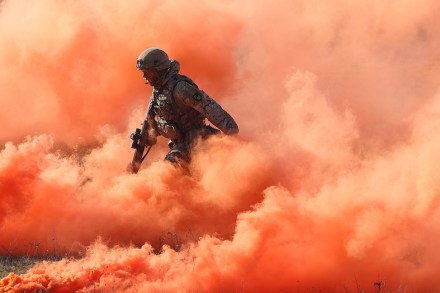
‘Stuff starts to get real, real quick,’ recalls former US Marine, Tyler Flanigan. An Iraqi sniper had just shot out the tyres of his truck and a key member of his team had been killed. ‘We were sitting ducks.’ ‘I couldn’t easily name a single day in Iraq that I wasn't shot at or didn’t have something explode next to me,’ says his fellow US Marine veteran, Nigel McCourry. Combat experience is hard to forget. Civilian life offers daily triggers that throw you back down ‘IED alley’, reliving the flailing feeling of being blown up and the horror of gathering friends’ body parts in bags. These former US Marines discussed their trauma in the documentary Dead Dog on the Left.

Private battles: Twelve Post-War Tales, by Graham Swift, reviewed

From our UK edition

When Granta magazine’s list of Best of Young British Novelists first appeared in 1983 it was a cue for me to immerse myself in the work of the named writers. There was the dazzling sardonic humour and knowing intelligence of Martin Amis; Ian McEwan’s twisty psychological thrillers; the cool prose of Kazuo Ishiguro, masking latent pain; and the fantastical, rich threads of Salman Rushdie. Rose Tremain’s anthropological insights and Pat Barker’s harrowing war stories were also transfixing. It took me a while to get to Graham Swift, but when I read Waterland, Mothering Sunday and the Booker-winning Last Orders, I was quietly absorbed. Swift didn’t aim for the pyrotechnics of his literary brothers. If they were strutting peacocks in the aviary of new writers, he was a sparrow.

The art of war

From our UK edition

On his deathbed, the Austrian writer Karl Kraus remarked of the Japanese attack on Manchuria: ‘None of this would have happened if people had only been more strict about the use of the comma.’ The implication being that by channelling rage into the ordering of small things, we might stay away from violence on a colossal scale. Unable to restrict ourselves to matters of punctuation, alas, humanity is often at war: with itself, and others, however hallucinatory. Two current exhibitions come at rage from very different starting points. War and the Mind demonstrates the devastating psychological impact of war on those who fight it and those who have no choice but to suffer it.

There’s nothing shameful about hypochondria

From our UK edition

The hypochondriac is the butt of jokes. Even his butt is the butt of jokes. A story doing the  rounds in the 16th and 17th centuries concerned a Parisian glassmaker who, believing himself to be also made of glass, fastened a cushion to his buttocks in case they broke when he sat down. His anxiety was mocked by a character in a play called Lingua, Or the Combat of the Tongue: ‘I am a Urinal, I dare not stirre,/ For fear of cracking in the Bottome.’ The aim of A Body Made of Glass is to take hypochondria, or ‘illness anxiety disorder’, seriously. But in a moment of levity, Caroline Crampton compares laughing about hypochondria to laughing about farts being made visible ‘like soap bubbles in the air’.

Blowing my mind in the Electric Forest

Rothbury, Michigan exists in a similarly strange duality to the small towns of Woodstock in New York and Glastonbury in Somerset on the other side of the Atlantic. It is a village of little consequence once you separate it from the famous music festival associated with it. But when the electronic dance music (EDM) extravaganza Electric Forest happens, Rothbury — 432 inhabitants, according to the 2010 Census — gets its annual day in the sun. The hatchet-faced Michigan state troopers, standing to mark the turnoff from the main road through the village toward the festival didn’t return our eager waves from the car. But the smoldering opprobrium of The Man was soon forgotten amid the fields and woodlands of the Double JJ Resort that braves hosting the festival.

electric

Why trigger warnings don’t work

The science is in, but don’t expect that to change anything. According to at least 17 recent studies, trigger warnings — those advisories posted ahead of content some readers may find distressing — not only fail to alleviate suffering in the emotionally disturbed but may actually induce greater trauma in those individuals. There are, to date, no studies that indicate trigger warnings work to their intended purpose. They were dreamed up in the 1970s after psychologists began to diagnose a new condition, post-traumatic stress disorder, in Vietnam War vets. But trigger warnings only reached popular consciousness in the 2010s, when feminist blogs used them ahead of content about sexual violence.

trigger

Trauma has become as American as apple pie

From our UK edition

Gstaad Lord Belhaven and Stenton, a wonderful man and the quintessential English gentleman, died at 93 just before the end of the crappiest of years. But Robin was lucky in a way: no tubes, no hospital beds, not another virus statistic. His widow, Lady Belhaven, gave me the bad news over the telephone, and although she was devastated after a very long and happy marriage, she is very smart and realises that it was a perfect death. He asked for a gin and tonic, went to bed, and never woke up. Acknowledging the death of others is one thing, accepting one’s own demise quite another. That’s why old men send young men to die in war, a confidence trick perfected after the Napoleonic Wars. Greek and Roman generals led from the front, as did many subsequent kings.