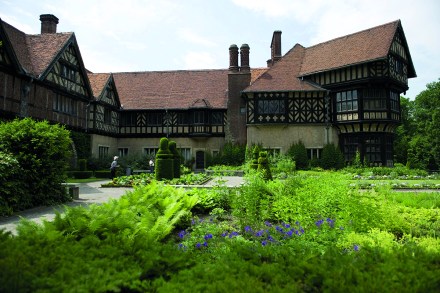
Prussia

The roots of 20th-century German aggression

From our UK edition

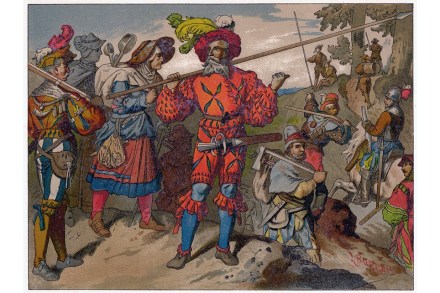
It is the contention of Peter Wilson, professor of the history of war at Oxford University and the author of an acclaimed history of the Thirty Years’ War, that military historians have focused too much on the German wars of the 20th century in trying to understand German ‘militarism’ as a distinctive characteristic – a ‘genius for war’ imitated by others. As he points out, Germany and Austria lost the first world war, and Germany, with Austria now attached, lost the second as well. A ‘genius for war’ evidently needs some rethinking. Wilson wants to place these modern wars in perspective, stretching back to the 15th century.
Who won the Cold War, anyway?

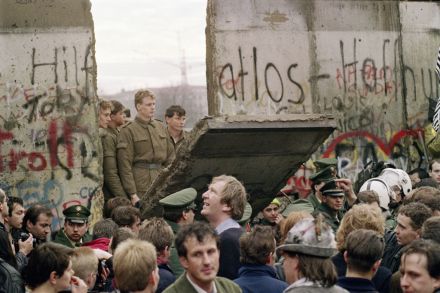
Thirty years ago this December 26, the impossible happened. One of the bloodiest states of the twentieth century (a horrific and highly competitive category) dissolved without violence. The Union of Soviet Socialist Republics had all but ended months earlier, when Russians took to the streets to defy the communist hardliners who had seized the government from an impotent Mikhail Gorbachev. That popular countercoup was itself largely bloodless: the soldiers called upon to enforce the hardliners’ rule refused to shoot their own countrymen. The Cold War is often said to have ended with the toppling of the Berlin Wall in 1989. Had things turned out differently in Moscow two years later, the struggle might well have resumed.

Cold War

Ignore the activists – Humboldt’s Enlightenment project deserves celebrating

From our UK edition

‘What a loss is the excellent Humboldt. You and Berlin will both miss him greatly,’ Prince Albert wrote to his much-beloved daughter Vicky, Crown Princess of Prussia, on news of the death of the author, explorer and celebrity Alexander von Humboldt in 1859. ‘People of this kind do not grow upon every bush [‘an den Blumen’] and they are the grace and glory of a country and a century.’ After some delays and bad luck, the grace and glory of the Humboldt name flourishes once again with the opening of the Humboldt Forum.

Prussian blues

My grandfather Werner von Biel was born in a huge white house on the Baltic coast of eastern Germany, a few years before World War One. I never met him. He died when I was a child. My grandmother didn’t like to talk about him. She’d left him for an English soldier at the end of World War Two. Growing up in England during the Cold War, I often wondered what had become of his Junker family, the Schloss (castle) they lived in and the land they farmed. When the Berlin Wall came down I went east, in search of the fatherland my grandmother had forsaken. Thirty years later, I’m still searching. I’ve found a few curios along the way. The Schloss is still there, though my grandfather’s family no longer owns it (the Communists turned it into a school).

prussia