Privacy

Azealia Banks loves Ron DeSantis

Azealia Banks is taking a break from digging up her dead cat and returning to music after signing with major label Parlophone. In a recent interview with the Guardian, Banks spilled the beans on her very public breakdowns, Kanye West and, weirdly enough, Ron DeSantis. (Naturally, she used rather colorful language in doing so: Cockburn urges the faint-hearted to skip over the following quotes.) Banks, the New York rapper and singer who first gained popularity eleven years ago with her hit "212," claimed that she felt safer after her move from Los Angeles to Florida. She said that people “mind their fuckin’ business” and claimed that the media lies about the Republican haven. Part of that, she said, is down to the governor, Ron DeSantis. “He’s focused on the basic shit.

azealia banks

Chinese tyranny? American surveillance is scary too

The New York Times recently ran an article on the dangers of surveillance tech in China. One wishes they would do the same for the US. According to the Times, Chinese authorities implement facial recognition tech everywhere they can, the police seek to connect electronic activity (making a call) to a physical location, biometric information such as fingerprints and DNA is collected on a mass scale, and the government wants to tie together all of this data to build comprehensive profiles on troublesome citizens. The latter is the Holy Grail of surveillance, a single source to know all there is known about a person.

The creeping authoritarianism of facial recognition

In an effort to lower crime rates, American law enforcement is pushing to combine facial recognition with expanded video surveillance. Politicians worried about their re-election chances due to a perceived crime wave see the expansion as necessary. It’s a sharp swing from 2019 and 2020, when cities like San Francisco and New Orleans were banning or at least enacting limits on facial recognition technology due to privacy concerns. Now, New Orleans plans to roll back its facial recognition prohibition. The Virginia State Senate gave law enforcement a late Valentine’s Day gift by passing a facial recognition expansion bill on February 15 — the Democrats who unanimously approved a ban on facial recognition last year suddenly changed their minds, as did five Republicans.

Urban Meyer and our DIY surveillance state

Imagine having a bad week by Jacksonville Jaguars standards. Such is the fate that has befallen Urban Meyer, the head coach of that star-crossed NFL franchise. Meyer was recently caught on video grind-dancing at an Ohio bar with a woman who was very much not his wife. This prompted sighs of relief from us '90s kids who were worried the term 'grind-dancing' had gone out of vogue forever. It's difficult to understate just what a mess Meyer's Jaguars are. The team is one of only four NFL franchises to have never made it to a Super Bowl. They've struggled for years with mediocre quarterbacks (who among us hasn't been walking down a sidewalk only to accidentally intercept a ball from Blake Bortles?). Meyer, along with rookie hotshot QB Trevor Lawrence, were supposed to turn all that around.

meyer

The DMV shows that COVID restrictions will never go away

Two weeks to flatten the curve became 18 months of mandates with no end in sight. Government seized new powers from the people to regulate their lives. Rules that make no sense dominate us, experiments in compliance not science. How do COVID restrictions end? They likely never will. I learned all that at the Department of Motor Vehicles . My reeducation started when I was told to prove as an American citizen in an American state that I am 'resident' here, not simply being an American in America. I'm a good sport and wanted to comply, just like I try to keep up with the latest rules and Purell my terrestrial hands 600 times a day against an airborne virus. Threats aren't inherently political, right? And you just can't be too careful.

The death of the private citizen

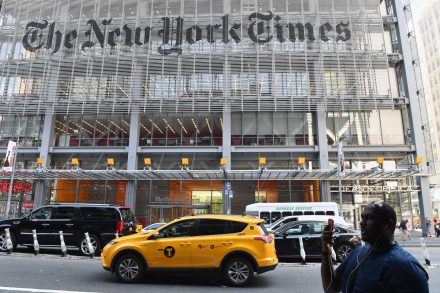
The internet is not a private place, but news outlets have decided that it's up to them to determine when someone loses their right to anonymity. Quite often, the media gets this calculation wrong and destroys lives in the process. Scott Alexander, the pseudonymous blogger behind 'Slate Star Codex', deleted all of the content on his popular website after the New York Times revealed it was going to publish his true identity. In a long post explaining the debacle, Scott Alexander said that he was talking to a Times reporter last week who was planning on writing an article about his blog. The Times reporter apparently discovered Scott Alexander's identity in the course of reporting and cited a 'New York Times policy' requiring him to publish his full name.

The New York Times private

How to disappear completely

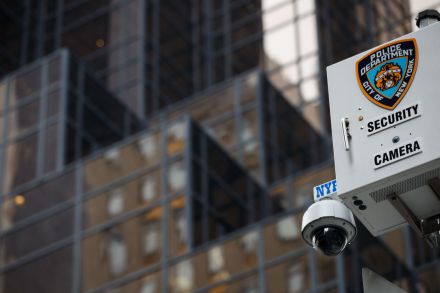
Coming soon to as neighborhood near you: cameras everywhere. On every traffic light, intersection, telephone pole and storefront, with tracking software that uses facial, gesture and heartbeat recognition. That identity data is combined with web search history, conversations with Alexa and Siri, Amazon purchases and Twitter. A complete individual profile, with a score measuring social reliability, can be constructed and shared with law enforcement and intelligence agencies.This might sound too dystopian to be true.

disappear completely privacy