Presidential election

Has the election made Republicans love the government?

As Americans, we aren’t exactly famous for our love of the government. But how is the reelection of Donald Trump affecting our attitudes?In what they are touting as the first such poll released since the presidential election, GW’s Graduation School of Political Management and Schoen Cooperman Research are revealing “shocking findings about the state of Americans’ trust in the government and media” — namely, that nearly 40 percent of the public says they trust the government less going forward.
Finally: a Democrat autopsy from a Republican consultant

Republicans have, very foolishly, engaged in “autopsies” after recent election losses. This election, it’s the Democrats’ turn! The Democrats will engage in a circular firing squad for the next couple of years, with all factions doing their best to gain the upper hand by giving their rivals the shiv in the jailhouse shower. Allow me, a Republican political consultant without a dog in this fight, to answer the pressing question: who will Democrats blame for the campaign that inconceivably allowed the bad Orange Man to win and the obviously superior Kamala and Clooney and Oprah to fail? First, let’s start with the obvious — black voters. The people at DNC HQ will be furious that black voters did not obey instructions and vote 95 percent for Democrats.

democrat

The logic of the J.D. Vance selection

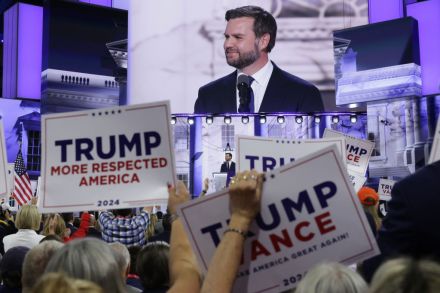
The best way to understand Donald Trump’s choice of J.D. Vance for vice president is to ask how different choices would have helped with different problems. That Trump didn’t choose them tells us that Trump isn’t worried about those problems. He has different goals. If Donald Trump was deeply worried about winning swing states, he probably would have selected Glenn Youngkin. The popular Virginia governor would probably give him the most help with independents in those states. If Trump were worried about Evangelicals, he wouldn’t have passed over Doug Burgum because of his strong stance on early-term abortions.

jd vance

Can Joe Biden go on?

From our UK edition

20 min listen

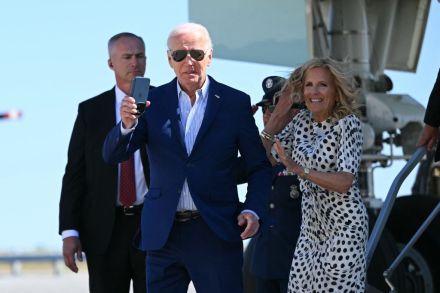
The dust has settled from the TV debate that was catastrophic for Joe Biden. What are the possible options going forward? Are things changing behind the scenes? Freddy Gray assesses the situation with Jacob Heilbrunn, editor of The National Interest.

Trump’s ultra-MAGA crew needs a reality check 

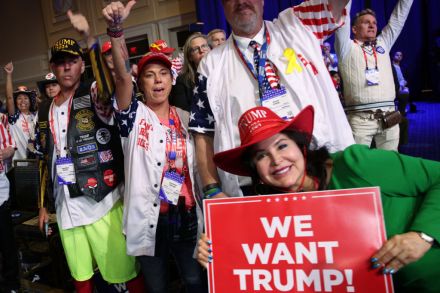
In 2020, Democrats made a pragmatic if uninspiring choice in nominating Joe Biden. If this month’s Conservative Political Action Conference (CPAC) is indicative of the Republican base’s mood, the ultra-MAGA crowd is still in middle-finger mode. Bernie Sanders wasn’t prepared to burn down the Democratic Party and trash all the other candidates to get the nomination in 2020, but Trump has always loved scorched earth. His followers need to get real before it’s too late.  Trump’s ardent fans lapped up his hour-and-forty-five-minute CPAC address, in which he portrayed himself as the only person capable of saving the country and averting World War III.

Trump PAC tells on DeSantis

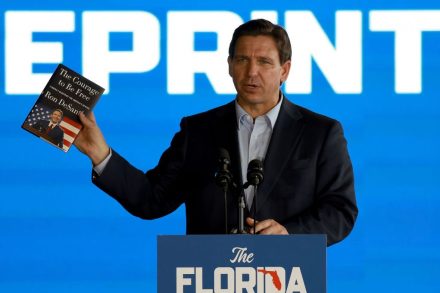
The game's afoot: MAGA Inc., a Donald Trump-associated super PAC, has lodged a formal complaint to the Florida Commission on Ethics against Ron DeSantis. The complaint alleges that the Florida governor is in breach of ethics laws by running for president without officially declaring. Cockburn detects a whiff of hypocrisy here: for a man who is always claiming to be the victim of legal warfare, Trump seems to be as willing as anyone to wield the sword of the law. The complaint argues that DeSantis is “leveraging his elected office and breaching his associated duties in a coordinated effort to develop his national profile, enrich himself and his political allies and influence the national electorate.

ron desantis

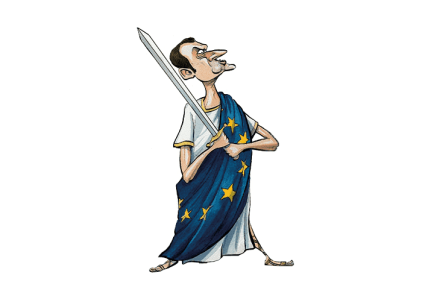
Marine Le Pen takes on the king of Europe

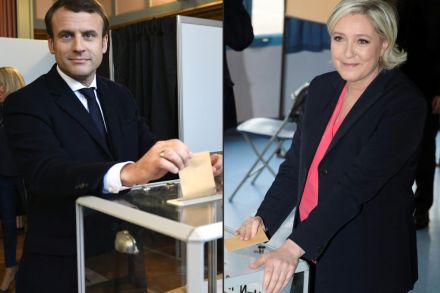
Last Sunday marked the beginning of the French presidential vote; the runoff election will take place on April 24, and incumbent president Emmanuel Macron winning again is no sure thing. If she plays her cards right, challenger Marine Le Pen has a legitimate shot at becoming the next president of France. Macron emerged victorious in the first round with 27 percent of the vote, followed by Le Pen with 23 percent. For the nationalist Le Pen, it is the second time she has qualified for the runoff, and thus the second time she is running against Macron. In 2017, she lost to Macron 66 percent to 33 percent, crushing once again the ambitions of her National Rally party. This year, however, will be a much closer call.

The mysteries and rituals of French democracy

From our UK edition

Montpellier I have never voted in an election for president of France, not being French. But as a councillor in my commune, before Brexit brought my promising French political career to a screeching halt, disqualifying me from municipal politics, it was among my duties to count the votes of others. It’s election day in France, the first round of the 2022 presidential race, and there are 12 candidates in the running. The top two will face off in a second round in two weeks. It’s expected that these will be the incumbent, Emmanuel Macron, and Marine Le Pen, in a rerun of the 2017 election that Macron won 66 to 34 per cent. Many here are saying, as they have for as long as anyone can remember, that the elections are fixed.

Macron has taken this election for granted

From our UK edition

Things are going from bad to worse for Emmanuel Macron, and for the first time political commentators in France are considering the possibility that he might not win a second term. The latest poll, carried out for Le Figaro, has him one point ahead of Marine Le Pen in the voting intentions of the people canvassed. Brexit and Trump have taught us not to put all our trust in polls but there’s no denying that Macron’s election campaign is in trouble. As I wrote yesterday, this time last month he was 18 points clear of Le Pen and a racing certainty for a second term. Where has it gone so wrong? Macron has only himself to blame.

Could Marine Le Pen actually win?

From our UK edition

Emmanuel Macron is worried. This wasn’t how he had envisaged the election. A month ago the president of France held a staggering 18 point lead in the polls and, as he looked over his shoulder in the home straight, he could barely make out Marine Le Pen in the distance. Now the gap is four points and she is breathing down his neck as the finish line approaches. Le Pen is one of Europe’s more interesting politicians. The daughter of Jean-Marie, the founder of her National Front party – which she rebranded National Rally in 2018 – and the aunt of Marion Maréchal, she has always been considered something of a political second-rater.

France’s political elite created Eric Zemmour

From our UK edition

Love him or loathe him, Eric Zemmour is a breath of fresh air in French politics. Before he appeared as a contender it was the usual worn-out figures lining up for next year’s presidential election: Marine Le Pen, Jean-Luc Mélenchon, Xavier Bertrand, Valérie Pécresse and Arnaud Montebourg. None of them have anything new to say and, even if they did, the electorate have stopped listening. Same old same old. Zemmour, on the other hand, despite the fact he has yet to declare his candidacy, makes for compelling TV. He was at it again on Wednesday evening, this time calling gender conversion therapy ‘criminal’ and comparing its medical facilitators in the USA to the Nazi doctor Josef Mengele. The presenter nearly fell off her chair.

Is Trump toning himself down for re-election?

From our UK edition

The last time a U.S. President lost re-election, the year was 1992 and the victim was George H.W. Bush. President Donald Trump is currently doing everything in his power to make sure he isn’t the first incumbent in 28 years to vacate the White House after a single, four-year term; if that means ditching the improvisation and unconventionality he wears on his lapel every day, so be it. That Trump gave two consecutive press conferences, on 21 and 22 July, about the coronavirus now rampaging the American South and West is not surprising. You may remember this past April, when Trump and his advisers thought it would be a good idea for the President to give daily news briefings about the virus with vice president Mike Pence, Dr. Anthony Fauci, and Dr.

The three reasons Bernie Sanders couldn’t beat Joe Biden

From our UK edition

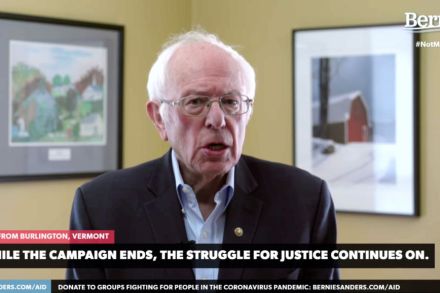
He took nearly a month to assess the state of his campaign after a whopping 15-point defeat in the crucial battleground state of Michigan. But after private deliberations with his wife, Jane, and some lobbying from his senior political advisers, Bernie Sanders came to the conclusion that continuing his presidential campaign would likely do more harm than good. On Wednesday he decided to call it quits, telling his supporters that there was 'no alternative’. Mathematically, he was right. Sanders was trailing former Vice President Joe Biden by over 300 delegates in the primaries and would have needed to win over 60 per cent of the remaining delegates to capture the Democratic Party nomination.