Post-liberalism

What I saw at the Restoring a Nation conference

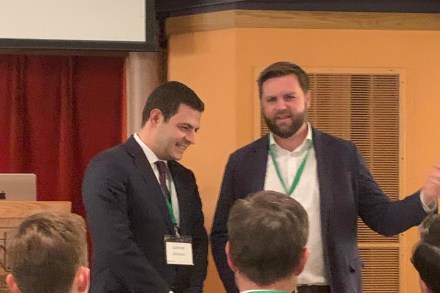
Take a drive through Steubenville, Ohio, Patrick Deneen urged the crowd at the recent Restoring a Nation conference. In downtown Steubenville, he assured us, the “blessings of liberty” are on full display. I didn’t bother making the trip. I know what those blessings are. We have the same ones where I grew up, in Beaver Falls, Pennsylvania, less than an hour away: a population that’s dropped 50 percent since 1940, record fentanyl overdoses, crippling brain drain, hulking husks of abandoned steel mills, empty storefronts on main street, the steady decay of once-beautiful public spaces and everywhere the poisonous fallout of family breakdown. The people I grew up with are dying — and the best the libertarians can offer them is a U-Haul.
What people get wrong about fusionism

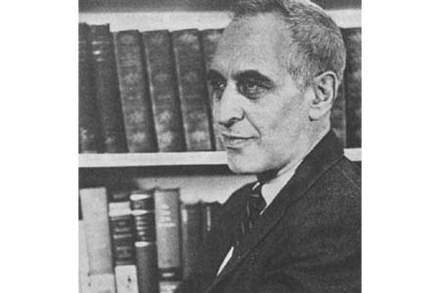
To suggest that the American conservative philosophy of fusionism was a mistake is often to betray one’s confusion about the term. Misconceptions notwithstanding, “fusionism” was never meant to refer to an alliance of convenience between disparate groups (religious traditionalists and economic libertarians, say). Instead it was a nickname, bestowed by L. Brent Bozell, Jr., for the philosophical synthesis advanced by his friend and intellectual adversary Frank Meyer in the 1950s and 1960s. Meyer’s synthesis had a few parts. Normatively, he said that both Judeo-Christian virtue and freedom from coercion (whether carried out by a bandit or by an agent of the state) are goods to be cherished and protected.

frank meyer fusionism

Our post-liberal moment

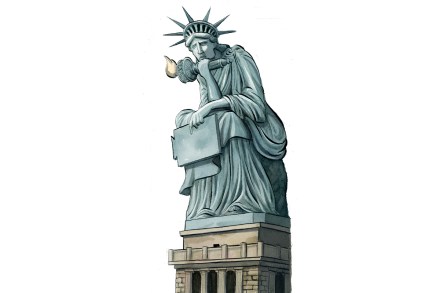
Can we still say that we live in a liberal age? We live, now, in the age of an epidemic. Calling for a political order that can effectively respond to such a disease is starting to sound a lot like calling for a post-liberal order. In the pages of the Atlantic, Adrian Vermeule has made something of the same point: the order that we have been living under is clearly unequipped to deal with crises of the nature of this epidemic. The common libertarian conservative position that any government action on this is a violation of the rights of the individual, shows the fundamental insanity of libertarianism. My father used to quote Voltaire to me: 'My right to punch you in the nose ends where your nose begins.

liberalism post-liberal

The next American revolution will be televised

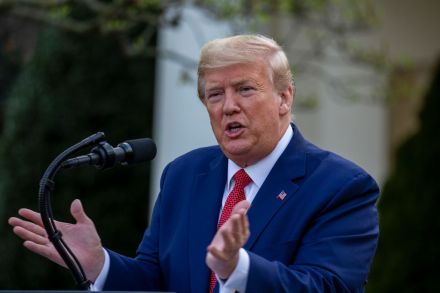
Is America becoming a developing country? We’re seeing increasing evidence of reverse convergence. We used to think that the developing world would in time become like America, but it now seems that the United States has developed an emulation complex of its own. What has not been explained are the reasons. In some fundamental areas America does resemble a traditional society, with its belief in transcendence and its quaint ways of enforcing justice and delivering public goods. The US executes prisoners on a scale matched only by China, Iran and Saudi Arabia. Guns are more readily available than in Pakistan and more than half of Americans pray every single day. No other state spends so much money on health care, yet Americans’ life expectancy keeps falling.

trump television

Constrained by freedom: what do post-liberals want?

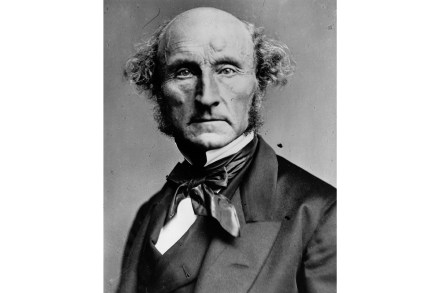
Any attempt to expound post-liberalism must begin by taking a view of what liberalism is. And liberalism can be viewed as a philosophy that enshrines freedom as its foundational principle. Freedom from what, though? That is a moving target. The pioneers of liberalism, whether they be John Locke or the Founding Fathers, wanted to be free from the tyranny of the minority, that is, from power exercised arbitrarily by a political sovereign. Two hundred years later, following J.S. Mill’s disdain for the craven conformism of late-Victorian social mores, liberals realized they wanted to be free from an empowered majority. That is, even if a majority want democratically to decide gambling should be made illegal, for liberals the practice should remain legal as long as one gambler remains.

post-liberals

The weak response to coronavirus is a symptom of the decay of the liberal state

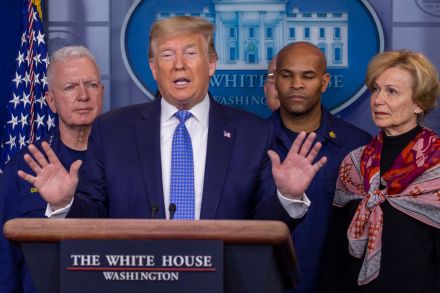
If COVID-19 spreads in the United States as it has spread elsewhere, then quite soon the virus will be established within the general population. The federal response will have changed from containing isolated ‘hot spots’ to managing a national epidemic. ‘Social distancing’ and self-quarantining will be endemic, hospitals will be overloaded and the economy will have continued to contract. This could test not just the American people — their social bonds, their sense of collective fate — but also America’s government and institutions. That testing will be far more demanding than the ‘stress tests’ faced by the banks after the financial crisis of 2007-08. America’s resolve will be challenged again. This should not be a time for petty politicking.

coronavirus state liberalism