Portugal

The tragedy of Cristiano Ronaldo

At 41 years old, Cristiano Ronaldo is a shadow of the once brilliant player he was. Everyone can see it, except the great man himself. The five-time Ballon d’Or winner is now focused on chasing the stupendous milestone of 1,000 career goals, which would be yet another achievement for a footballer obsessed with breaking personal records in a team sport. The 2026 World Cup marks yet another milestone achievement – the sixth time he has played in the tournament. It is a lot of soccer, and at the highest level, yet Father Time waits for no one, not even someone as rich and famous as Ronaldo. Portugal’s manager Roberto Martinez must take a fair share of the blame. Why does he persist in picking Ronaldo? This once supreme athlete is now a drag on the Portugal team.

cristiano ronaldo

Legal immigration is an absolute nightmare

From our UK edition

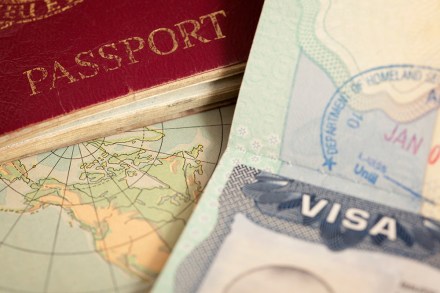
A personal note this week, as 15 October 2025 marked an occasion of sorts: when my husband’s and my Portuguese residency permits expired. Isn’t that a bit sloppy, you might ask, allowing your permission to remain in a country where you live to lapse? On one party’s part, very sloppy, but not ours. At least a dozen people must have exclaimed to me: ‘Oh, I’ve thought about moving to Portugal!’ After emigrating from London in 2023, I’m not issuing a warning exactly. We don’t regret the move. Landscape gorgeous, food great, people nice, wine cheap. But this country is notoriously bureaucratic, and the paperwork side of playing Mother, May I? with Portuguese immigration was and remains a nightmare.

A ‘Trump tornado’ is about to hit Europe

There is a wind of change blowing through the West. It emanates from Washington DC, where President Donald Trump continues to dash off executive orders; more than fifty by the end of last week, the highest number in a president’s first 100 days in four decades. The liberal mainstream media is rattled. The New York Times magazine ran a piece at the weekend in which it described Trump as "the leading light of a spate of illiberal leaders and parties flourishing in democracies around the world." The paper namechecked some of them: Poland, Holland, India, France, Germany, Italy, Brazil, Hungary and Russia. What unites and motivates these "illiberal" parties is their opposition to what the NYT called "liberal creep," which they regard as a civilizational threat.

Trump

Why the young are fleeing to Portugal

From our UK edition

The legendary music producer Rick Rubin once asked me why I had never moved to the United States. The answer, I think, comes down to an important trade-off: quantity of earnings vs quality of consumption. Historically, once you had a job, there was a limit to the lifestyle choices you could make Whereas the United States is certainly a better place to earn and accumulate money, Europe is, on balance, still a better place to spend it. (Which may explain why Rick asked me that question at his summer home in Italy.) This imbalance partly arises from a fundamental asymmetry in the transmission of ideas.

Portuguese wines are back

Regular readers will recall my fondness for Lord Falkland’s observation that “when it is not necessary to change, it is necessary not to change.” That crisp declaration is not only elegantly framed but (in my view) true. In this it differs, it saddens me to acknowledge, from the Duke of Cambridge’s even more robust confidence that he was “opposed to all change, at any time, for whatever reason.” I am not sure whether that mot was a testimony to the duke’s utopian inclinations or merely his stubbornness. But it is sharply at odds with the realities, if not, perhaps, with the governing temperament, of most of its main actors in the world of wine.

Portuguese

A solo summer sojourn in the Algarve’s Pine Cliffs resort 

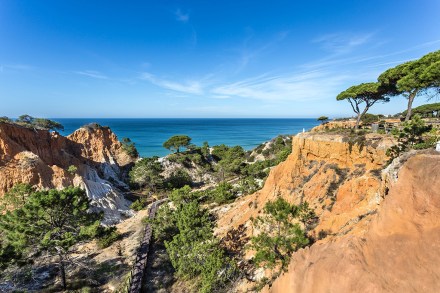
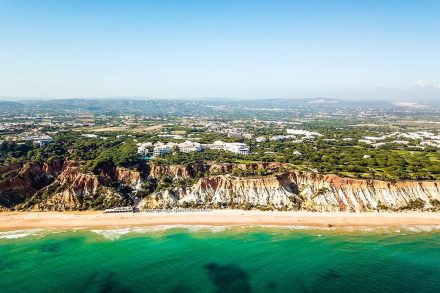
Strong, old pine tree branches cutting through a cloudless cerulean sky — a sight I find hard to beat. Throwing open the curtains at Pine Cliffs Resort in the Algarve, I wondered why I’d been away from Portugal so long.  Bleary-eyed, I reflexively photographed my first glimpse of the Atlantic from my Junior Ocean Suite’s balcony, seagulls cinematically swooping into the frame. Another vain attempt to capture the colors that always keep me coming back; the pictures somehow never as good as the real thing. I’d posted up from Tokyo gone dinnertime the previous night, just outfoxed by Japan’s famed pink sakura (2024’s late bloom meant I missed them by twenty-four hours). Waking up deathly early, I soaked away grizzly jet lag in my spacious room’s egg-shaped tub.

pine cliffs

Lisbon and the Algarve: the spots I find hard to share

World-class golf, more than 300 days of sunshine a year, flavorsome local seafood, excellent wines and more than 1,000 miles of Atlantic Ocean coastline. There are countless reasons to add Portugal to your bucket list, not least that United Airlines has announced direct flights from New York to Faro, starting in 2025. Me, I might have been living in Lisbon on and off for four years, but I’m continually surprised by new discoveries, from quirky bookstore openings in central Lisbon (Salted books, I love you) to secluded coves or gnarly rock formations in the Algarve’s emblematic places such as Praia do Marinha.

lisbon portugal

The wellness retreat reborn

Rebecca Illing’s résumé doesn’t read like your typical hotelier’s: circus school graduate, free diver, marine conservation advocate and certified death doula. So when the thirty-seven-year-old Londoner inherited a rundown guest house in Portugal’s northerly Minho region, the property was destined to be reimagined as something more than a straightforward B&B. Illing had spent childhood summers at Paço da Glória, roaming its cork oak woodlands and swimming in the nearby Lima River. But the circumstances of her return in 2020 were less idyllic. Europe was entering lockdown, and she was grieving the sudden death of her brother.

retreat

Road trips out of Lisbon: a slice of tranquilidade

Forget Barcelona. Say sayonara to San Fran. And so long, London. Post-Covid, Lisbon has become a hub for the creative, hungry and cosmopolitan. A throng of new restaurants, wine bars and buzzy co-working spots has formed a playground for the young and ambitious.  They’re squeezing every last drop out of their free time, too, joining the tourists in thumping nightclubs before escaping to beautiful  beaches. But plenty of weekend visitors don’t know (or have time to discover) that the city is flanked by bucolic countryside, dotted with world-class hotels and agriturismos. A forty-minute drive can take you to pristine white sands, enchanting pine forests, retro beachfronts and sprawling national parks. Next time you’re in town, tack a road trip onto your city break.

road trips lisbon

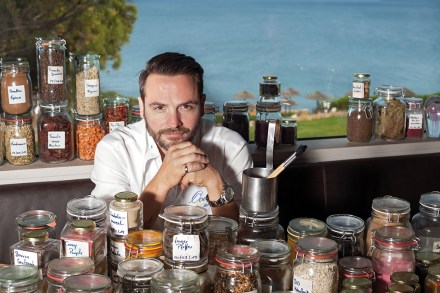
Open a bottle with… two-Michelin-star chef Hans Neuner

Quizzed on how best to assimilate a new culture, travel writer and celebrity chef Anthony Bourdain once uttered the famous line: “Drink heavily with locals whenever possible.” I never met the man, but still I miss him and his deft writing. The Opening a Bottle series is about getting pickled with people far cooler than I am, in whatever city I’ve washed up in.  “What is it, love?” A British lady, tanned deep walnut, is curious, as are most passersby. I’m standing outside the imposing red façade of Red Chalet in the sleepy town of Armação de Pêra, in Portugal’s Algarve. She’s the third septuagenarian to greet me since I touched down. I smile to myself — some stereotypes exist because they’re true.

Chef Hans Neuner (Vila Vita Portugal)

Diary of a digital nomad

From our UK edition

As the pandemic gently recedes into history, many of us have been embracing the liberties that have followed. For anyone whose work relied on a desk, a chair and a computer, video-conferencing services such as Zoom left us questioning long-held assumptions about the need for those increasingly anachronistic offices to which we once trudged. The thought of traipsing across town to sit in front of the same computer perched on a slightly different desk suddenly felt absurdly outdated.   But just as we became accustomed to typing in our slippers, more adventurous feet began to itch. Being stuck in a corner of the sitting room all day could be just as stifling as those open-plan offices we thought we'd escaped.

The rise of the ‘workation’

From our UK edition

The biggest single driver of last year’s property boom was the surge in working from home. For many, the commute went from daily chore to occasional concern, enabling them to move to areas that previously seemed beyond reach, from the Cotswolds to Cornwall. But others have gone further still – swapping ‘work from home’ for ‘work from anywhere’. These digital nomads typically ditch the nine-to-five or find flexible employers to enable them to decamp to sunnier climes in the greyest months of the year. And during a winter of high energy bills and soaring living costs at home, the trend has been growing.

Eating from Lisbon to London and back again

Six months of the year, I’m a (wannabe) Lisboeta, “a person from Lisbon.” A peripatetic British food and travel journalist somewhat scuppered by Brexit, I’m allowed in the Schengen Area for up to ninety days in any 180-day block. I max them out before I’m sent packing. I’ve come to think of these moments in time as “chapters,” in a half-hearted attempt to romanticize the loss of my border privileges. Lisbon is the object of my affections — and has become my base for European chapters from which I breathlessly ping between countries. I try new dishes and try not to fall in love with anyone before I’m ordered home (rather inconvenient: "getting married for the visa" jokes grow less and less funny).

lisbon gunpowder

48 hours in Lisbon

From our UK edition

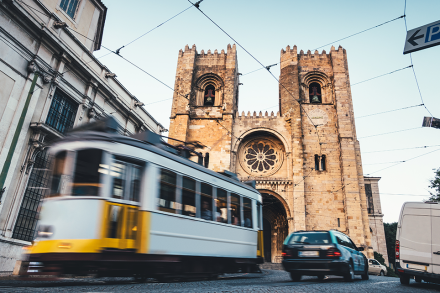
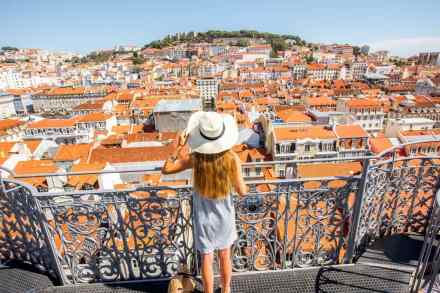
Lisbon is, as they say; ‘having a moment.’ The Portuguese capital has become something of an international hotspot of late, with a deluge of, not just global tourists, but those decamping to become ‘alfacinhas’ – the local term for those living in Lisbon, which adorably (though mysteriously) translates as ‘little lettuce.’ The appeal is abundantly clear from the moment you arrive. This is a city which has atmosphere in spades. Aside from the sunshine, there is a feeling to Lisbon that immediately grips you: colourful façades, grand squares leading out to the Atlantic Ocean and the distinctive yellow trams cutting a precarious path down vertigo-inducing streets.

Another fallen idol: the myth of Ferdinand Magellan debunked

From our UK edition

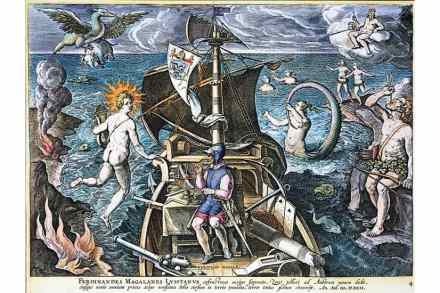
Who would you choose to judge you long after your death? How about a professional historian? How about Felipe Fernández-Armesto? Much lauded and read, this professor of history at Notre Dame, Indiana is the author of many books including short histories of humankind and the world and longer ones of exploration, Hispanic America and the year 1492. As you begin Straits, his account of the life and voyages of Fernando de Magallanes, known in English as Ferdinand Magellan, the explorer credited with the first European navigation from the Atlantic to the Pacific via the straits at the tip of South America in 1520, you may quail at the thought of his searing judgments. He can be waspish, uncompromising and cutting.

Why second-homers are buying in Portugal

From our UK edition

In recent years Portugal’s been pulling away from its image as a place for golf-playing retirees. Now it’s a fashionable and increasingly upmarket destination for home buyers who are drawn by its tax benefits coupled with its unspoilt coastlines and low-octane lifestyle. As of December 2021, there were 42,071 Britons resident in Portugal, according to the SEF, the Immigration and Border Service, the second largest group of foreigners behind the Brazilians. It is extraordinary that although the figure has fallen a little since 2020 – the pandemic has played its part – prior to Brexit, Britons made up only the sixth largest group of foreign residents in Portugal.

Down Santiago way

Hiking toward the Spanish border on my second day after setting off from Bayonne, I set down my backpack on a grassy patch beside a beach. It was bloody hot — August in the southwest of France — and the sight of beachgoers taking a shower had a cooling appeal. I stripped to my underwear and enjoyed the bracing shower burst. Then I looked down. Water was cascading over what looked like leprosy, breaking out over the right side of my chest. Feeling self-conscious, I got dressed and plodded on. Twenty-five miles later, at the sparkling city of San Sebastián, the pain proved too much. I lifted my shirt to two Portuguese pharmacists — and they pointed me toward the nearest hospital. I had herpes zoster, commonly known as shingles.

Camino

Euros 2021: Hungary’s lockdown lesson for the world

From our UK edition

Hungary (Orban 1, 90) 2 Europe and the WHO 0 Now THIS was a proper game of football. Fractious and furious, bitterly contested in front of 61,000 magnificently partisan Hungarians in Budapest. Scarcely a mask in sight and certainly not a knee. Orban has had enough of lockdown: Hungary took us back to the old world, that world we quite liked. The Magyars, roared on, fought for everything, inspired by Laszlo Kleinheisler (a Danube Swabian? One of Hungary’s ethnic Germans, persecuted of late and often expelled?) They were undone, cruelly, by a deflection and a penalty, having had a goal of their own disallowed. How I hoped they might win, given that I like Hungary and cannot abide Portugal, ancient allies notwithstanding.

The forgotten joy of spontaneity

From our UK edition

If you ask people what they’ve missed out on since the pandemic, they’ll probably lament their cancelled plans. Weddings postponed, birthday parties axed and family reunions moved to Zoom. Me, I’ve missed the unplanned. The spontaneity that knocks your routine, muddles your diary and lands you tipsy in the pub on a Monday night when you were supposed to be at the gym. For more than a year, our lives have been ruled by the principle of ‘safety first’. Accidents — even the fun ones — have been avoided at all costs. It has been illegal to act on a whim or at least, in the better times, very strictly regulated.

Portugal’s secret sanctuaries: why it pays to roam far

From our UK edition

My trek along the entire length of Portugal began on a small boat with Captain Juan standing beside the outboard. Accompanied by five other rucksack-laden pilgrims who I met during an extended Camino de Santiago pilgrimage to escape UK lockdowns, we were crossing the Minho River that serves as the border between Spain and Portugal’s northern edge. It was all rather dramatic and felt a bit like a Special Forces’ insertion, additional frisson coming from uncertainty over whether the border was actually open. It didn’t seem the issue was much on the mind of Captain Juan either way. The following 560-plus kilometres of hiking due south brought ancient towers, castles, cathedrals and defunct windmills straight out of Miguel de Cervantes’ Don Quixote.