Pornography

What our parents didn’t know about sex

From our UK edition

My mum and dad never told me that I was found in a cabbage patch, or delivered by a stork. They took a straightforward approach to talking about sex, and always seemed far less embarrassed about it than I did. Once I started at my all-girls secondary school, PSHE lessons re-enforced the emphasis my parents placed on sex as an important part of healthy and committed relationships. The aim was to enable us to make informed decisions, and to feel confident saying no if need be, not to preach abstinence. Sex-ed sessions were good on the practical stuff, too. I’m grateful that, aged 16, my schoolmates and I bid farewell to PSHE with an encyclopaedic knowledge of sexually transmitted infections, and the ability to label genitalia diagrams and put on a condom.

Online etiquette must be taught in classrooms

From our UK edition

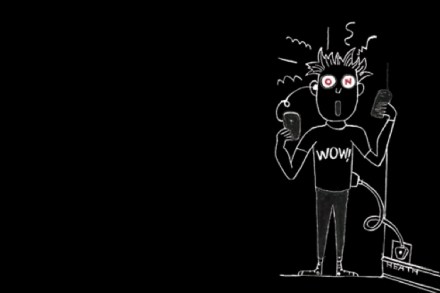
Can we protect children from the darker aspects of the internet? That was the question put to the panel last night, when the Spectator hosted a feisty discussion about the effects of technology on childhood. Child abuse, pornography and online dating were discussed, as was the idea that children have become self-centered and socially inept. Andrew Neil chaired the event, and was joined by culture minister Ed Vaizey, psychologist Oliver James, The Spectator’s Rory Sutherland and Microsoft’s Jacqueline Beauchere. Each panelist presented a different angle on the subject of The ‘Always On’ Generation, but all agreed that technology had created new opportunities and challenges.

State sanctioned sex

From our UK edition

After bullying from the government, our major internet providers are now ‘filtering’ pornographic websites, so that children don’t get to see them. However, a BBC Newsnight study revealed, with great alarm, that this filtering often blocks access to sexual advice sites aimed at children. Such as, for example, BishUK, which contains helpful advice on how youngsters can pleasure one another and how absolutely marvellous it is to be gay, you really should try it. ‘If you are going to have vaginal or anal sex with toys, fingers or penises, I think that you should know how to make it as pleasurable as possible as well as making it safe….’ one section begins. Lovely. I mean, by toys, is it referring to Lego? I wonder which is more harmful to the kiddies?

David Cameron’s crackdown on child porn is not over yet

From our UK edition

Parliament returns from a three day break today, but the headlines this morning are dominated by the international crackdown on online images of child abuse on the 'dark internet'. Technology companies have made significant progress since July, when David Cameron urged them to do more to eradicate these ‘depraved and disgusting’ images. For example, 200 employees of Google have been targeting 100,000 search terms in order to locate pictures of child pornography. YouTube engineers have found a way to identify videos created by and for paedophiles, and Google and Microsoft have been collaborating to identify pictures of child pornography.

Liberté, égalité, pornographie

From our UK edition

Bravo Melanie McDonagh. Your stand against the coarsening of society's sexual sensibilities is very welcome. But it is not just in Britain that porn has gone mainstream. We French now have our share of outrageously lewd tastes, too. Long gone are the days when the French could hide their perversions behind a veneer of sophistication, as if sex was somehow something that the French did in a classier – plus distingué – way. Our revolutionary ancestors would roll in over in their graves if they knew how unenlightened and childish we have become when it comes to pleasures of the flesh. Crude, cheap sexual material, whether it is on TV or in magazines, has become as common in Paris as it is in London, or any other global city. The sex world is flat. Take French magazine Lui.

Rod Liddle on the cant of the Great Porn Act

From our UK edition

Several articles in this week’s issue of the Spectator are worth the cover price alone. We’ll be flagging them up on Coffee House over the weekend. To start with, here is Rod Liddle on the row over pornography: ‘The Co-operative stores, with all the high-handed self-righteousness of the political movement to which it is paying obsequy, has demanded that henceforth publications such as Nuts and Zoo and Front must be displayed in plastic bags which disguise their front page. The front page of these mags usually consists of a young woman in a state of partial undress — but no nipples on display and certainly nothing from the really naughty region, that famous neck of the woods below the waist and from which babies emanate.

Google is part of the free press. So hands off, Prime Minister

From our UK edition

It is not quite clear what Google did to David Cameron, but the Prime Minister seems to be exacting some sort of revenge. First, he wanted them to keep records of their customers’ emails just in case his officials wanted to snoop later. Now he wants the British government to be the first in the free world to censor internet search results. The causes he invokes are undoubtedly popular ones: confronting terrorists, for example, and thwarting pornographers. But it is precisely in moments of populist outrage that liberties are sacrificed — and only later do we realise what we have lost. The digital age is bewildering for governments, especially those not constrained by a constitution. How to respond to the explosion of ways in which citizens can express themselves?

Can we trust the state to censor porn?

From our UK edition

The most sweeping censorship is always the most objectionable. In principle, however, there is nothing wrong with David Cameron’s sweeping proposal that the customers of internet service providers must prove that they are 18 or over before they can watch online pornography. The rule for liberal democracies is (or ought to be) that consenting adults are free to watch, read and listen to what they want. It stops child pornography – because by definition children are not consenting adults – and it could stop children accessing pornographic sites. Children are no more able to give informed consent to watching pornography than they are to appearing in it – if 'appear' is not too weak a verb to describe the rape and abuse of children on camera.

Porn damages everyone — not just children

From our UK edition

Porn, porn, porn. One way or another, we all like talking about it. But today's debate about children and 'sexually explicit material' on the internet might be more demeaning than the smut itself. For a start, it's government manufactured: the coalition knows that nobody ever lost votes by saying they cared about kids. The media love tackling porn, too, because the subject enables them to be prurient and morally serious at the same time. Stories about online porn and the young are, inevitably, accompanied by lots of images of naked women in provocative poses. Newsnight last night used this strange blue filter to soften their broadcasting of quite a lot dirty pics to the nation - after the watershed, of course. (And oh look above — we've done it too. LOL!

Howard Jacobson interview

From our UK edition

While Howard Jacobson’s prose works are renowned for their wit, energy, and self-deprecating, priapic jokes, his latest book, Zoo Time, is perhaps his most light-hearted to date. The protagonist is a struggling novelist, Guy Ableman: a red-blooded male with a penchant for the filth-merchants of English literature. Ableman has two predicaments: the first is his inability to sell any books. The second is his wish to sleep with Poppy, his alluring and sophisticated mother-in-law. Although the book is meant to be read with the smarmy, tongue and cheek tone that Jacobson has become famous for, the novel also passes judgment on a more serious matter: the crisis that has befallen the world of literary fiction.

What comes after Fifty Shades?

From our UK edition

After the record-breaking success of the Fifty Shades trilogy, publishers are desperately trying to answer the multi-million dollar question, what comes next? What will all those millions of readers who have raced through Fifty Shades want to read now? With a depressing lack of imagination, many publishers seem to have landed on the answer of more erotica. Each week, more and more shiny paperbacks with suggestive covers, claiming they are ‘the next Fifty Shades’, arrive in the bookshop where I work. If this is the future of reading, then it is bleak indeed.

Smut Samizdat

From our UK edition

Thanks to Twitter for alerting me to this small act of rebellion: Taken outside the display windows at Smiths, @HypnoPeter As Fleur Macdonald wrote a couple of weeks ago, it is a mystery 'why people might want to read it [Fifty Shades of Grey] rather than Réage’s The Story of O, Bataille’s The Eye or any back issue of Cosmopolitan. And that's to name but a few, and none of the masters like Henry Miller. As the Samizdat above tells you, assuming that you are in the market, go forth and find good smut. Please, anything but 'it'.

Porn season

From our UK edition

EL James has a lot to answer for. Yesterday brought news that a British publishing house, Total-E-Bound Publishing, will sex-up some of the classics in the hope of cashing in on the Fifty Shades of Grey phenomenon. In the forthcoming editions: Cathy and Heathcliffe will do a little bondage. Sherlock Holmes will bed down with Dr. Watson (you’ll have to read the books to find out what Mrs Watson makes of that). And Jane Eyre, of course, will get rogered by Mr Rochester, presumably while St. John Rivers plays with himself in his cottage, or perhaps even the schoolroom — the perverse possibilities are almost endless where poor, conflicted St. John is concerned.

Across the literary pages: Of life, love and death

From our UK edition

John Banville's reputation as a master stylist and serious novelist wasn't done any harm by the weekend reviews for his latest book Ancient Light. Familiar riffs on his usual leitmotifs guaranteed the standard standing ovation. 'It is written in Banville's customary prose, rhythmic and allusive and dense with suggestive imagery,' Alex Clarke commended in the Guardian. While Patricia Craig in the Independent applauded that: 'Many of John Banville's customary concerns are present in this bedazzling new novel: memory and invention, questions of identity and make-believe, names and aliases, transgressions and transformations'. More unexpected however — given the rather dour face he sports for photo-ops - was his rather fun interview in the Guardian.

Amis: Porn is an attack on love

From our UK edition

Pornography is in the news, and Martin Amis has been thinking about pornography. Those two facts are not related, not necessarily. Tomorrow’s issue of the Spectator contains an interview with Amis, who is on vintage form. Pornography, he says, is an attack on love; it is the repudiation of significance in sex. Pornography has, he says, created a ‘big disconnection for human beings’ between their conceptions of sex and its biological realities. He says, ‘There is no more talk of love in porn than there is about having babies. It’s as if you made babies by some other way, like sneezing.