Population

Paul Ehrlich’s bad ideas won’t go away

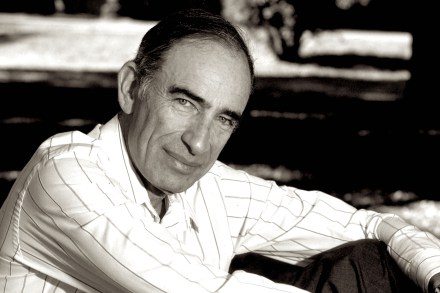
I am sorry to hear of the death of Stanford University Professor of Biology Paul R. Ehrlich at the age of 93, but to read his writings you wonder whether it is an event he might actually want us to celebrate. It does, after all, mean one less mouth to feed. Just another 6.5 billion people to go and we will be down to what in 2018 he stated was the world’s optimum population of between 1.5 to 2 billion. Ehrlich’s 1968 book, The Population Bomb – written with his wife Anne whose name his publisher famously kept off the front cover – established Ehrlich as the world’s latter-day Malthusian-in-chief.

paul ehrlich

No, Joy Reid: Rome didn’t fall due to a lack of ‘diversity’

Former MSNBC host Joy Reid recently delivered a peculiar history lesson to her social media audience. In her mind a reproach to Donald Trump, Reid warned that the Roman Empire “died because it wasn’t diverse enough,” implying that sticking with “just white folks” leads to inevitable civilizational decline. If history were written by cable news soundbites, we might soon learn that Napoleon lost Waterloo because he lacked a DEI department.In reality, Rome didn’t fall because of a lack of diversity. Nor is Europe today crumbling because of too many white people. Societies fail for many reasons, but skin color has never been one of them.

Joy Reid

Panicking over the planet and population is pointless

One sign of moral panic is that when the facts change, the fears remain the same. In the 1970s, the Washington Post, TIME and Newsweek stoked fears of “a new ice age.” As soon as scientists updated their models to show a trend in the other direction, “global warming” became as threatening as global cooling. And when winters stubbornly kept happening and the direst predictions of new-age prophets like Al Gore failed to come to pass, the whole thing was rebranded as “climate change.” Whatever the label, and whatever the underlying phenomenon was thought to be, the moral implication remained the same — human beings were ruining the earth and must curtail their comforts to save the planet. Bad weather used to be God’s punishment for human sinfulness.

panic

The African exception to the population bust

Earlier this year, New York Times columnist Ross Douthat wrote a provocative piece making the case that there are two kinds of people in the world: “Those who believe the defining challenge of the twenty-first century will be climate change, and those who know it will be the birth dearth, the population bust, the old age of the world.” Douthat made this bold claim not just because he believes the population bust is the more important of the two challenges, but because, in his view, it is being comparatively neglected due to all the attention paid to irrepressible climate doomsayers.

african population

Back to Bangalore

India’s fast-growing population now stands at 1.38 billion, just shy of China’s ginormous 1.4 billion. China’s population is rapidly aging, so it’s only a matter of time before a youthful India —average age twenty-nine to China’s thirty-seven — overtakes its communist neighbor and becomes the most populous nation on the planet. I left India as a child, and just spent two months in Bangalore, selling some ancestral property. Bangalore is India’s booming tech hub and Silicon Valley; most major American tech companies, including Facebook, Google, Amazon and Microsoft have opened large offices there to manage their back-end operations.

india

Is the shrinking global population good news?

The New York Times recently published a lengthy piece on the long- term ‘slide’ in world population with ‘plunging fertility levels’ and ‘sweeping ramifications’. How will the lower projected levels of world population affect climate change? Surely, if humanity is a blight on earth, as leading environmentalists assert — from the great naturalist David Attenborough who famously said that ‘humans are intruders’ to UN secretary general António Guterres who declared that ‘humanity is waging a war on nature’ — then surely the projected decline in world population by the end of the century should be welcome news.

population