Politics

Happy Birthday, Aleister Crowley

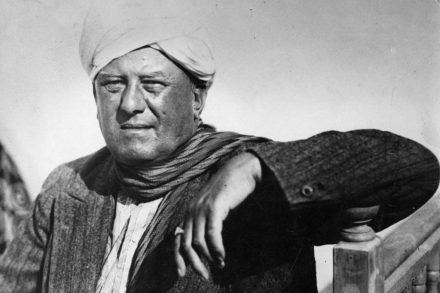
Aleister Crowley, who was born 150 years ago today, was once one of my idols. No one else seemed to match the panache of someone who could make a name for themselves as a magician, poet, artist, novelist, prophet, journalist, mountaineer, and spy. Yet, the outsized influence of such characters frequently attracts legions of charlatans. I met one during my adolescence when I became a student of a Tibetan Buddhist lama who claimed to be Aleister’s living son. It did not immediately occur to this bright-eyed seeker that the alleged son's chief interest seemed to be in shagging his female students, but eventually it did, and I grew disillusioned.

Crowley

Give the Nobel to Jared

On a season eight episode of The Simpsons, newscaster Kent Brockman interviews a man who’s woken up from a 23-year-long coma, and lets him know that Sonny Bono is now a Congressman and Cher has won an Oscar. The man dies soon after. If someone were to wake up from a coma today to find out that Donald Trump, who 23 years ago was hosting The Apprentice, is now the leading candidate for the Nobel Peace Prize, it would have a similar result.  But who else deserves the award? If you can give Peace Prizes to Al Gore and Barack Obama for basically being Cool Liberal Guys Who Aren’t Dick Cheney, you can give one to Donald Trump. Look at who’s nominated him: Benjamin Netanyahu, the government of Pakistan, The Israeli Hostages Family Forum.

Kushner

James Comey’s ‘knight in shining armor’ complex

Former FBI director James Comey is in the news again for all the wrong reasons. He’s been indicted for allegedly lying to Congress and obstructing a congressional investigation, which he denies. Comey’s arraignment is scheduled for October 8. Having covered every FBI director since 9/11, I’m reminded of Comey’s difficult relationship with the facts. In May, he was interviewed by the Secret Service after he posted a photo on Instagram that spelled out “86 47” in seashells. According to Merriam-Webster, eighty-six is slang for “to throw out,” “to get rid of” or “to refuse service to.” The dictionary says it originated in the 1930s, but these days to get “86’d” is widely interpreted as a threat of harm. Of course, President Trump is the 47th Commander in Chief.

Comey

Trump knows personnel is policy

In May 1801, Thomas Jefferson wrote a complaining letter to a friend. “There is nothing I am so anxious about as making the best possible appointments.” Donald Trump would appreciate Jefferson’s anxiety. “Personnel is policy.” As far as I have been able to discover, that slogan gained currency in the Reagan administration. But it articulates a truth that political thinkers from Aristotle to Machiavelli to James Madison appreciated. The first line of Article II of the Constitution reads: “The executive Power shall be vested in a President of the United States of America.” That’s “a President.” Only one. Not “a President and a bunch of district court judges.” Not “a President and sundry federal agencies staffed by unaccountable bureaucrats.

personnel

Is the religious right shifting?

In 2021, for the first time in 1,400-odd years, Britain ceased to have a Christian majority. The United Kingdom, the political entity of which the island of Great Britain has been a part since 1801, has had its share of not-quite-Christian prime ministers over the years, with a handful of agnostics and quiet atheists. But in 2022, for the first time, the UK had a prime minister who practiced a non-Christian religion – and Hinduism had the distinction of claiming the first post-Christian head of state, Rishi Sunak. The West’s ethnic and religious foundations have already shifted in our great cities It may be some time before an American president is Hindu. Already, however, there are several prominent Hindus in the Trump orbit and near the top of the Republican party.

religious

The bully doctrine

When the suspended late-night comic Jimmy Kimmel got his show back in late September, he did not apologize for the callous remark that briefly drove him off the air. Kimmel had accused Donald Trump and his followers of harboring and inciting the man who assassinated the activist Charlie Kirk, a beloved friend to many in Trump’s circle. This brought threats from one of Trump’s communications officials, then boycotts by two major station operators and finally Disney’s suspension of Kimmel. On his return, the comedian cracked a joke about Trump: “I don’t like bullies,” he said. “I played the clarinet in high school.” Weird thing to say. With tempers running so high, why would an impenitent enemy settle for calling Trump a “bully?” Why not call him a censor? A dictator?

bully

The ‘Great Spiritizing’ of the top brass  

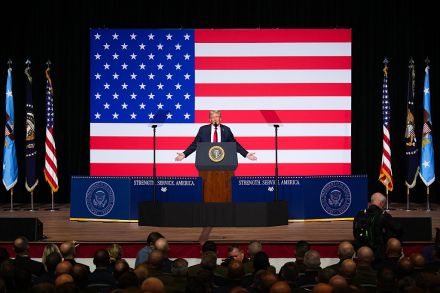
“Today we end the War on Warriors,” Secretary of War Pete Hegseth, author of the book The War On Warriors, tweeted this morning. Today was the day that Hegseth really became Secretary of War, addressing, along with President Trump, a full gathering of top military brass in Quantico, Virginia.  “This is only an esprit de corps,” the President said, as he set sail from the White House for the event. “Do you know what that is, an esprit de corps? This is only a spirit. These are our generals, our admirals, our leaders, and it's a good thing, a thing like this has never been done before, because they came from all over the world. And there's a little bit of expense, not much, but there's a little expense to that. We don't like to waste it.

Hegseth

The masses have had enough

Nearly everybody I know has experienced crime in our cities or had a family member threatened. A few years ago, my pregnant wife was walking in San Francisco when a deranged homeless man repeatedly asked her if she wanted to be raped. This is not unusual in America. Iryna Zarutska, a Ukrainian refugee, was murdered, aged 23, on the subway in North Carolina just recently. The man responsible had been charged and released 14 times under a broken system. A judge who’d never passed the bar, a city council that ignored public safety and Governor Roy Cooper’s Task Force for Racial Equity in Criminal Justice all made it harder to keep repeat offenders like Iryna’s killer off the streets.

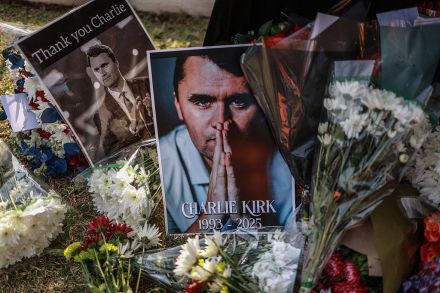
Iryna Charlie Kirk
morality

The blurred lines between politics and common morality

Some 238 years ago Thomas Jefferson wrote that “the tree of liberty must be refreshed from time to time with the blood of patriots and tyrants.” Charlie Kirk was a patriot and his blood, shed by an assassin’s bullet, is making Americans take their free-speech liberties seriously once again. Jefferson wrote his famous line in response to an insurrection – a real, armed one quite unlike the ugly out-of-control protest at the US Capitol on January 6, 2021. The author of the Declaration of Independence wasn’t defending the rebels who had risen up under the command of Daniel Shays. His letter was instead a warning against overreaction to the rebellion on the part of the national government.

The evolution of the political animal

From our UK edition

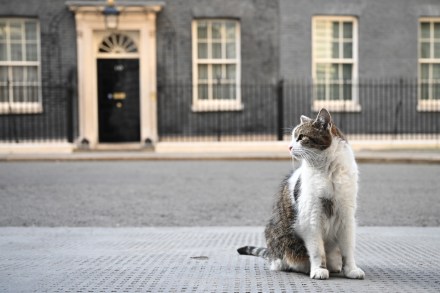
Most of our politicians themselves are not obedient, kindly and loyal. Similarities between candidates and their faithful cat or dog are few – but as trolls now deter supportive spouses and photogenic children from saccharine election leaflet photos, pets are increasingly becoming familial proxies. When Nigel Farage does a TikTok about his dogs Pebble and Baxter, thousands comment approvingly. But finding a family photo of the Reform UK leader is nearly impossible. And that, says Farage and many like him, is entirely deliberate. Political animals are not new. Caligula threatened to make his horse, Incitatus, a consul. Cardinal Wolsey’s cat is immortalised in a bronze statue in Ipswich.

Was I the victim of a sex crime?

From our UK edition

Dante’s Beach, Ravenna I went up to her and got straight to the point: ‘What are you using for bait?’ I say ‘her’ but you never know round here. We live a mile inland from one of the last unspoiled stretches of Adriatic coast, part of which was stolen several decades ago by highly trained nudists. The nudists, who seem to be mostly men, attract several fringe groups, such as trans women (men who identify as women). One of the best-known was christened Cesare but is now a peroxide blonde called Cesarea. ‘She’ is taller than anyone else in the village apart from me and has enormous hands. Besides, it is not exactly every day you come across a real woman fishing, is it?

Weimar Britain: lessons from history in radical times

From our UK edition

The Ancient Greeks believed the past was in front of us and the future behind. Man could look history in the face and learn from it, while the future was unknowable, hidden, the wind whistling at our back. It is in history, its patterns, and what it reveals about human nature, that we have the best guide to our times and how they might develop. The government may wish us to focus on innovation this week – new nuclear reactors, AI data centres, OpenAI’s Sam Altman and Nvidia’s Jensen Huang at the state banquet – but if we really want to understand the convulsions gripping our society it is to the past we should look for signs.

Who’s next on the Ambassador’s Sofa?

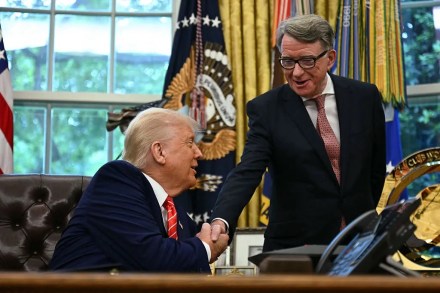
This time next week, President Trump will be across the Pond in the United Kingdom for a state visit. He goes back to the Old Country at a testing time for US-UK relations. The UK ambassador to the US Lord Mandelson was removed from his post this week after further revelations emerged about his friendship with the convicted child sex offender and financier Jeffrey Epstein. Mandelson remained close with Epstein after his first conviction in 2008 and referred to him as his “best pal” in emails. Mandelson also has an entry in the 50th birthday book put together by Ghislaine Maxwell which the House Oversight Committee released last week – the same book which is the subject of a defamation suit filed by President Trump against the Wall Street Journal.

ambassador

Art and radicalism in 1930s Britain

From our UK edition

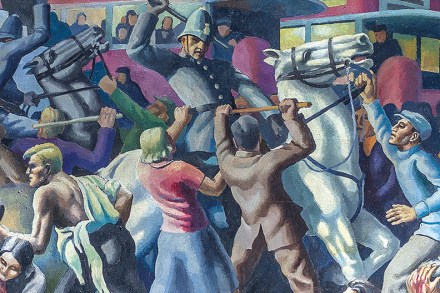
What is art for? How can it, should it, relate to the political framework of its time? How far can it shade into ‘propaganda of the imagination’? These are some of the questions threading through Andy Friend’s compelling account of the first decade of the Artists International Association, or AIA, a vital but under-explored British movement welding art and politics against the growing threat of international fascism.  The story opens in 1933 in the candlelit rooms of Misha Black above Seven Dials, Covent Garden, where a dozen impecunious jobbing artists met to discuss a sensational report from the Soviet Union.

Magnificent – but is it war?

When Donald Trump made building a “big, beautiful” wall along the southern US border a priority in his first term, he was widely derided. There wasn’t enough concrete or steel to build such a structure. Anyway, it was futile because migrants would find some way over or around it. It was a heartless and evil project being promoted to distract from other failures. When shutting off immigration from Mexico became an unrealized project from that first term, Trump’s critics enjoyed themselves. Campaigning for his second term, Trump hardly mentioned the wall. Yet something remarkable has happened. Undocumented migration across the border has all but ceased.

Trump
liberalism

Liberalism is a lost cause

The worst book title of the modern age actually belongs to a superb work: The Strange Non-Death of Neoliberalism, which the English sociologist Colin Crouch wrote in 2011. The title was meant to play off the historian George Dangerfield’s 1935 book about the politics of the United Kingdom before World War One, The Strange Death of Liberal England. Alas, after almost a century, not many people remember Dangerfield. A larger problem is that it is hard to say what liberalism is, neo- or paleo-, dead or alive. In Europe, it mostly means the free market. In the United States, it mostly means various movements for social betterment pushed by those skeptical of the free market. Liberalism thus comes to mean every political tendency and its opposite.

The risks of Reform

From our UK edition

In 1979, XTC sang: ‘We’re only making plans for Nigel/ We only want what’s best for him.’ The song is from the perspective of two overbearing parents, confident that their son is ‘happy in his world’ and that his future ‘is as good as sealed’. Nigel Farage is making plans for his own future but it’s doubtful it’s as good as sealed. This week, he announced Reform UK’s proposal for mass deportations, ‘Operation Restoring Justice’. Some 600,000 illegal migrants will be removed, he promised, should his party win the next election. Britain will leave the European Convention on Human Rights (ECHR) so we can return people to countries such as Afghanistan and Eritrea, currently deemed too dangerous.

How Italy’s ‘new young’ party

From our UK edition

Dante’s Beach, Ravenna The Feast of the Assumption began for me just after midnight with a WhatsApp message from my eldest son, Francesco Winston, 20, which said: ‘Papà don’t come, the police are everywhere.’ He and my eldest daughter, Caterina, 21, had invited me to a party on the beach organised by their group of friends to mark Ferragosto, the most important day of summer. There would be a bonfire and sausages, booze and guitars, and all the rest of it, until the blood-red sun emerged out of the sea at about 6 a.m. to bring it to an end. The huge, shimmering sun rose up out of the sea, a wondrous way to end a party I cannot remember the last time I went to a party. I avoid small talk if possible and am currently not drinking.

Dinner party talk won’t help Gaza

From our UK edition

I’m one of the Silent People who sit on the sidelines of the great political events and debates of the present. We Silent People don’t sign on-line petitions or go on protests to show solidarity with this group or that one. We don’t tweet our outrage, or blog our bile. We prefer to keep what we think to ourselves. When a verbal punch-up erupts over Gaza or trans rights at a dinner party, I stay silent and wonder what’s for pudding. The thing we Silent People are most silent about is our silence. It’s easy to see why: the silent are suspect The thing we Silent People are most silent about is our silence. It’s easy to see why: these days the silent are suspect.

Britain shouldn’t put up with Donald Trump

From our UK edition

History is the march of folly and far too many of my countrymen are hearkening to a drumbeat which would lead us to disaster. On Tuesday several of our newspapers led with variations of the same headline: ‘Trump: cut tax to beat Farage.’ This is idiotic counsel, given the state of Britain’s public finances. I would have thought the way to beat populism was not by emulating its idiocies but by prudent, cautious, sensible management of a nation tired of liars. If Donald Trump teaches us anything, it is how to ruin a great nation. Far more useful than parroting the US President’s delusions would be telling the British people more than they are currently permitted to read about his manic conduct of office.