Politics

We’re living through eerie reminders of the 1970s

From our UK edition

There are eerie parallels with 1970s at the moment, I say in the Times today. The inflation of that decade was principally caused by the abandonment of the gold standard in 1971 and the oil shock of 1973-4, which saw the price of a barrel of oil go from $3 a barrel to $12. Today, we have seen huge amounts of quantitative easing from central banks to keep the economy going through Covid – and unlike the post-financial crash QE, which was largely used to repair banks’ balance sheets, it has gone into the real economy. On top of that, we have now seen the gas price rise fourfold. There are other supply issues too; just look at how the shortage of lorry drivers is affecting petrol deliveries.

Let’s not politicise Emma Raducanu’s triumph

From our UK edition

It didn’t take long for the open-borders brigade to try and politicise the magnificent feat of British teenager Emma Raducanu in winning the US Open women’s singles. Rather than just revelling in the general outbreak of joy in the country, or praising the astonishing maturity of Emma’s performance, the usual blue-tick suspects piled onto Twitter within minutes of her victory to argue, or imply, that the fact Emma was born in another country (she moved here from Canada aged two) proved that immigration in all its guises is always a good thing. Times columnist Sathnam Sanghera stated the case plainly: ‘Half Romanian, half Chinese. Born in Canada, brought up in the UK. Immigration enriches us, and always has done.

PMQs: Starmer’s caution lets Boris off again

From our UK edition

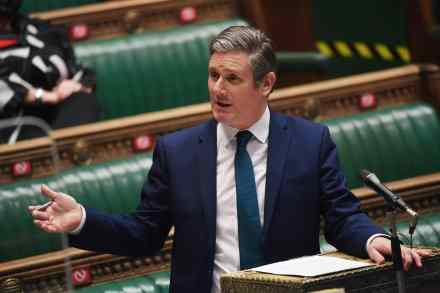
Today was the first PMQs clash between Boris Johnson and Keir Starmer in a packed Commons chamber. Starmer tried to pin down Johnson on whether he could guarantee that no one would have to pay their home to fund their care. Johnson dodged the question. But Starmer was limited by the fact that Labour can’t say how it would raise funds for the NHS backlog and social care, allowing Johnson to claim that Labour has no plan. Starmer is a naturally cautious politician, but his caution is leaving the field clear for Johnson on social care. Things would have been more difficult for the Prime Minister today if Labour was explicitly backing a tax on assets.

Why isn’t the vaccine approved for 12- to 15-year-olds?

From our UK edition

This afternoon, the JCVI has essentially passed the buck on vaccinating 12- to 15-year-olds. It has declared that the health benefits of a vaccine for this age group are ‘marginally greater' than the risks of Covid. But it has left the decision on whether to actually vaccinate them to the chief medical officers. It would surely have been better for the committee to have made a decision one way or the other In the past few weeks, tensions between ministers and the Joint Committee on Vaccination and Immunisation have been rising. Ministers are keen to get on with an autumn booster shots campaign for the elderly and to vaccinate more school children. Yet the JCVI has only approved boosters for those with weaker immune systems.

The art of politics: what ministers hang on their walls

If I am ever appointed to one of Britain’s Great Offices of State — stranger things have happened to Spectator hacks — the first thing I’d do is furnish my office. A raid on the Government Art Collection is a perk of being a minister, and better than the car and the driver. A few Hogarth engravings, a set of David Jones’s ‘Ancient Mariner’ etchings, Cedric Morris’s ‘Irises and Tulips’, Edward Bawden’s ‘The Coal Exchange’...I’d have liked to nab Winifred Nicholson’s ‘Flower Piece’, if only Carrie, the new Mrs Boris, hadn’t got there first. A Freedom of Information request from The Spectator has lifted the little red velvet curtains on which works of art ministers have got from the vaults.

art

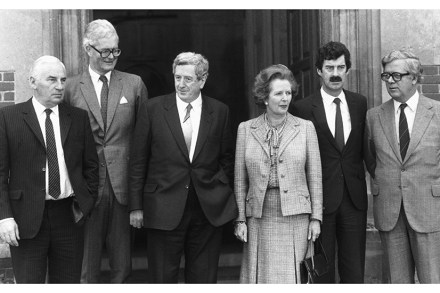
Margaret Thatcher vs everyone else: the making of the 1985 Anglo-Irish Agreement

From our UK edition

Diplomatic negotiations are rarely fully described by their participants in books, for two reasons. They are usually secret until much later, and their intricacies can be boring. Politicians often include brief accounts in their memoirs, but these seldom reveal much about the process as a whole because, as I discovered by interviewing scores of them for my biography of Margaret Thatcher, they cannot avoid focussing almost exclusivelyon what they did and said (or think they did and said). This book, however, overcomes the secrecy rule, because it is published nearly 40 years after the events described; and it overcomes the boredom problem because of the literary skill and intellectual grasp of its author. It is clear, precise, readable, sometimes drily funny.

What do oven chips have to do with virtue signalling?

From our UK edition

Why does virtue-signalling matter? It’s a fair question. After all, if people display virtuous behaviour, need we care about their motivation? I understand why some are irritated by the term; deployed unsparingly, it can be used to denigrate any act of decency. Yet, if the phrase is relatively new, the concept isn’t. Several of the best-known passages of the New Testament (The Widow’s Mite; the Sermon on the Mount) deal with the contrast between sincere acts of virtue and those driven by self-advertisement. No chant from a football crowd has ever converted anyone in the opposition stands Why is this distinction important? For one thing, cheap displays of virtue may crowd out more concrete actions.

The monsters we become

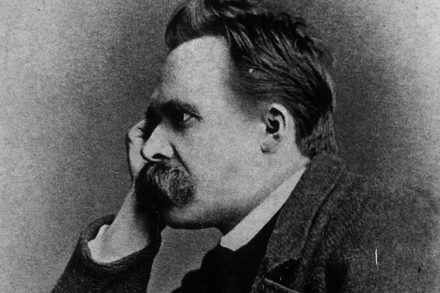
Nietzsche would have been great at Twitter. He excelled at epigrams, which are to philosophy as the fortune-cookie motto is to Chinese takeout, and he loved to hate. Scholars divide as to whether his epigrammatic excellence came from using a typewriter — he was the earliest philosophical adopter of this technology — or because he was no good at joined-up thinking but very good at vituperating about the news. It was Nietzsche who spotted that the emerging theme of democratic society was not the reign of reason and universal brotherhood, but the ‘stupidification of the world’ and resentment. He called it ressentiment. Philosophy goes better in French, and Nietzsche had lately turned against Wagner, anti-Semitism and German nationalism.

Nietzsche
anger

Old Glory, new anger

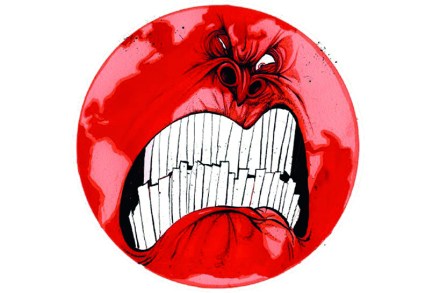
America is no longer just angry. We have become a nation of wrath. It is a risky emotional condition, recognizable by our desire to obliterate our opponents. Wrath doesn’t seek reconciliation. It wants revenge. Nor does wrath want to accommodate what it can’t control. It wants to rub the slate clean. There is a wrathfulness of the political left, stemming from visceral hatred of Trump and his supporters. But as the left is ascendant in the seats of power, it can pursue its effort to extinguish its opposition via the instruments of state. The wrathfulness on the political right is another story. Wrath reaches its zenith when people feel not just abused but hopeless in the pursuit of any redress.

In search of Nirad Chaudhuri

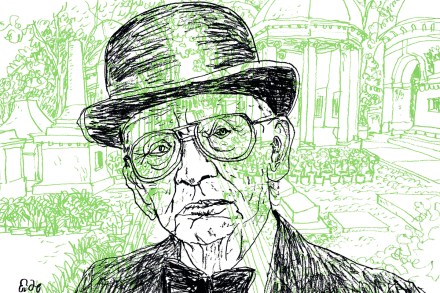
The false sense of complacency in Washington DC, now restored as the imperial capital of the world, is only matched by a tone of utter bafflement. History has apparently renewed its march toward a progressive utopia, and the American cabinet seems as epidermally diverse as it is ideologically totalitarian. But there remains a sense of unease. The imperium suffered a systemic shock in 2016, one that needed and still lacks explanation. The shock was not limited to America. The Guardian struggles to comprehend that British Indians tended to support Brexit, and that members of their community such as Rishi Sunak and Priti Patel have risen to influence in the Conservative party and high office in the government.

chaudhuri

Is J.D. Vance the right man for the right?

J.D. Vance is the man Republicans have been praying for since the day Donald Trump stormed to the party’s presidential nomination five years ago. He has a lot of the traits conservatives liked about Trump: Vance, too, is a political outsider with proven appeal to an audience beyond politics, thanks to his bestselling memoir Hillbilly Elegy. Like Trump, Vance offers himself as an avatar for the people who have been discarded by globalization and demonized by a left-wing media and education establishment. And he is as radical as Trump — maybe more so — in his willingness to reject the merely liberal side of American conservatism. Trump defied elite orthodoxy on trade and immigration. Vance adds proposals to curb the tech companies and tax Ivy League endowments. But if J.D.

vance
p.j. clarke's

Is New York coming back?

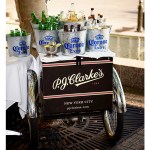
New York Well, at least P.J. Clarke’s survived the lockdown ordeal. Founded as a ‘saloon’ by an Irish migrant in the late 19th century, the restaurant-bar is a Manhattan dining icon — and a defiant one at that: it’s housed in a modest two-story building, nestled among the skyscrapers of Midtown East, a relic of an older, redbrick Gotham, refusing to give way to the titans of law and finance who occupy the commanding heights of glass and steel nearby. Reality is a little more complicated than that, of course. These days, P.J. Clarke’s is owned by a consortium of financiers, and before the lockdowns, its patrons very much included the finance bros dressed in their standard-issue uniforms (button-down, slacks, Patagonia vest).

family

How to fight with your family

Like many families, mine is home to a diverse array of political orientations, ranging on an ideological spectrum from Calvin Coolidge to somewhere around Attila the Hun. In 2021, this means arguments can get quite heated. Should the government subsidize young families? Should tech companies be regulated? Should America reconsider its support for Israel? Should you, personally, get the vaccine? The first half-year of the Biden administration has already given even broadly right-of-center communities plenty to in-fight about. My left-leaning friends who have also spent more time with their families during the pandemic report a similar phenomenon: their good boomer liberal parents are skeptical about critical race theory, for instance, or are suddenly nervous about the national debt.

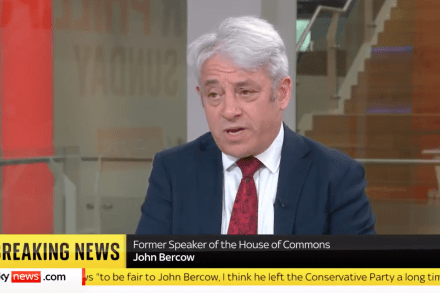
Sunday shows round-up: ‘I do not identify with the Conservative party’, says John Bercow

From our UK edition

John Bercow – ‘I do not identify with the Conservative party’ Last night, it was revealed that the former Commons Speaker John Bercow had not merely distanced himself from his former party, but had disowned it altogether. Interviewed by the Observer, he castigated the Conservative party as ‘reactionary, populist, nationalistic and sometimes even xenophobic’. Bercow’s jump across the divide may come as no surprise to some, but in doing so he has become the first ex-Speaker to ever make such a move back into the political arena. Trevor Phillips spoke to Bercow, once an enthusiastic figure on the Tory right, about the reasons for his change of allegiance: https://twitter.com/RidgeOnSunday/status/1406523980979355655?

The sweet smell of success: the story behind Chanel No 5’s popularity

From our UK edition

This is a curious book, by turns profound and whimsical. Karl Schlögel, a professor of Eastern European history at Frankfurt, begins by stating he didn’t know anything about his chosen subject of perfume beyond going into department stores and duty-free shops to encounter a ‘peculiar mélange of scents... the light and sparkle of crystal, the rainbow of colours, mirrors and glass’. Although he always felt this to be an alien environment, he was also repeatedly captivated. Then by chance he discovered a link between Chanel No. 5 and the Soviet perfume Red Moscow.

How Jon Stewart killed comedy

This article was originally published in The Spectator’s June 2021 World edition. Click here to subscribe. Somewhere along the way, Jon Stewart discovered he could make stupid people laugh by smirking at Fox News clips — and the world has never been the same since. Stewart, who anchored The Daily Show until 2015, is often remembered as the progenitor of a long line of left-wing topical comedians, from Stephen Colbert to John Oliver to Samantha Bee. Yet before that he was something else: the most gloriously subversive personality on television. The Daily Show’s heyday came at the turn of the century, just after Stewart had taken it over from Craig Kilborn.

jon stewart

Why the Tories won’t let me display a local election poster

From our UK edition

Being told by the Tories not to put a local election poster in my window because it will only remind people why they don’t like them has reminded me why I don’t like them. It also put my blood pressure up, according to my newly delivered blood pressure monitor. I strapped the thing to my arm while I was arguing with a Tory councillor about why they wouldn’t give me a Vote Conservative poster: 136/84. Nowhere near as high as it was in the doctor’s surgery, but still… This happens every election. I always offer the local Conservatives the run of my front garden, which borders the village green, and they always politely decline my offer to display a banner or placard in a prime spot.

Scottish Covid adviser’s vaccine confusion

From our UK edition

Oh dear. During the course of the pandemic, the University of Edinburgh professor of public health Devi Sridhar, has become a regular sight on television screens and comment pages – offering her insights on the best course of action over Covid. In her role on the Scottish government’s Covid-19 advisory group, Sridhar has previously caught Mr Steerpike's attention for lobbying repeatedly for more SNP powers which she claims are necessary to stop the spread of coronavirus. The snag? There was nothing stopping the Scottish government from quarantining travellers using their own powers, a move that was already planned at the point Sridhar demanded it.

How 20th-century artists rescued the Crucifixion

From our UK edition

Two millennia ago, in the outer reaches of the empire, the Romans performed a routine execution of a Galilean rebel. Tortured and publicly humiliated in front of family and friends, Jesus of Nazareth was slowly asphyxiated over six hours. The Crucifixion is the centrepiece of Christianity. But artists have long adapted the devotional image of the Cross for their own purposes. As far back as the early 5th century, woodcarvers working on a door for the Basilica of Santa Sabina in Rome crafted a Christ whose palms are impaled with nails, but who is not hung on a cross. A devotional statue in Panama dating from the 17th century made Christ not Middle Eastern, but black African. James Tissot (c.

Watch: Labour MP refuses to condemn Bristol violence

From our UK edition

Oh dear. Appearing on BBC Two's Politics Live this afternoon, Labour left winger Nadia Whittome refused to condemn the violent protesters in Bristol last night that left 20 policeman injured including two in a serious condition.  Despite being asked four times by presenter Jo Coburn, Whittome would only say 'I'm not going to get into condemning protesters when we don't know what's happened yet. We need a full investigation into what has happened.' https://www.youtube.com/watch?v=KlxijNsB6kA It is worth noting that all four of Bristol's Labour MPs and the city's Labour mayor Marvin Rees have already criticised the actions of the protesters, with Rees claiming it was 'selfish, self-indulgent, self-centred violence.' https://twitter.com/SkyNews/status/1373921295054831616?