Political correctness

Rod Liddle: The top 10 most fatuous phrases in the English language

From our UK edition

An apology. A few weeks back, in my blog, I promised a regular series called ‘Fatuous Phrase of the Week’. Like so many publicly uttered promises, this one has failed to materialise. There has been no update to the Fatuous Phrase of the Week. This is because for the past two weeks I have been battling my demons — and horrible, vindictive little bastards they are too. While I would have been happy to fulfil that promise, and had plenty of phrases at the ready, the demons crowded around. Nah, they said, take the dog for a walk instead. Jabbering in my ear, poking me with their little pitchforks. Forget the phrase thing, they insisted. Instead try to get to 400,000 points on Bejewelled (Lightning mode): you can do it, Rod. You got 375,000 only a couple of days back.

Rotherham has proved it again: social work just doesn’t work

From our UK edition

In 1980, June Lait and I published Can Social Work Survive?, the first critique of British social work aimed at the general public. She was a lecturer in social policy and a former social worker; I was a psychiatrist who had regular and friendly contact with social workers. But we both felt that social work had become vague and grandiose, and we compiled quite a lot of evidence to make our case. We even reported studies showing that well-intended social work interventions could be not just unhelpful but harmful. Our work was published in The Spectator, and it touched a nerve. ‘Of course social workers don’t do harm,’ one critic fumed.

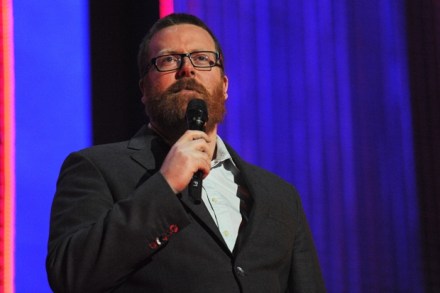
Frankie Boyle is a cowardly bully, and I’m ashamed I ever stood up for him

From our UK edition

‘Outspoken comic Frankie Boyle has called on the BBC to sack “cultural tumour” Jeremy Clarkson.’ Can anyone tell me what’s wrong with this opening sentence from a recent news report? Clue: it’s that first word. In order to qualify as ‘outspoken’, surely, you need to be the kind of person who fearlessly, frequently and vociferously sets himself in opposition to the clamour of the times. Does demanding that a public figure lose his job for some mildly sexist/racist/homophobic/ableist remark fit into that category? Hardly.

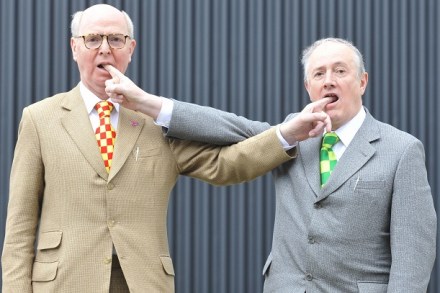
Gilbert and George have lost their bottom over the burka

From our UK edition

Let’s brood, shall we, on the following report in the Evening Standard about an exciting new departure by the winsome duo, Gilbert and George, on the back of their new exhibition, called ‘Scapegoating Pictures’ for London which opens tomorrow at the Bermondsey White Cube Gallery: ‘The artists Gilbert and George feature women in burkas in their new exhibition reflecting the changing face of the East End, their home for decades.  The veiled figures feature in giant photomontages demonstrating the artists’ long-standing hostility to all religions which they believe “terrorise” people.

Should I report my boyfriend to the police?

From our UK edition

Driving along in the car, listening to the radio news, the boyfriend turned to me and said he thought the Michael Fabricant row a very strange one. Fabricant was being pilloried for having tweeted that he could never go on television with Yasmin Alibhai-Brown because he might ‘end up punching her in the throat’, but my man said he didn’t see what the fuss was about. ‘After all,’ he said, ‘I feel like punching you about 50 times a day.’ Reader, be assured, he was joking. Victims’ groups, hold your horses while I explain. My beloved was pretending to have punching urges for the purposes of humour. Do you see? It was irony. I-r-o… Do I need to spell it out?

Spastics, cretins and the political correctness of the right

From our UK edition

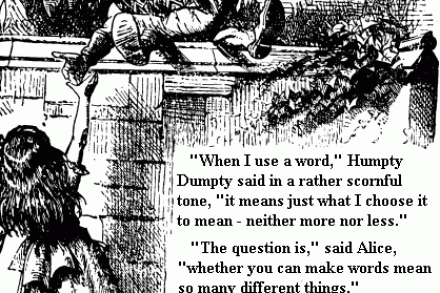
Ruth Richards, head of communications at Mind, has written a response to my criticism of the pointlessness of politically correct descriptions of the mentally ill and handicapped. As you would expect it is worth reading in full, but I am afraid it left me unconvinced. She thinks that the effort to reshape language is worthwhile, and cannot see how today’s polite discourse will become tomorrow’s insults. 'I don’t agree that in however many years’ time the terms we use today will become offensive in their own right. “Person with mental health problems” is just far too clunky to be shouted in the playground.' So it is. But 'mental' is already an insult, and other attempts to change the world merely by twiddling with language have been equally futile.

A small town in Yorkshire turns racist

From our UK edition

A small Yorkshire town has been hugely enriched this year by the arrival of 500 Roma people. The village of Hexthorpe was once boringly, stultifyingly, monocultural - and you would think that locals might have welcomed this influx of vibrant diversity. Not a bit of it – they called a public meeting and complained long and loud in a manner which, frankly, can only be called racist. They warned, too, that there would be violence in the streets. Is it too much to hope that one day these uneducated and bigoted Yorkshire folk will understand that claiming benefits, fly-tipping, littering the streets, threatening people and playing loud music all night – these were the things of which they complained – are simply expressions of cultural diversity, to be warmly embraced?

Don’t apologise for holding The Sun, Ed

From our UK edition

I’d like to say that when I’m low and feel I can’t go on anymore that it’s the thought of a child’s smile or a better future for humanity that gets me through, or maybe one of those inspiring Maya Angelou quotes people were sharing last week: but to be honest, it’s actually that picture of Ed Miliband trying to eat a bacon sandwich. I know that certain Labour commentators are unhappy with Ed’s performance, and many Tories are concerned about him actually running the country, but his visual mishaps do provide such cheer during these dark periods. A friend of mine brought a copy of the bacon picture to his 83-year-old father in hospital, who had suffered a stroke, and said his dad laughed so much he almost had another one.

Now the BBC is censoring the word ‘girl’ – it really is in a different world

From our UK edition

It’s beyond parody, isn’t it? Mark Beaumont, a BBC presenter, has made a documentary about the Commonwealth Games and during the course of it he was filmed grappling with a judo champion. After he was sent crashing to the floor he said: 'I am not sure I can live that down - being beaten by a 19-year-old girl.' Mr Beaumont is 31. So inflammatory was the remark that though it was broadcast in full when the programme was broadcast in April, it was removed for the repeat, presumably lest, as the broadcaster Mariella Frostrup observed, the word might come across as 'dismissive'. I think we can assume that Mariella speaks for received opinion on these matters when she says 'the BBC has to consider the sensitivities of everyone who might be watching'.

Why people will be voting for Ukip this Thursday

From our UK edition

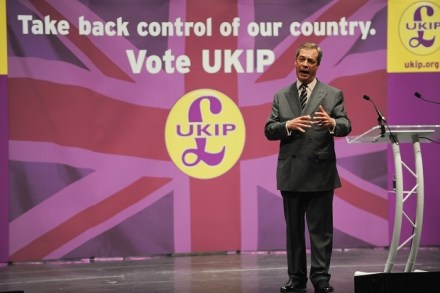
Despite levels of media scrutiny and hostility unseen in recent political history, this Thursday up to 30 per cent of British voters will opt for Ukip. The odd thing is that the more outrageous the slurs made against them, and the wackier the members unveiled in the press, the more their popularity surges, perhaps out of bloody-mindedness; if a Ukip candidate was caught committing autoerotic asphyxiation dressed in a Gestapo uniform tomorrow the party would probably be on 50 per cent by the end of the week. One of the reasons is that Ukip is a product of lowered trust; the party’s supporters have noticeably less trust in politicians than voters in general, and I would hazard a guess that they have far less trust in the media.

Yorkshire village bans Nazis. Why didn’t Neville Chamberlain think of that?

From our UK edition

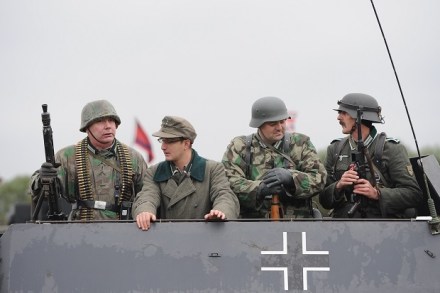
D-Day would have been effected with far less trouble if, at the time, we had insisted on the same rules that pertain in Haworth’s annual commemoration of the event. The Yorkshire village holds what is now called a “1940s Weekend” – don’t mention the war – and people who wear Nazi uniforms, or the SS insignia, have been told that they are not welcome. This is because the uniforms “give offence”. Previously, people turned up dressed as Nazi soldiers and others as allied soldiers – much as actually happened the first time the event was staged, on the beaches of Normandy in 1944. But some people complained about the uniforms and so signs have gone up all around the town telling them they’re not welcome.

Political correctness gone mad – and madder – and even madder

From our UK edition

In a blog for the IEA the other day Kristian Niemietz looked at the economics of holding politically correct views. Disagreeing with the idea proposed by Spiked magazine that PC is motivated by a loathing for ordinary people, he argues that such views are in fact a ‘positional good’. A positional good is a good that people acquire to signalise where they stand in a social hierarchy; it is acquired in order to set oneself apart from others. Positional goods therefore have a peculiar property: the utility their consumers derive from them is inversely related to the number of people who can access them. It has long been clear that expressing certain views has been a form of social signaling, although social media has made this far more explicit.

Why must we have a Minister for Women?

From our UK edition

Does it make you feel better about yourself, girls, ladies, to know that if Labour’s elected, Ed Miliband will have a Secretary of State for Women, and Equalities, with Cabinet rank? Or do you find yourself asking what a Minister for Women has ever done for anyone, beyond guaranteeing that at least one member of the Cabinet will be a paid up woman? It was a bit like that when Sajid Javid was appointed Culture Secretary and everyone started asking what he’d ever done to qualify in the way of going to the opera, reading books etc. When Kitty Morgan was appointed Minister for Women, it was a different matter.

The BBC is more scared of offending Muslims than gay people

From our UK edition

Just to ring the changes, I’ve written about the BBC and political correctness for the mag this week. Yeah, yeah, I know – you haven’t heard enough about that subject. But one of the writers of the 1970s situation comedy It Ain’t Half Hot, Mum has complained that aunty isn’t showing the series any more as a consequence of political correctness. My suspicion is that it isn’t being reshown because it was humourless unmitigated crap, but there we are. The bigger issue, though, is the one raised by the excellent (for a Blairite) Dan Hodges. As it happens, I was invited onto this show and now wish I had accepted. The irony of it all seems entirely lost on the BBC. Thank god they’re going to get rid of the channel entirely.

So now we know – the BBC is more scared of offending Muslims than gay people

From our UK edition

Are there enough black and minority ethnic people on our television screens? The comedian Lenny Henry thinks not and has proposed targets to ensure better representation. Lenny means stuff like Midsomer Murders, I think, which famously avoided using people of colour for a very long time in its absurd but strangely comforting dramas. I think this was to cater for people like me who enjoy watching affluent white people bludgeon each other with candlesticks in the library. In fairness, even Midsomer Murders once had some gypsies play a pivotal role in one episode — they lived in a gaily painted horse-drawn caravan, and were scrupulously tidy and probably filed their income tax returns ahead of schedule. But in general, Lenny has a point, I suppose.

Why I’m on board for the homophobic bus

From our UK edition

London has long since lost its allure for me — altogether too many cars, foreigners, cyclists, middle-class liberals and people who, like me, work in the media, as they call it. I was born in London but only feel truly at home in the north-east of England, an area of the country within which the constituents of that list I quoted above are almost nonexistent. But I am thinking now of moving back to the city — it’s possible that I could afford a flat in somewhere such as Brockley, or perhaps Catford — to take advantage of a radical new development in our capital. Because rumbling along the streets of London quite soon will be homophobic buses.

Blonde children and Roma: when the two great hysterias of our age clash

From our UK edition

The media seem to be in a pickle over the removal of a blonde girl from a Roma family in Dublin, which followed the arrest of a couple in Athens who had a suspiciously Nordic-looking child with them. It’s a fascinating story because for the first time I can remember the two great hysterias of our age have finally clashed – racism and child-snatching, the Guardian's obsession versus the Sun’s. It has also pitted the almost immovable object of media taboo against the unstoppable force of the human-interest story. The highbrow media maintains a sort of code of decency about reporting the Roma, so that you will never read anywhere an accurate analysis of anti-Roma prejudice.

A Slap in the Face, by William B. irvine – review

From our UK edition

A friend of mine who works for the NHS has been told recently by a superior that his ‘attention to detail is bordering on the obsessive’. Aside from observing that an obsessive attention to detail might serve the health service well, this is an example of the kind of insult that Professor Irvine would ascribe either to low self-esteem or to narcissism (high self-esteem with no self-knowledge). The speaker wasn’t offering constructive criticism (my friend had been praised for his attention to detail only days before, by a perhaps less negligent superior) but rather emphasising her superiority, something she had no need to do, unless she felt it threatened. My friend’s attention to detail is clearly her problem rather than his. Irvine begins with examples of insult.

Katie Hopkins – this is why we have political correctness

From our UK edition

I’ve been reminded just why political correctness exists: Katie Hopkins of the Apprentice, the TV show that glorifies the entrepreneurial ideal and the psychopathic levels of self-confidence that accompany it. Hopkins is on a bit of a roll with her homespun wisdom. Late last week she criticised 'lower class' children’s names, saying: 'I think you can tell a great deal from a name… I tend to think that children who have intelligent names tend to have fairly intelligent parents and they make much better playdates for my children.' As well as also having a go at people with tattoos and fatties, she also quipped: 'Ginger babies. Like a baby. Just so much harder to love.' Her response on Twitter was: 'Dear PC brigade.

David Goodhart makes Hay

From our UK edition

What a pity. It seems that Dave Goodhart, director of Demos and editor-at-large of Prospect, has made peace with the Hay Festival organisers, who decided against showcasing his new book on immigration on the annual luvvie field trip. Hay Director Peter Florence described Goodhart’s The British Dream as ‘sensationalist’, and apparently told Goodhart that Hay stood ‘for pluralism and multiculturalism' and that he is half-Italian. Goodhart hit back at these ‘ultra-liberal, slightly lefty multiculturalist’ views, saying:  ‘it's [the book] probably been more widely reviewed than any non-fiction book so far this year - both favourably and unfavourably, so when my publisher said there was no interest from Hay I was a bit surprised.