Poems

Waging war through poetry

Poetry is politics in the Yemen. When the last imam of Yemen, who was also the hereditary ruler, was deposed in a coup in 1962, it was a local poet who announced the change of regime on the radio, in verse of course. And the current al-Houthi regime in the north of the country, like all its predecessors, asserts its legitimacy, confounds its enemies and rallies its supporters through poetry. As an aspect of their cause, they have consciously avoided high-Arabic poetry — a literate, urban cultural form — and have made use of the zamil tradition, which immediately speaks not of the palaces of emirs and princes, but takes the listener to sit beside the farmers and Bedouin shepherds in the villages and hills.

poetry

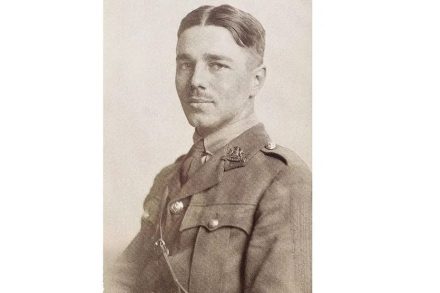
How Wilfred Owen became a poet

Here is the opening of a sonnet written by Wilfred Owen in the spring of 1911: “Three colors have I known the Deep to wear;/ ’Tis well today that Purple grandeurs gloom.” Owen was eighteen and had just been on a pilgrimage to Teignmouth in England, where his hero John Keats had once stayed. The kindest thing to say about this poem is that it is heavy with the influence of Keats. Six years later, in a seaside hotel requisitioned by the army and waiting to be sent back to the Western Front, he begins a poem like this: “Sit on the bed. I’m blind, and three parts shell.” This looks so simple. The monosyllables carry the meter without fuss; “shell” here means both munitions and protection.

Owen

Ocean Vuong’s immature poetry

Time is a Mother — Ocean Vuong’s second poetry collection — should have been a scene-stealer, a much-awaited literary event of the type normally reserved for a J.K. Rowling. The collection has been talked about in the breathy, excited terms not normally associated with poetry — the least glitzy of the literary genres — and in a way not heard of since the blockbuster release of Ted Hughes’s Birthday Letters (1998). Vuong, rightly, won the T.S. Eliot prize in 2017 with Night Sky With Exit Wounds. The collection had flashes of brilliance and was a mark of a young poet making his way in the world. It also won the Forward Prize for best first collection, and, in 2019, Vuong was awarded a MacArthur “genius” grant.