Podcasts

The best podcasts to fall asleep to

From our UK edition

‘Yous!’ a train cleaner in rubber gloves says as we arrive at Liverpool Lime Street. ‘What are yous doing here?’ He is grinning and holding up the political journalists and delegates dribbling from the Euston train like a leaky hose. Behind me waits Tim Shipman, the consummate chronicler of Conservative political chaos. I once sent Shippers a photograph of me sitting between my brothers Boris and Jo in a row on a cream chintz sofa at Chevening, all holding his hardback Fall Out: A Year of Political Mayhem. It was 2017. Instead of exchanging books which we had written – as is the family Christmas custom – everyone had given each other his. Those were the days to be a hack, eh. Or a politician. Drama! Box office! Action!

Inside the unlikely success of Patrick Bet-David

A right turn off Montauk Highway onto a leafy street in the Hamptons town of Water Mill brings you to a wooden gate, behind which sits a 12,000-square foot modernist estate that rents, with staff, for $75,000 a week. At the moment it’s the vacation home of Patrick Bet-David, an unlikely character to find in this area of New York. Over the last two years, Bet-David has improbably emerged as one of the most prominent voices in right-wing media. His prodigious influence is belied by the fact that around here, he’s more undercover heretic than acclaimed celebrity.

Bet-David

How Berlin nearly broke Bowie

From our UK edition

This week’s Archive on 4 is a treat for David Bowie fans. Francis Whately, the producer behind several of the BBC’s Bowie films, including The Last Five Years, has patched together old recordings and new interviews with Bowie’s lovers and friends to examine his life in West Berlin between 1976 and 1978. It was a fraught, make-or-break time. Out of pocket, addicted and depressed, Bowie had grown ‘very, very worried’ for his life. It isn’t entirely clear why he chose Berlin as a place for recovery, other than that it was unstarry, cheap and a good distance from LA, where his troubles had spiralled. Unfortunately, it was also ‘the smack capital of Europe’, and Bowie was about to move in with Iggy Pop.

Glamour or guilt? The perils of marketing the British country house

From our UK edition

The most angst-ridden sub-category of the very rich – admittedly a lucky bunch to start with – must surely contain those who have inherited a British country house, along with the exhortation to keep it up. Imagine the anxiety of knowing that one is custodian of a large, crumbling pile of distinguished architecture, stuffed with meaningful antiquities and perpetually besieged by damp, dry rot and taxes. For those of us who are already reliably paralysed by small-scale admin, it would be enough to drive you to drink or worse. In contrast, the landed gentry who survive best in this modern terrain must be energetic, ruthless and ingenious; in all probability possessing similar characteristics to those which propelled their ancestors to social prominence in the first place.

A fiery examination of the damage wrought by internet culture

From our UK edition

Historically, when a woman was giving birth, she was attended by the women she trusted most, including her child’s prospective godmother. The word ‘gossip’ derives from the Old English ‘god-sibb’, meaning godparent, but came to refer to what went on around the childbed. As Erica Jong later put it: ‘Gossip is the opiate of the oppressed.’ Gossip has since moved online – see Mumsnet and the network of Facebook pages called ‘Are we dating the same guy?’. Women use the latter to post warnings to alert others to serial cheaters – and worse. Perhaps inevitably, it has become the focus of several lawsuits brought by men who have been publicly maligned. Is it possible to keep the old ‘whisper network’ alive without being sued in the process?

Do men and women need different podcasts?

From our UK edition

Do men and women need different podcasts? The notion goes against the unisex, every-sex, what-is-sex-anyway culture we have come to inhabit. Yet this week we find, on the BBC no less, a podcast dedicated to men’s problems and one satirising women’s problems. Some would say the pushback has begun. Geoff Norcott’s Working Men’s Club is a recorded stand-up comedy act performed to a studio audience in Leeds. Norcott describes it as a place ‘to discuss proper bloke stuff’, by which he means beer, sport and masturbation (cue laughter), but much more than that, men’s physical, mental and emotional health (initial silence). He jibes at the male habit of squashing feelings and ignoring signs to visit the doctor.

Exploring the rise of vaping

For those of us with a poor grasp of time, who can still recall when a night at the bar could be sharply revisited by a Proustian wave of stale smoke arising from yesterday’s clothes, it can almost feel as if vaping crept up on us out of nowhere. One moment, it seemed, all the authorities had firmly agreed that pushing for vaping was creepy, and were pledging to legislate and tax cigarettes into oblivion; the next, great hordes of schoolchildren were apparently free to suck constantly on little vials of liquid nicotine with sugar-rush names such as Cherry Fizzle and Blue Razz Lemonade. What happened?

vaping

Forget monetary policy, the Bank of England’s greatest crime was architectural

From our UK edition

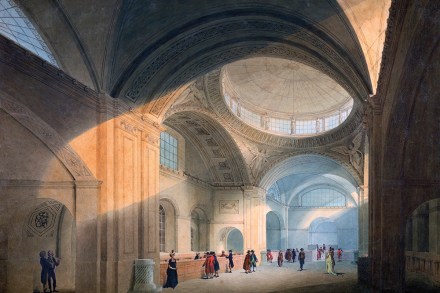
In 1916 the Bank of England committed what Nikolaus Pevsner was to call the greatest architectural crime to befall London in the 20th century. It decided to demolish much of its own building, designed by the great Georgian neoclassical architect John Soane. Soane’s lost masterpiece is the subject of the latest series from the essential architecture podcast About Buildings and Cities. The podcast, started in 2016 by presenters Luke Jones and George Gingell as a hobby, has slowly become a fan-funded staple for architects, offering a re-evaluation of the received wisdoms about the canon and some affable banter along the way. He built a rich ‘internal world’, lit by roof lanterns that crown dramatic vaulted spaces Soane worked on the Bank of England for almost 50 years.

How we became addicted to vaping

From our UK edition

For those of us with a poor grasp of time, who can still recall when a night at the pub could be sharply revisited by a Proustian wave of stale smoke arising from yesterday’s clothes, it can almost feel as if vaping crept up on us out of nowhere. One moment, it seemed, all the authorities had firmly agreed that Nick O’Teen was a creepy pusher hooking innocent kids on gaspers, and were pledging to legislate and tax cigarettes into oblivion; the next, great hordes of schoolchildren were apparently free to suck constantly on little vials of liquid nicotine with sugar-rush names such as Cherry Fizzle and Blue Razz Lemonade. What happened?

Trump courts Gen Z on the pods

Donald Trump went to Capitol Hill on Thursday, his first visit since some of his supporters stormed the Capitol building on January 6 three years ago.A packed room full of House Republicans sang “Happy Birthday” to the former president, who turns seventy-eight today.Trump pleaded with members for a change in tone on abortion, calling on the issue to be left to the states. This comes after a record number of voters, 32 percent, said in a Gallup poll that they would only vote for candidates in major races who share their views on abortion.

Under the Taliban, Afghan light entertainment accrued unusual weight

From our UK edition

For a television talent show, Afghan Star had unusually high stakes. When it first hit Afghanistan’s screens in 2005, four years after the fall of the Taliban, it represented the triumph of music over those who had attempted to smother it. Even from the show’s somewhat chaotic inception, it galvanised a nation, sending supporters out on to the streets to canvas for their favourite performers. When the Taliban first swept into town, people were overjoyed: they were seen as ‘angels of peace’ The first winner, Shakib Hamdard, certainly deserved some luck: he had lost his father to a suicide bomb and his brother to a rocket attack, and was driving a taxi around Kabul to support his mother and sister.

A gripping podcast about America’s obsession with guns

From our UK edition

The love affair between so many Americans and their guns – long a source of international fascination – appears to be getting more painfully intense. The greater the publicity over gun crime, the more Americans think they’d better acquire a firearm to keep themselves safe. There are now roughly 400 million guns in the US – but most citizens feel more unsafe than ever, and with some justification. Last year featured both the highest level of gun ownership in US history and the highest recorded number of mass shootings. This really is one to listen to in bed, in the pitch dark – even better, pretend you’re in a couchette ‘How did we get here, and how do we get ourselves out?

How to live off the land for a year

From our UK edition

Could you live off the land for a year without buying a single thing to eat? This was the challenge a retired journalist set himself on Radio 4 this week. Max Cotton lives on a five-acre smallholding near Glastonbury in Somerset with his wife Maxine, two pigs, two dozen hens and a Jersey-Friesian cross named Brenda. He also has six adult sons who, as far as this project is concerned, ‘prefer to pontificate than help very much.’ Cotton’s hopes for peas by April were even less realistic than I thought Cotton conceded at the outset that he would allow himself to purchase salt as a necessity.

The death of good conversation

London  At London parties you can find plenty of smart beautiful women and handsome charming men. You can find a cornucopia of drugs and drink. And you can find someone who will sleep with you, marry you, publish you and best of all, flatter you. But what’s hard to find is someone to have a really good conversation with. Think about it. When was the last time you went to a social event and had a really interesting conversation with a stranger? You meet someone and suddenly you click: they get you, you get them. There’s no secret agenda — sexual or otherwise — just the pure pleasure of talking. And now that I don’t drink, take drugs or look for love, all that London parties have left to offer me is good conversation.

conversation

Don’t tell them but the French didn’t in fact invent etiquette

From our UK edition

When dining in France, it is considered rude to finish the bread before the main course has been served, and ruder still to slice the bread with a knife, lest the crumbs land in a lady’s décolletage. In China, you should never place your chopsticks upright in a bowl of rice, and in Bangladesh you may eat with your fingers, but should avoid getting sauce above the knuckles. If you are guilty of any of the above, may I direct you, politely, to a new documentary on the World Service. The programme takes aim at many outdated traditions (including those that resign women to the kitchen), but the conversation is far more informative than censorious and more eye-opening than dour.

How depressing when people over-identify with their ethnicity

From our UK edition

I am a Jew. I live in a council estate in London where considerably more than half of my neighbours are Muslims. These people aren’t my friends, but we get along fine: I pick up their parcels; we coordinate complaints to the council about the strange, blue-tinged fluid that sometimes drips from everyone’s ceilings, as if someone in the penthouse had decided to fill their flat with jelly. Elsewhere, our distant cousins are doing terrible things to each other. It’s increasingly hard to imagine a world in which these distant cousins can live together, intermingled but mostly minding their own business – but that’s exactly what we do every day in London. Over the past six months I’ve started feeling extremely grateful for that.

How did the internet become so horrific?

From our UK edition

I can dimly remember the internet getting going, gradually staking its claims on our attention with hardly anyone except tech nerds – and famously David Bowie – realising what was going on. In our defence it was the 1990s and we had a lot else to think about: Britpop, The End of History, lads’ mags, guacamole, supermodels, Tony Blair, Monica Lewinsky, etc. But here we all are now, in a world where I can do my banking from bed, America is fragmenting like papier-mâché in the rain, and primary school children can get porn on their smartphones. Can anyone recall the incremental steps that brought us here?

Fascinating: Radio 4’s Empire of Tea reviewed

From our UK edition

I can scarcely remember a time before tea: I started drinking it at around four, at home in Belfast, as a reward after school. Before long I was as fiercely protective of my right to a brew as the workers of British Leyland’s Birmingham car plant, who were famously spurred to strike action in 1981 when the management proposed cutting tea breaks by 11 minutes. Decades on, my passion is undiminished. There is no problem to which tea is not at least a partial solution: it restores flagging spirits, calms the over-excited, warms in winter and refreshes in summer.

The rise of the underground free speech groups

Robin McDuff still lives in the same California town where she and other feminists formed a community back in the 1970s, during the heyday of the women’s movement. But by the end of the decade, McDuff had already begun to drift away from feminist orthodoxies. She’d been working in the anti-rape movement where victims said they wanted the man who assaulted them to understand the pain they caused, apologize and learn why never to do it again. They didn’t want them in jail. But most of McDuff’s feminist peers were fixated solely on incarceration as justice. “These women had no interest in considering any nuance of a case,” McDuff, now sixty-nine and retired, told me. “Nuance and feminism have never done well together.

free speech

What happened to the supermodels of the 1990s?

From our UK edition

‘What advice would you give to your younger self?’ has become a popular question in interviews in recent years. It’s meant to generate something profound but, musing privately, I always find it a puzzler. Sometimes I think that maybe I shouldn’t have wasted so much of my twenties talking nonsense in pubs, but on the other hand I really enjoyed it. So I usually settle on: ‘Don’t buy a sofa bed, especially not the kind with a concealed metal frame that you pull out.’ Unbelievably, I’ve done this twice. These vast, unwieldy contraptions cost a bomb, weigh a ton, make a terrible sofa and an uncomfortable bed. If you’re 16 and reading this, be warned.