Podcasts

The genius of Sherlock & Co.

From our UK edition

The podcast audio-drama Sherlock & Co. is an updated version of Sir Arthur Conan Doyle’s stories in which the great detective is neurodivergent and gay, Dr Watson is a millennial who preaches against ethnic stereotyping, Lestrade is a woman who speaks with a Caribbean twang, and the society gossip Langdale Pike has morphed into a drag queen. Throw in the fact that it’s produced by Gary Lineker’s Goalhanger and you might imagine that we’re talking about a woke brew designed to repel conservative Holmesians like me. Actually, Sherlock & Co. is my favourite podcast ever. I love it almost as much as Conan Doyle’s ur-text and infinitely more than the BBC’s Sherlock, which began well but then disappeared up its smug backside.

Podcasts are making us stupider

From our UK edition

The most insufferable person you know is a Podcast Person. They’re on the tube each morning, sat with a smug smile on their face, AirPods thrust into their earlobes and a performative Metro – it won’t be opened – on their lap. They’re probably tuning into The Rest is History, preparing to bore every colleague they meet at the tea station with a glowing review of Dominic Sandbrook and Tom Holland’s dissection of battles and monarchs of centuries past.‘I did a History degree at Durham, you know, and I’m still learning SO MUCH! SO MUCH!’, they’ll drone on, unknowingly intent on making you abandon your mug and jump out of the nearest window.

Should we take Beryl Cook more seriously?

From our UK edition

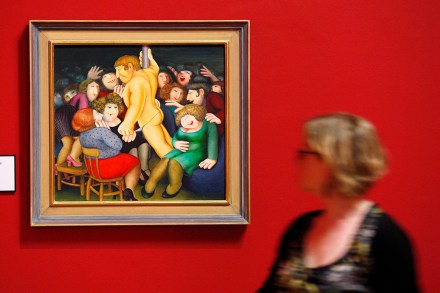
The late Victoria Wood described Beryl Cook as ‘Rubens with jokes’. This was flattering for an artist whose fat, eye-shadowed ladies were more at home in the bingo hall than the boudoir. Fleshy, but utterly unsexy, Cook’s buxom babes have long been objects of veneration as well as ridicule. The question being posed in this, the centenary year of her birth, is whether they ought to be taken more seriously.  Listening to the documentary on Radio 4 this week, I was inclined to think this a fatuous question, over which Cook, had she still been alive, would have rasped. An untrained painter, who worked out of the ironing room of the B&B that she ran in Plymouth, she seems to have set out simply to please – herself as much as others.

Alexis de Tocqueville’s America has vanished

From our UK edition

When Alexis de Tocqueville arrived in New York in 1831, he found a city a quarter of the size of Paris, perched on the lower tip of Manhattan, roamed by pigs. Speaking to everyone he met, high and low, he was struck by how many of the rich used to be poor. There was, he observed, an ‘equality of conditions’ that filtered down to the way parents treated their children. The 25-year-old ‘wiry aristocrat’ filled 14 notebooks during his nine-month road trip across America to 17 of the 24 established states. It formed the basis of Democracy in America. ‘The American inhabits a land where everything is constantly moving, and each movement seems to be progress,’ he wrote.

​A charmingly bold food podcast

From our UK edition

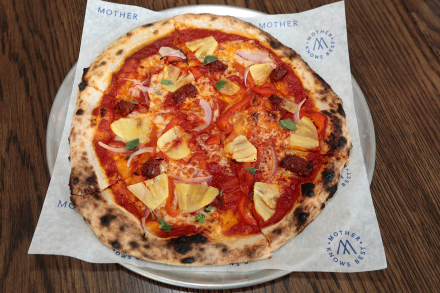
It takes some gumption to name a podcast History’s Greatest Dishes and proceed to offer episodes on pizza, blancmange, balti, gooseberry fool and Victoria sponge. Where’s the rarebit, the pottage, the pigeon pie? But the boldness of the podcast is one of its charms, and the choice of topics isn’t terribly important. Food historian Annie Gray and podcast host Emily Briffett chew over some fascinating material on each of the dishes they have selected and provoke surprisingly heated debates. Pineapple on pizza ought to be accompanied by Spam instead of ham It was suggested, for example, that pineapple on pizza ought to be accompanied by Spam instead of ham.

The first woman to climb Mt Blanc took 18 bottles of wine and 24 roast chickens 

From our UK edition

The dark side of the Moon, a broken loo and a floating jar of Nutella: such was Artemis II. When Helen Sharman joined the Mir space station in 1991, becoming the first Briton to visit space, the appetite was rather for oranges. Not only were they ‘rare in the Soviet Union then’, Sharman recalls on a new podcast, but they lent the cramped space a reassuringly fresh aroma. The Art of Adventure hosts an interview about a different exploration each week, from George Mallory’s expedition to Everest in 1924, to Ernest Shackleton’s ill-fated Endurance, and Sharman’s space flight. It has been steadily climbing the charts, which is a feat in itself, given that it’s hosted by a shop, rather than the likes of Goalhanger.

China wants robots to look after the elderly

From our UK edition

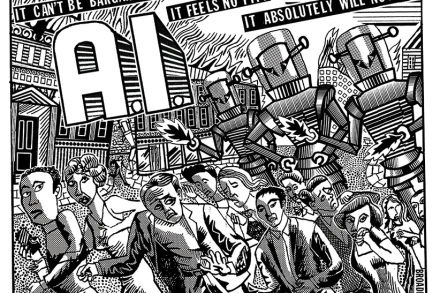
An AI data centre – imagine a factory of buzzing wires and computing equipment cooled by industrial fans – can consume as much power as a city. It has been estimated that, not too long from now, we’ll require 92 cities’ worth of extra power just to meet the demands of artificial intelligence. Ergo, the heat is on – but so, it is said, is a new cold war. On Radio 4 last week, Misha Glenny was exploring how the rapid evolution of technology is shaping the rivalry between the US and China. It turns out that the race for pre-eminence – in AI, at least – is as close as the 1973 Grand National. Red Rum (China) has the current lead, but that lead is ‘razor-thin’ and is thought to owe something to the nature of American tactics.

The rise and fall of the football presenter

From our UK edition

What does it mean to be a ‘good’ sports presenter? Really, it should mean nothing. They aren’t important. They should have a sense of perspective, a sense of remembering that they are peripheral to the most popular consumer product and human activity that we have come up with. Of course, it doesn’t work like that. Look at Gary Lineker. The BBC paid him £1.3 million to ask Danny Murphy things like ‘Bournemouth look to have run out of steam a little bit?’ for 75 minutes a week. Such is our infatuation with sport that we end up really caring about who asks this kind of question. That person gets to be the highest-paid broadcaster in the country.

My life after Today

From our UK edition

Nearly a year after my final Radio 4 shift, my new interview podcast has launched, and the weeks are more varied than anything I’ve previously experienced. The main focus is of course the guest and the content of the next episode. But we’re often at different stages of two or even three interviews at the same time, and production questions take us in multiple directions. How recent is the headshot the illustrator is using for artwork? What’s the best headline for each version: audio, video, text, social? What about practical arrangements or special requests for the next recording?

Condoms in 18th-century painting

From our UK edition

Waldemar Januszczak and Bendor Grosvenor’s art podcast has returned after nearly five years. It is, says Januszczak, ‘the podcast they could not stop – but they did have a jolly good try’. What happened? It isn’t clear; there are teases that it revealed too much, which is anyway a good ploy for attracting listeners. ‘Subversive’ is not the first word that springs to mind when tuning in to the two unlikely chums. Their regular feature, ‘Shocking News from the Artworld’, is more Apollo than Nigel Dempster. For example: Christie’s has closed the digital art department that dealt in NFTs, the crypto tokens going the way of the dodo.

Kate Moss’s new Bowie podcast is far too safe 

From our UK edition

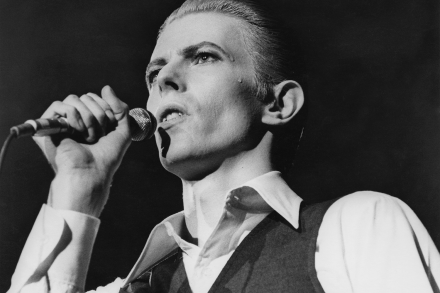
In January, it will be ten years since David Bowie died. I remember Bowie songs playing out of every London orifice that day. People who only knew ‘Life on Mars’ went down to the Brixton mural and cried. And then, for a whole year afterwards, the BBC’s arts coverage consisted entirely of salt-and-pepper fatties sitting in studios, in the mandatory uniform of T-shirt and blazer, all of them finding different ways to wheeze: ‘Day-vid Bow-ie chay-nged everyfing.’ As we approach the anniversary, the BBC is having another go – except this time with Kate Moss. ‘This is David Bowie Changeling’, Moss purrs, inaugurating a nine-parter on BBC Sounds and Radio 6 Music. Moss and Bowie were friends: he sent her to collect a Brit Award for him in 2014.

R.S. Thomas – terrific poet, terrible husband

From our UK edition

Love’s Moment is one of those quiet radio programmes you’re unlikely to have read about. It aired without fanfare at 4 p.m. on Tuesday, an understated yet engrossing one-off, half-hour documentary. It can now be found in the recesses of BBC iPlayer. It opened with a compelling question: ‘What happens when two artists fall in love and marry, and as one’s reputation soars, the other’s is slowly forgotten?’ Narrator Gwyneth Lewis, former National Poet of Wales, might have been alluding to any artistic couple in history, but her subjects were R.S. Thomas and Mildred Eldridge. Thomas was one of the most popular poets in Wales in the last century. He was an Anglican priest, a fervent Welsh nationalist and something of a misanthrope.

The mystical hold of the 1990s over Gen Z

From our UK edition

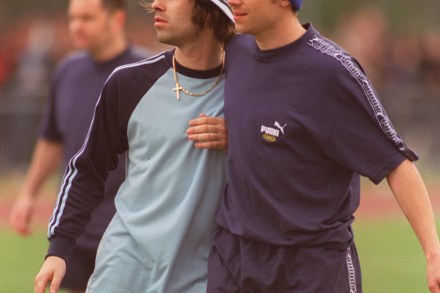
At some point during the past decade and a half, it was decided that the 1990s were a golden age. While Britpop, New Labour and acid house do not immediately evoke the same spirit as, say, Versailles under Louis XIV or Augustan Rome, compared with what followed they were certainly characteristic of something. Appetites for what the energetic Sawyer calls ‘the last nutty pre-internet age’ have never been greater Members of Gen Z who have known only the colourless, anodyne first years of the new millennium speak of the Nineties in mystical tones. At a party last week, I found myself holding court over some twentysomethings who’d discovered that I am a millennial. ‘What was it really like?’ they asked, as if coming face-to-face with Shackleton or Francis Drake.

Welcome to the Age of Jerks

From our UK edition

How screwed is Britain? I’ve checked with the Impartiality Police. They said stick to the facts. Like many ailing, ageing western democracies, we’ve had low growth, soaring debts and flat living standards for nearly two decades. Have our politicians met the moment? You tell me. Perhaps, as The Spectator has long advocated, we need some heretical and brave thinking to improve our prospects and make sense of the giant forces – of technology, ecology and demography – that are reshaping our world at a dizzying rate. For a decade, I have tried to rebalance the news, from events to trends. The result of all this: a new podcast from the Today franchise, called Radical. I’ve always had a soft spot for the word.

The podcast of the summer

From our UK edition

The cover painting for The Specialist, a new podcast from Sotheby’s, looks like a scene from Mad Men. The people are so good-looking and so well dressed that you barely notice how odd they are. One chap’s walking along with a porcelain bowl as if it were a macchiato; a lady holds a plant in her palms in the manner of receiving communion; someone else walks the street with a gavel. The admen have done their job: intrigued, I press play. It becomes apparent that the people who work at Sotheby’s have no interest in persuading anyone that they are normal. I listen to Ottilie, Julian and Gregory, and to mouths that volunteer, with ease, such phrases as ‘the visceral power is undimmed by the passage of time’.

Britain fought on the wrong side of the first world war

From our UK edition

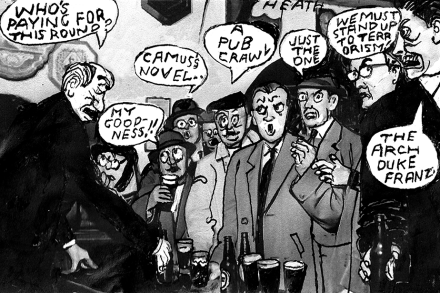
It’s more than two months since I returned from Dublin, and at last the hangover is beginning to fade. I flew out with our team at The Rest is History to record a series about the Irish War of Independence and Civil War. Our guests were Paul Rouse, a professor at University College Dublin and former manager of Offaly’s Gaelic football team, and Ronan McGreevy, an Irish Times journalist and author of a terrific book about the murder of Sir Henry Wilson. On the first night Ronan took us for an excellent curry; on the second, Paul organised a pub crawl. Well, I say a crawl, but in truth we barely got beyond the first pub, the Gravediggers, which is just a few hundred yards from the graves of Michael Collins and Eamon de Valera.

The best radio at the moment is on the BBC World Service

From our UK edition

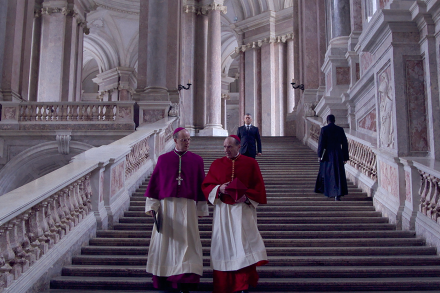
Online viewings of Conclave increased threefold following the death of Pope Francis last month. At least some of the traffic was rumoured to have come from the Vatican itself. This raises many questions, but the most pertinent for me this week is, what did the cardinals think of the carpets? Do they really have coffee machines in their rooms like Tremblay? Minibars like Bellini? Their peace spoiled by the sounds of a lift shaft as in the case of long-suffering Lawrence? If any of these details passed you by, it’s worth watching the film again. In fact, after listening to an interview with the production designer, to be broadcast on BBC World Service next week, you will feel positively compelled to do so.

My friend the people smuggler

From our UK edition

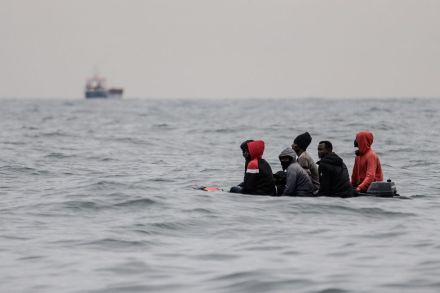
Usually when I start listening to a true-life podcast, I don’t know how it ends. That’s not the case with The Smuggler, BBC Radio 4’s new investigation into people smuggling. Across ten episodes, its Orwell Prize-winning presenter, Annabel Deas, tells the story of ‘Nick’, on the face of it an unlikely protagonist. Nick is white, English and a former soldier in the British Army. He’s also a friend of mine. We met in jail in 2021 and have stayed in contact ever since. So I know Nick’s story. I even know how it ends. Despite all this, I found myself absolutely gripped by The Smuggler. This is partly because it’s such a fascinating, and timely, topic. Migration is rarely out of the news. Keir Starmer keeps promising to ‘smash the gangs’ and ‘stop the boats’.

Spare us from podcast host plugs

From our UK edition

I’ve spent most of my working life producing radio commercials. You might expect me to say this, given my job, but when hosts read out ads on their own podcasts, I find it embarrassing. On commercial radio and television, viewers and listeners have always understood that the ads pay for the programmes and they’re fine with that – on one condition. The ads must be separated from the programmes in a commercial break. This has always been the unspoken agreement between advertisers and their audiences: a programme might be interrupted but at least it stays honest to itself. Podcast hosts are trashing this time-honoured contract when they read out the ads themselves.

A fabulously entertaining new podcast about ancient Greece

From our UK edition

How did a myth about the consequences of poor judgment become a parable for aspiration? The question is posed by the Greek writer-actor Alex Andreou in his fabulously entertaining new podcast. His topic is the ancient myth of Midas, king of Phrygia, who was granted his wish to have everything he touched turn to gold. Midas’s new world was brilliant for all of five minutes. What is a man to do with piles of metal when every person he comes into contact with is reduced to the same? The Midas myth has been mangled many times; Andreou recalls that Donald Trump co-authored a book in 2011 entitled Midas Touch in which he promised to reveal the secrets to entrepreneurial success.