Plagiarism

Reassessing Jerzy Kosinski

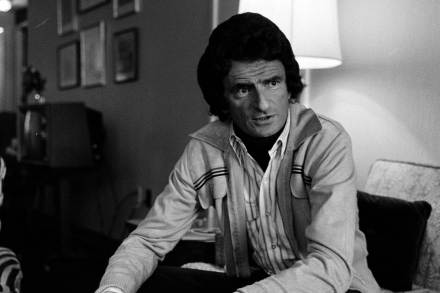
At the conclusion of Hal Ashby’s remarkable Being There, which celebrates its forty-fifth anniversary this month, comes a scene that has only acquired greater resonance and relevance since it first appeared. At the funeral of the plutocrat Ben Rand (Melvyn Douglas), the US president (Jack Warden) is delivering a heartfelt but somehow trite eulogy. As the pallbearers march away with Rand’s casket, which will be buried in the family mausoleum, talk turns to who should replace the president; the film has already suggested that he is suffering from erectile dysfunction and, wickedly, equates this with his falling popularity ratings.

kosinski

The New York Times guide to ignoring Kamala’s plagiarism

Conservative activist Christopher Rufo found five instances of plagiarism in Kamala Harris’s book Smart on Crime: A Career Prosecutor’s Plan to Make Us Safer, he revealed in a Substack article Monday. Harris, or her ghostwriter Joan O’C. Hamilton, lifted five passages almost word-for-word from an NBC News, Urban Institute and Bureau of Justice Assistance report, as well as a John Jay College of Criminal Justice press release and, most embarrassingly, Wikipedia. The book, though some of the wording is changed slightly, cites none of these sources. “Taken in total, there is certainly a breach of standards here,” Rufo writes.

kamala harris plagiarism

Johann Hari’s career-long trouble with the truth

British fabulist Johann Hari is at it again. After revealing he used Ozempic to lose forty pounds in his tell-all book, the alleged journalist still hasn’t shed his penchant for telling porkies. While the miracle drug made him “listless,” “strangely muted” and “emotionally dulled,” it hasn’t killed his energy for dreaming up facts.  In his latest book, Magic Pill: The Extraordinary Benefits and Disturbing Risks of the New Weight-Loss Drugs, Hari alleged that food critic Jay Rayner had lost pleasure in eating at even the finest Parisian establishments after taking Ozempic. The catch: Rayner has never used Ozempic or any other weight-loss drug.

johann hari

Claudine Gay may be gone, but the issues on campus remain

Claudine, we hardly knew ye. Gay’s tenure atop Harvard was the shortest in that university’s history. Yet it was still too long. In mere months, she did enormous damage to one of the world’s great universities. Gay is not the only one who should be held accountable for this fiasco. The university’s governing board, the Fellows of Harvard Corporation, should be out, too. They chose her, and their choice did enormous damage to the institution. They should pay for it. Their statement accepting her resignation shows just how feckless they are. Don’t read it if you are glucose intolerant. “First and foremost, we thank President Gay for her deep and unwavering commitment to Harvard and to the pursuit of academic excellence . . .

education

Lessons from the removal of Harvard’s president

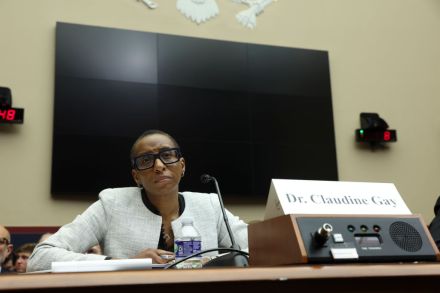
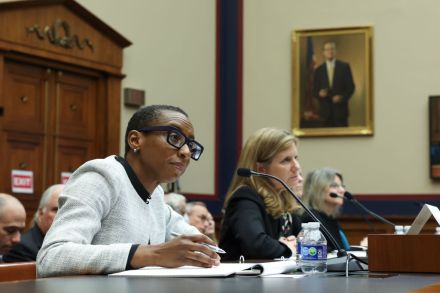
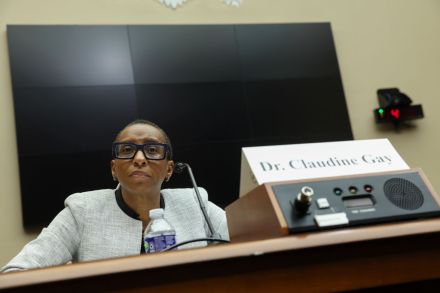
“This is not a decision I came to easily,” wrote disgraced former Harvard University President Claudine Gay of her resignation just after New Years. That might be the only honest thing Gay has said about the debilitating scandal in which she has devastated her once-prestigious institution over the past three months. Indeed, her decision to resign did not come easily at all. It only came after Gay repeatedly failed to state, including in Congressional testimony, and in the wake of the deadliest anti-Semitic violence since the Holocaust, that calling for the genocidal murder of members of her university community is a violation of its code of conduct.

Claudine Gay was bad for Harvard, but Harvard is bad for the country

I advise you to have a bottle of Dramamine on hand before reading Claudine Gay’s nauseating missive announcing her resignation as president of Harvard University. “It has been distressing,” she (or perhaps it was someone else) wrote, “to have doubt cast on my commitments to confronting hate and to upholding scholarly rigor — two bedrock values that are fundamental to who I am — and frightening to be subjected to personal attacks and threats fueled by racial animus.” “Confronting hate”? “Upholding scholarly rigor”? “Racial animus”? Puh-leeze!  Gay had a chance to “confront hate” when the pampered panty-waist radicals at Harvard demonstrated in favor of Hamas. She didn’t.

When will Harvard give Claudine Gay the boot?

You are probably almost as sick of hearing about Claudine Gay — as of this writing, still the president of Harvard University — as I am of writing about her. As I pointed out a year ago in this space, Harvard’s appointment of Gay, a black woman, was simply the next chapter in the university’s long-running pursuit of its racial spoils system. Gay’s entire academic career has been a testimony to the power of that enterprise. What a prize Harvard had in Claudine Gay: a black female who was an avid proponent of the whole “Diversity, Equity and Inclusion” racket. Could there be any doubt that she was being groomed for the top slot?

claudine gay

Why plagiarism matters

Harvard president Claudine Gay’s troubling history of appropriating other people’s idea and words and passing them off as her own has a well-worn name: plagiarism. Every college and university in the United States prohibits plagiarism. Most present students with explicit rules against it and lay out the possibility of drastic punishments, such as failing a course and, depending on the severity of the offense, expulsion from the college. Typically, instructors in freshman English include lessons on the proper ways to quote, paraphrase and cite sources.  Why? What is so wrong with plagiarism? We don’t punish actors for reciting their lines and failing to add, “Mr. William Shakespeare wrote that.

plagiarism

Mehdi Hasan exposed as copycat and hypocrite

Mehdi Hasan of MSNBC has a plagiarism problem. It appears that, as with the cases of John Oliver and James Corden, Britain is not sending its best. The pundit also seems to be as much of a chameleon as Kamala Harris and Kirsten Gillibrand, taking whatever position gets him ahead. Lee Fang, a reporter formerly at the Intercept, published an investigative piece on his Substack looking at Hasan’s journalistic (or, maybe, not-so-journalistic) history. "Writing" an article in 2000 taking up the cause of spanking disobedient kids, he took — almost to the letter — the text from a 1998 article in US News and World Report. A few alterations here and there to account for the difference in date, and voila!

mehdi hasan plagiarism