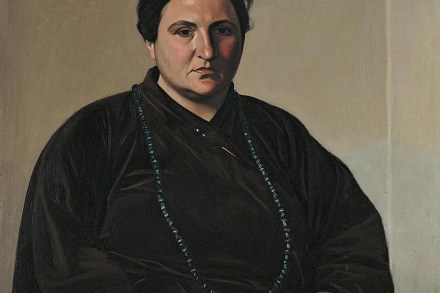
Picasso

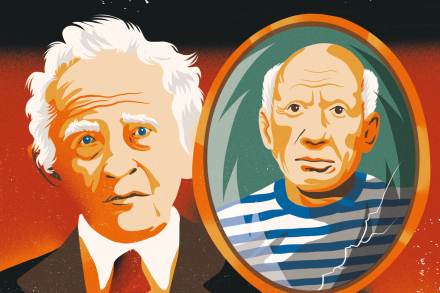
How Norman Mailer changed the face of biography

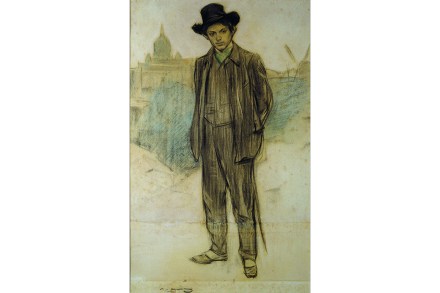
Many labels leap to mind in association with the prolific and controversial Norman Mailer, who died in 2007, but “biographer” is not typically one of them. He was not considered a serious practitioner of the genre in the same sense as Edmund Morris, Ron Chernow or his friend Doris Kearns Goodwin. And yet, as his own official biographer J. Michael Lennon asserts to me, “Mailer became a major biographer in the last half of his career.” Thirty years ago, two intriguing books by Mailer appeared just a few months apart: Oswald’s Tale: An American Mystery and Portrait of Picasso as a Young Man.

Mailer
tour

Guiding young minds through the National Gallery of Art

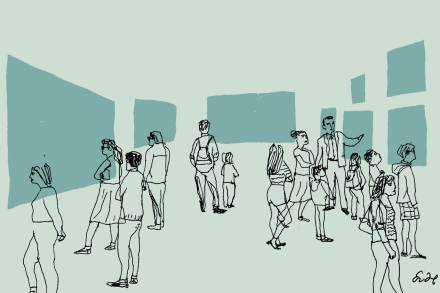
"Are there any more questions?” I asked loudly. I was struggling to make myself heard above about thirty seventh-graders, whom I was leading on a tour of the National Gallery of Art. There had already been many questions that morning, even before we began looking at objects in the museum’s permanent collection. We had just finished an analysis and discussion of techniques and symbolism in a seventeenth-century sculpture from Seville, so I took advantage of the momentary lull in the hand-raising and was walking toward the next work on our itinerary when I heard an unexpected sound. Thud. Turning, I saw that one of the students had fainted, practically at my feet. Teacher and chaperones rushed in, and after a few moments the student was fine.

Drinking with Picasso

In February 1900, a critically acclaimed art exhibition went up at a Barcelona café called Els Quatre Gats. It was neither the first nor the last show mounted at the establishment, a popular drinking spot for avant-garde artists, writers and others. It was, however, the very first solo outing for one of the café’s regular patrons: a brash nineteen-year-old local art student named Pablo Ruiz Picasso. It has now been fifty years since Picasso died, on April 8, 1973, and even as that anniversary is being commemorated worldwide with new exhibitions and publications, he has never really faded from public consciousness. His art and even personal objects associated with him are avidly collected, and he continues to inspire filmmakers, musicians and other artists.

picasso

Make art free, not digital

If you won the lottery tomorrow and suddenly had the money to invest in art, what would you prefer: a work from Picasso’s Cubist period (Guitar on a Table, 1919), or an NFT made from AI-based images and shapes? On the one hand, Picasso’s Guitar on a Table isn’t his most famous or even most interesting work — by 1919, the radicalism of Cubism had begun to wane. But on the other, NFTs are a relatively unproven market with dubious artistic merit, and have been linked to art crime, money laundering, and even allegations of human trafficking. If Picasso couldn’t persuade you to ditch the digital art, what about a painting by Renoir, a sculpture by Rodin, or a triptych of paintings by Francis Bacon?