Photography

Diary – 23 March 2016

From our UK edition

Killing time in a Heathrow first-class lounge, I notice how many men adopt an unmistakable ‘first-class lounge’ persona. They stand like maquettes in an architect’s model (feet apart, shoulders squared, defining their perimeter) and bellow into mobiles like they’re the first person ever to need ‘rather an urgent word’ with Maureen in HR. Along with this ‘manstanding’ comes the ‘manspreading’ of jackets, laptops and newspapers (FT for show; Mail for dough) over a Sargasso Sea of seats. In many ways, ‘first-class-lounge persona’ echoes ‘country-house-hotel face’ — the affectations couples embrace during weekend mini-breaks.

The counterfeiters

From our UK edition

One day, in the autumn of 1960, a young Frenchman launched himself off a garden wall in a suburban street to the south of Paris. He jumped in an unusual away; not as if he expected to land, feet first on the pavement below, nor even as if he were diving into water, but arms outstretched, back arched, apparently taking off into the air above. The result was Yves Klein’s ‘Le Saut dans le vide’ (Leap into the Void), which opens the exhibition Performing for the Camera at Tate Modern. Beside the finished product — a photomontage — are two other images that together explain how it was done. One shows the same quiet stretch of road, completely empty except for a solitary cyclist passing by like an extra in a Maigret dramatisation.

You’ve been framed

From our UK edition

‘I like ordinary people,’ says the extraordinary photographer Martin Parr, pushing a few high-concept smoked sprats around his plate at St John, the Smithfield restaurant. Parr is Britain’s best-known photographer, but he is no acolyte of celebrity. Like the Italian anti-designers, his Seventies contemporaries who wanted to dull the sheen of modernism by elevating the mundane (or valorising crap, as I would put it), he is a devotee of the ordinary. But is he celebrating the everyday or mocking it? He never quite answers, although he does say, ‘I enjoy the banal.’ Ask me and I’d say the banal is what we want to avoid. Since 2014, Martin Parr has been president of Magnum, the celebrated international photographers’ collective.

Best in show | 31 December 2015

From our UK edition

Until a decade and a half ago, we had no national museum of modern art at all. Indeed, the stuff was not regarded as being of much interest to the British; now Tate Modern is about to expand vastly and bills itself as the most popular such institution in the world. The opening of the new, enlarged version on 17 June — with apparently 60 per cent more room for display — will be one of the art world events of the year. But, like all jumbo galleries, it will face the question: what on earth to put in all that space? Essentially, there are two answers to that conundrum. Give the public what they want, or — alternatively — what you think they ought to see.

From cave painting to Maggi Hambling: the best Christmas art books

From our UK edition

It’s been a memorably productive year for art books (I have published a couple myself), but certain volumes stand out. Chief among the illustrated monographs is Maggi Hambling: War Requiem & Aftermath by James Cahill (Unicorn Press, £30), a spirited examination of this wonderfully unpredictable artist. The book focuses on her recent paintings and sculptures, many on the theme of war. Art history meets forthright artistic statement, and it’s fascinating to see Cahill’s intellect in dialogue with Hambling’s visceral art. As she says: ‘Real art is the opposite of mere observation or reportage. It takes you to another place.

Artificial life | 19 November 2015

From our UK edition

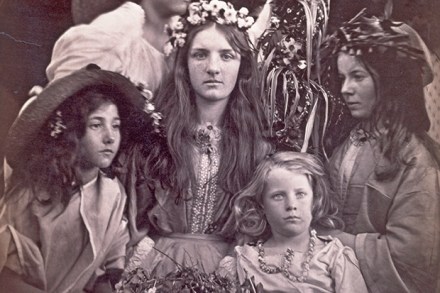
One day Julia Margaret Cameron was showing John Ruskin a portfolio of her photographic portraits. The critic grew more and more impatient until he came to a study of the scientist Sir John Herschel in which the subject’s hair stood up ‘like a halo of fireworks’. At this point, Ruskin slammed the portfolio shut and Cameron thumped him violently on the back, exclaiming, ‘John Ruskin, you are not worthy of photographs!’ He was indeed smackingly wrong to dismiss her work, as visitors to an exhibition at the V&A celebrating the 200th anniversary of her birth will be able to see for themselves. There are multiple ironies underlying this spat (they happily made up by lunchtime). Ruskin disapproved — officially speaking, at least — of photography.

Unreliable evidence

From our UK edition

I hadn’t really thought much about pixels before, despite spending a large portion of my day looking at them. After all, a pixel is just a tiny unit in a digital image, and we all tend to look at the bigger picture. But how about this: this humble unit has now become a key feature of drone warfare. Drone-fired missiles have reportedly been developed that can burrow through targeted buildings, and leave a hole that appears smaller than a pixel on publicly available satellite images. This means that drone strikes are often invisible to groups who try to monitor attacks, such as NGOs or the UN.

Coming up for air

From our UK edition

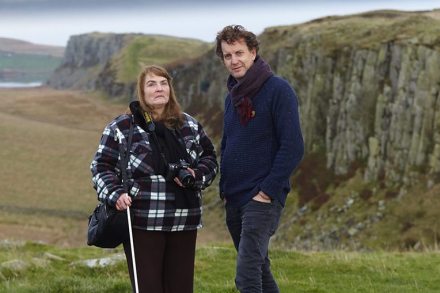
The thing that the photojournalist Don McCullin likes best of all now, he tells me, is to stand on Hadrian’s Wall in Northumberland in a blizzard. He made his name in conflicts in Vietnam, Cambodia, Biafra, Uganda — hot places full of fury, panic and death — but these days he finds his greatest solace in the English landscape. I can see why he is drawn to that wild part of Britain: its isolated beauty, the feeling of being roughed up by the elements but not destroyed by them. Clean air, too: you must get a cool, fresh lungful up there. He’s 80 years old in October: talking to him at home in Somerset, I get the sense he’s been coming up for air all his life.

Complicated, but unfussy

From our UK edition

Amory Clay, photographer and photo-journalist, was born in 1908, only two years after Logan Mountstuart, writer, poseur and ‘scribivelard’. Amory died in 1983; Logan in 1991. Though shaped by the same era, their accounts of their lives are tonally worlds apart. Logan is flamboyant, self-regarding, lyrical, self-pitying; Amory plainer, braver, yet less self-revealing. Both, of course, are fictional, and both are protagonists woven by William Boyd into novels where they rub shoulders with historical characters. Amory, however, born into an era in which Vivians, Evelyns and Beverleys could be of either sex, is female. Boyd’s representation of a certain sort of female voice is pitch-perfect, chiefly because he is not trying too hard to signal Amory’s femininity.

Kultural icon

From our UK edition

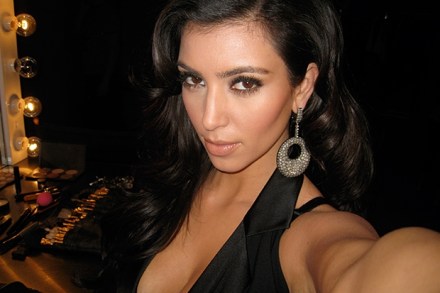
The almond eyes that rise towards their outer edges. The cheekbones that curve down to the corners of those upholstered lips. The dark strands of hair that fall wisplike on to her chest. The hourglass extremities that will exercise your ciliary muscles until they snap. Dear me! After looking at this book, you’ll be more familiar with the particulars of Kim Kardashian’s body than with your own lover’s. For this is her hardback collection of selfies. It contains almost 500 photographs of Kim, by Kim. Six of them include her daughter; 60 of them feature at least one of her siblings; 100 have Kim in a bikini, in her underwear or completely naked. The book’s title, Selfish, might be the most knowing of all time. But who is Kim Kardashian?

Stolen kisses and naked girls: there is much to wonder about in Lewis Carroll’s Wonderland

From our UK edition

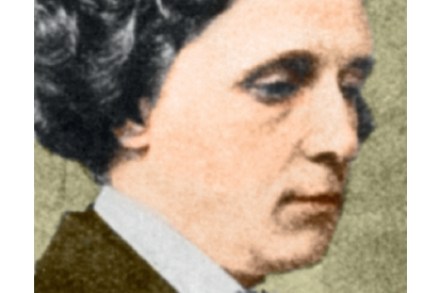
‘A vision of innocence was not always the same as an innocent vision,’ remarks Robert Douglas-Fairhurst. He is referring to Alice’s discovery in Wonderland that ‘ “I say what I mean” is not the same as “I mean what I say”.’ Douglas-Fairhurst is a subtle expert in doubleness. His new book tells the story of Lewis Carroll, who was also an Oxford mathematician called Charles Dodgson, and Alice Liddell, whom Dodgson photographed naked when she was seven, who married and became Mrs Hargreaves though she liked to use the title Lady Hargreaves, to which she was not entitled.

Sculpture Victorious at Tate Britain reviewed: entertainingly barmy

From our UK edition

In the centre of the new exhibition Sculpture Victorious at Tate Britain there is a huge white elephant. The beast is not, I should add, entirely colourless. On the contrary, it has a howdah richly decorated in gold and green, and numerous trappings, and tassels covering its pale grey hide. Its whiteness is entirely proverbial. After all, what can you do with a porcelain pachyderm, standing over seven feet tall? The Victorian period, a text on the wall proclaims, was ‘a golden age for British sculpture’. This is perfectly true, in the sense that a colossal amount of the stuff was turned out during Victoria’s reign.

The amazing story of the blind photographer

From our UK edition

Perhaps the news that Radio 5 live will be the only BBC station (under the new broadcasting rights agreements) to broadcast ‘live’ golf will ensure that its audience stays above the six million listeners now dreamt of by its controller Jonathan Wall as the magic number he needs for the network to stay buoyant. (Figures announced last week showed that 5 live has lost 10 per cent of its audience after a radical shake-up of its presenting team, losing especially Shelagh Fogarty and Victoria Derbyshire, which had the knock-on effect of turning it even more blokey.) At first the idea sounds absurd —golf on radio.

2015 in exhibitions – painting still rules

From our UK edition

The New Year is a time for reflections as well as resolutions. So here is one of mine. In the art world, media and fashions come and go, but often what truly lasts — even in the 21st century — is painting. Over the past 12 months, there has been a series of triumphs for pigment on canvas, including the glorious Veronese exhibition at the National Gallery, and a demonstration by Anselm Kiefer at the Royal Academy that we still have painters of towering stature among us. What will 2015 hold? Well, as far as painting is concerned — both old master and contemporary — there are some extremely promising items.

In the steppes of the ancients: travels on the Silk Road

From our UK edition

It is difficult to fault this remarkable volume. The publishers have created a book of quality with stunning illustrations and lucid maps. It will, I believe, become a standard reference for all who study the complex history of Central Asia and the Silk Road. This is the second volume in Christoph Baumer’s projected four-book series on Central Asia and shows its author to be an extraordinary person, whose skills encompass those of an explorer, a geographer, a historian, an archaeologist and a photographer. Moreover, in each of these exacting disciplines he is no amateur. He displays the rare qualities of both an academic and a man of action. His sparkling prose ensures that the armchair traveller will not nod off.

The images from the Apollo missions will reduce you to tears

From our UK edition

When people ask why I’m obsessed with the Apollo moon missions, I always want to reply using the same phrase: ‘Because they were out of this world.’ I never do, because it happens to sound like a very bad joke. But it’s the truth. For the first time ever, mankind left its home turf and discovered somewhere new. It was qualitatively the greatest journey in human history. Not — and this is the point — that it was mankind rejecting that home turf; leaving the Earth made us value it all the more. That’s where the greatness lay. It’s also the charm of a new exhibition in London.

The camera always lies

From our UK edition

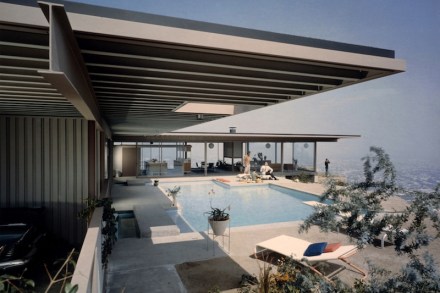
Everyone knows about architecture being frozen music. The source of that conceit may be debated, but its validity is timeless and certain. For all its weightiness, architecture plays with ethereal proportion, harmony, resonance and delight: the stuff of music. But architecture is more fundamentally about the management of light and space. Or, at least, that’s how architects see it. So photography makes better sense of architecture than any other medium does: there is something congruent between the fixed optical geometry of a camera and the way we perceive buildings. And because images are more readily accessible than travel to remote sites, everyone’s experience of world architecture is, at least initially, based on the photographic record, not the real thing.

Dear Mary: Help me hunt down my priceless missing book

From our UK edition

Q. A scholarly book of great importance to me appears to have gone missing from my library. It was heavily annotated so it is irreplaceable. I lend books all the time and I have a strong feeling I have lent it to someone, but I just cannot remember to whom. I can remember the last time I saw it and have emailed all those who signed the visitors’ book since, asking whether by any chance they have borrowed it — but it seems that none of them has. I feel it would be a tad accusatory/Alzheimery to send a round robin to all friends and colleagues to ask whether they have by any chance been to my house in the last six months and borrowed it. — K.N.H., Oxford A. Instead, send a round robin email asking if anyone happens to have a copy of the book that you could buy.

A photographer sheds new light on Constable Country

From our UK edition

The phrase ‘Constable Country’ summons up a quintessentially English landscape: river and meadows, open vistas bordered by trees, the greens and golds of cultivated acres, with the wide (and often blustery) skies of East Anglia over all. John Constable (1776–1837) is one of our greatest artists and certainly one of the most popular. His vision of rural England has become a cherished ideal of how landscape should look, and is as much a state of mind as a real place. In actuality it is based around the village of East Bergholt where Constable was born, in the Essex–Suffolk border country, and extends through Dedham Vale and the valley of the river Stour.

Mass destruction in an age of mass media

From our UK edition

Catalyst: Contemporary Art and War at the Imperial War Museum North (until 23 February) is alone worth a trip to Manchester. The exhibition shows how artists living in the age of mass media have explored conflict in the age of mass destruction. The most successful works are not those that ‘make a statement’ but those which address the viewer, usually by embarrassing their indifference and inspiring empathy. Taysir Batniji’s ‘Gaza Homes’ is a set of mock estate agents’ particulars for bomb-damaged houses. Captions about ‘well appointed’ rooms, ‘airy living space’ and ‘beach access’ are a joke in bad taste.