Philosophy

Why I’ve started my own Mail Online

From our UK edition

There are good reasons for serious people to despair of the news. A minor country singer dies, and the BBC gives him the front page. An actor dies and every channel mourns him as if a president had expired. There’s one final fact that particularly sticks in the throat of serious news people: the most followed news website in the English language, by an enormous factor, is the Mail Online, purveyor of a stream of appalling ‘human interest’ stories of the lowest kind. The clear temptation is to withdraw into the bunker and lament the decadence of a ruined age. This would be a big mistake. We can face the facts head on: the most attractive, charming, sexy and compelling news outlets enjoy unparalleled influence over the minds of tens of millions of people.

Political philosophy, Harry-style

From our UK edition

Boy-band super-hero Harry Styles proclaimed on Twitter earlier today: ‘All social change comes from the passion of individuals.’ His shrieking fans were enthused by this insight. Some even asked if they could quote him in their exams. How sweet. Mr S is pleased to see little Harry channelling American anthropologist Margaret Mead. She is alleged to have said (although I can't discover where and when she said it), 'Never ever depend on governments or institutions to solve any major problems. All social change comes from the passion of individuals.' Clever lady, that. But what could all this philosophising from Styles, a self-confessed Labour supporter, mean? Mr S has a theory.

Reflections on a Metaphysical Flaneur, by Raymond Tallis – review

From our UK edition

There are books we read for pleasure and there are books we are paid to review. However enjoyable the books we review, they are still, in some sense, ‘work’, and my attitude to them is different. Even when reading them with delight, I find myself ticking off the pages, as so much ‘job done’. I was sent this book weeks ago. But I forgot that I was meant to review it. I have been carrying it round with me, reading and rereading, and it has been like the most engaging, stimulating conversation with an unpredictable, witty new friend. Only lately did I remember that I was actually expected by the Lit Ed to say what I thought about it.

A Slap in the Face, by William B. irvine – review

From our UK edition

A friend of mine who works for the NHS has been told recently by a superior that his ‘attention to detail is bordering on the obsessive’. Aside from observing that an obsessive attention to detail might serve the health service well, this is an example of the kind of insult that Professor Irvine would ascribe either to low self-esteem or to narcissism (high self-esteem with no self-knowledge). The speaker wasn’t offering constructive criticism (my friend had been praised for his attention to detail only days before, by a perhaps less negligent superior) but rather emphasising her superiority, something she had no need to do, unless she felt it threatened. My friend’s attention to detail is clearly her problem rather than his. Irvine begins with examples of insult.

Plato – slave-owning aristocrat or homosexual mystic?

From our UK edition

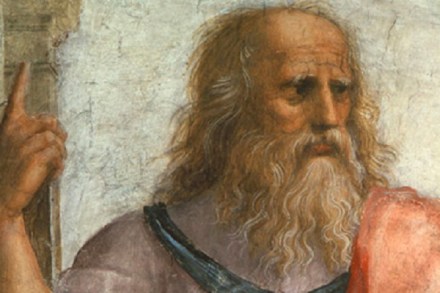
For over two millennia, the writings of Plato had been at the very core of a Western education. Yet  by the dawn of the 21st century, Plato appeared marginalized to the benign pedantry of Classics departments — engagement with his ideas having been spurned by many philosophers and educators over the preceding decades. To many his call to search for truth — and to live according to it — is no longer seen as applicable to our relativistic age. Neel Burton's Plato: Letters to My Son attempts to rescue Plato from irrelevance and guide another generation of readers and leaders along the path of self-knowledge. To understand the thrill of Burton's timely intervention, it is essential to grasp why Plato has fallen out of fashion.

Kenneth Minogue RIP

From our UK edition

The weekend brought the sad news of the death of Kenneth Minogue. Intellectually and physically active to the last, he died on Friday at the age of 82, while returning from a conference on the Galapagos Islands. Spectator readers will remember his essays and reviews for the magazine stretching over many decades. Some may have been fortunate enough to have been taught by him at the London School of Economics. Ken was, needless to say, one of the most brilliant conservative political thinkers of his generation. He was also the most wonderful man. He had that rare mixture of great intelligence and twinkly, irrepressible good-humour.

Timothy Beardson interview: It’s urgent that China reforms

From our UK edition

Recent convulsions in China’s banks will not, I suspect, have surprised Timothy Beardson, a sinophile, veteran Hong Kong financier and author of Stumbling Giant: The Threats to China’s Future. He argues that China’s extraordinary growth over the last 30 years has come in spite of its banking system. A dinner party might speculate where China would be if not for Mao; but a more immediate question is: where would China be if its banking system supported the private sector? “If the economy has grown by 10 per cent for 30 years, as is reported (and I think that the data in China is very frail – it probably hasn’t grown at 10 per cent a year – but it’s clearly grown at a very high rate and that’s all that matters).

The odd couples

From our UK edition

This is the first post in an occasional series about rediscovering old science books. Twins, Lawrence Wright posits, pose a threat to the established order. People have long been scared of, and intrigued by, them. The doppelganger holds a special place in the gothic canon, whilst some cultures have even seen men cutting off a testicle in the hope it would eliminate the possibility of twin-bearing. Conversely, twins have been held up in voodoo ceremonies as objects of worship or been the subject of televised wonder and investigation. Whether the sentiment is positive or negative, we see them as an aberration and have tended to hold such specimens at arm’s length. More than anything else, Wright says, this is because we are scared of what they can tell us about ourselves.

Jesse Norman interview: Edmund Burke, our chief of men

From our UK edition

When he arrived in London, Burke had a very brief career in law. He soon dedicated his time to critical thinking, writing and politics. Burke published a number of ground breaking books, including: A Philosophical Enquiry into the Origin of Our Ideas of the Sublime and Beautiful, and Reflections on the Revolution in France. In his new book, Edmund Burke, Jesse Norman dissects Burke’s outstanding intellect, and his career. He then asks how these ideas might be applied to modern politics. Jesse Norman is Conservative MP for Hereford and South Herefordshire. In 2012 he was named as the Spectator’s Parliamentarian of the Year. He is a member of the Treasury Select Committee and is a senior fellow at the think tank, Policy Exchange.

Michael Sandel interview: the marketization of everything is undermining democracy

From our UK edition

Michael Sandel is a political philosopher and a professor at Harvard University. He is best known for his  ‘Justice’ course, which he has taught for over two decades. Sandel first came to prominence in 1982 with his book Liberalism and the Limits of Justice. The book offers a critique of liberalism, arguing that individuals’ needs are rooted with a sense of community and obligation to others, rather than the self. Last year, Sandel published What Money Can’t Buy: The Moral Limits of Markets. When one initially begins to read this book, it seems as if Sandel is simply stating the obvious. He asks questions that many of us think about on a day to day basis, but perhaps are afraid to ask, such as: do we want a society where everything is up for sale?

The Glorious Revolution and small ‘c’ conservatism

From our UK edition

From a dialogue  between a non-juring clergyman and his wife by Edward 'Ned' Ward Wife: Why will you prove so obstinate, my dear, And rather choose to starve, than yield to swear? Why give up all the comforts of your life, Expose to want your children and your wife; Hug your own ruin through a holy pride, Which interest calls you now to lay aside; And common safety, that prevailing plea, Justifies those who wisely do agree? Consider, therefore, and in time comply, You may, perhaps, on some mistakes rely; And then, how fatal 'twould hereafter be, That error should beget our misery?

Interview: Jared Cohen and The New Digital Age

From our UK edition

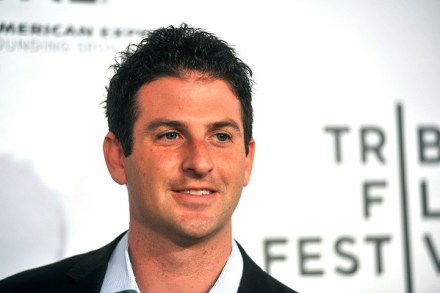
Jared Cohen is Director of Google Ideas, a think tank set up by Google dedicated to understanding global challenges by applying technological solutions. Cohen is also an Adjunct Senior Fellow at the Council on Foreign Relations. He previously served as a member of the U.S. State Department’s Policy Planning Staff, working as a close advisor with two former Secretaries of States, Condoleezza Rice and Hillary Clinton, focusing on the Middle East, South Asia and counter terrorism. Cohen has co-written, together with Eric Schmidt, Google’s Executive Chairman, The New Digital Age; a book that examines a number of different challenges that will arise as cyberspace drastically changes in the coming decade. The book asks two central questions.

Interview: David Graeber, leading figure of Occupy

From our UK edition

The anarchist movement in the United States has had the support of leading libertarian intellectuals, such as Noam Chomsky; but it has lacked a figure who could transform its guiding principles into something resembling a political movement. In the autumn of 2011, David Graeber seemed to be the man who could drag anarchism into mainstream politics. Graeber, along with other leading figures in the Occupy movement, coined the term ‘we are the 99 percent’. The catchphrase caught on, and within weeks — with the assistance of social media — Occupy transformed a small group of idealists with little support into a radical network occupying 800 cities around the world.

Schroder – one man’s journey into night

From our UK edition

Erik Schroder is an East German who last saw his mother when he was five years old. In 1975 only his unspeaking father crossed the Wall with him into West Berlin and on to America. It is here that Erik Schroder becomes Eric Kennedy - his fateful, fictional second skin. It is Kennedy, deflecting wide-eyed enquiries in to his ancestry with a modest shrug (‘I wanted a hero’s name’), who is accepted in to college, who gets a job in real estate, who marries a woman named Laura and has a daughter named Meadow. But after the failure of this marriage, it is Schroder who kidnaps Meadow and takes her on a carnivalesque road trip through the New England countryside, a trip that progresses along increasingly blurred borderlines – physical, moral, mental.

Interview with a writer: Evgeny Morozov

From our UK edition

Evgeny Morozov is an iconoclast. He believes that technology, if abused or misused, has the potential to make society less free. His latest book, To Save Everything , Click Here, builds on his acclaimed polemic The Net Delusion (about which he spoke to the Spectator last year) to challenge those who suggest that technology is the solution to all of life’s problems. Morozov describes how the technology of perfection is not necessarily compatible with democratic institutions and processes that are imperfect by definition. He reveals how ‘technological fixes’, particularly when coupled with market forces, threaten to close public debate and curtail personal choice; thereby moulding individuals into an efficient, homogenised society.

Douglas Adams’s big idea

From our UK edition

Had he not died 12 years ago, Douglas Adams would have been 61 yesterday. Google produced a doodle in his memory, and the Guardian published an interesting piece which declared that Adams remains the king of comedy SF, before going on to argue that he was unique, pretty much the only writer in that genre. Take a bow Mr Adams; you’re top of a league of one. But, in a way, Adams was, or very nearly was, unique. The Hitchhiker’s Guide to the Galaxy and its sequels are comedies of ideas flavoured with lashings of silliness: the restaurant at the end of the universe and Marvin the Paranoid Android, a robot beset by depression because he never uses his planet-sized brain – how gloriously silly and how very clever. How unique, almost.

Diary – 7 March 2013

From our UK edition

My friend and colleague Roy Brown has just sent me the draft of a statement he will submit to the UN Human Rights Council this spring, on behalf of the International Humanist and Ethical Union. This is a group to which we both belong, which campaigns on freedom of thought and expression, women’s and children’s rights, education and much besides. Roy’s draft concerns discrimination against people who do not have a religious faith. It is extraordinary how many countries discriminate by law against nonbelievers, in violation of Article 18 of the Universal Declaration of Human Rights, which protects freedom of conscience.

Interview with a writer: Lars Iyer

From our UK edition

People call Lars Iyer a ‘cult author,’ which is odd, because almost every paper to have reviewed him from here to Los Angeles has praised him endlessly. The ‘cult’ thing is probably down to people naturally associating innovative, serious and challenging art with the marginal. This no doubt plays up to Iyer’s own theories about the climate of contemporary literature, but the reception of these books tells quite a different story. While his manifesto claims masterpieces cannot be produced in our age, and that no contemporary literature could be as important as anything by Samuel Beckett, critics call his books masterpieces and constantly compare him to Beckett.

Discovering poetry: Samuel Daniel and the art of outliving death

From our UK edition

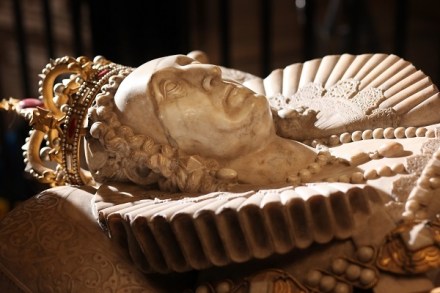
from Delia When winter snows upon thy golden hairs, And frost of age hath nipped thy flowers near; When dark shall seem thy day that never clears, And all lies withered that was held so dear;    Then take this picture which I here present thee, Limned with a pencil not all unworthy; Here see the gifts that God and Nature lent thee; Here read thyself, and what I suffered for thee.    This may remain thy lasting monument, Which happily posterity may cherish; These colours with thy fading are not spent; These may remain, when thou and I shall perish.    If they remain, then thou shalt live thereby;    They will remain, and so thou canst not die. Nicholas Hilliard’s miniature portraits are bewitchingly beautiful.

Interview with a writer: John Gray

From our UK edition

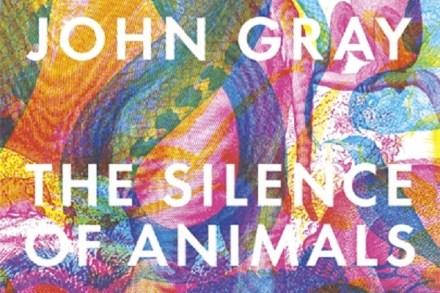
In his new book The Silence of Animals, the philosopher John Gray explores why human beings continue to use myth to give purpose to their lives. Drawing from the material of writers such as J.G. Ballard, Joseph Conrad, Ford Madox Ford, John Ashbery, Wallace Stevens and others, Gray looks at how we can reinvent meaning in our lives through a variety of myths and different moments in history. Gray refutes that humanity is marching forward to progress, where utopian ideals of civilisation and enlightenment are the end goals. He sees human beings as incapable of moving beyond their primordial, animalistic, selfish instincts, particularly when factors beyond their control make them more fearful.