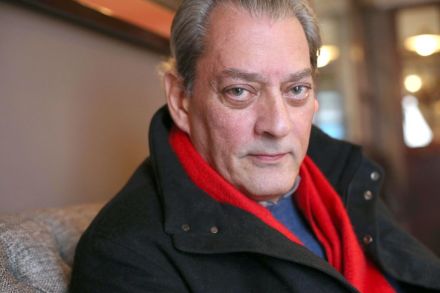
Paul Auster

Why New York is a city built on the written word

When I visited New York for the first time in a decade recently, one of its most famous living writers, Paul Auster, died on the day I arrived. This was not, I hope, anything to do with my presence in the city he spent decades memorializing; he had been suffering from terminal cancer for a considerable time. Yet as I sat at my desk at the first hotel I was visiting, the Frederick in Tribeca — a comfortable and well-located spot, let down slightly by its surly and unhelpful staff, but redeemed by stylish touches like a tiled map of nineteenth-century Manhattan built into the well-appointed shower — and started to write a tribute to Auster for our website, it made me wonder what, exactly, I was trying to find out about literary New York. Was I exploring its distinguished past?

new york

Remembering the postmodern Paul Auster

In Salman Rushdie’s new memoir Knife, there is a powerful and moving moment — amid the many other powerful and moving moments — in which Rushdie visits his ailing friend Paul Auster at the latter’s house in Brooklyn and describes his sorrow at seeing him so reduced by illness. It may have been that the extent of the cancer that killed Auster had not been made public knowledge, although a statement was released about his condition, until Rushdie’s description of his encounter — and some might accuse him of indiscretion or indelicacy. Yet the news of Auster’s death, anticipated though it undoubtedly was, has meant that such questions recede almost immediately — and instead a consideration of his legacy as a writer, rather than an invalid, can begin.

paul auster